How Mapping Neuronal Migration Will Help Us Design Better Brain Therapies
Source PublicationNature
Primary AuthorsZhang, Canela, Kurisu et al.
"Think of migrating neurons like explorers squeezing through a narrow, jagged rock crevice; they scrape their gear to get through, but they carry a repair kit to fix the damage on the other side."
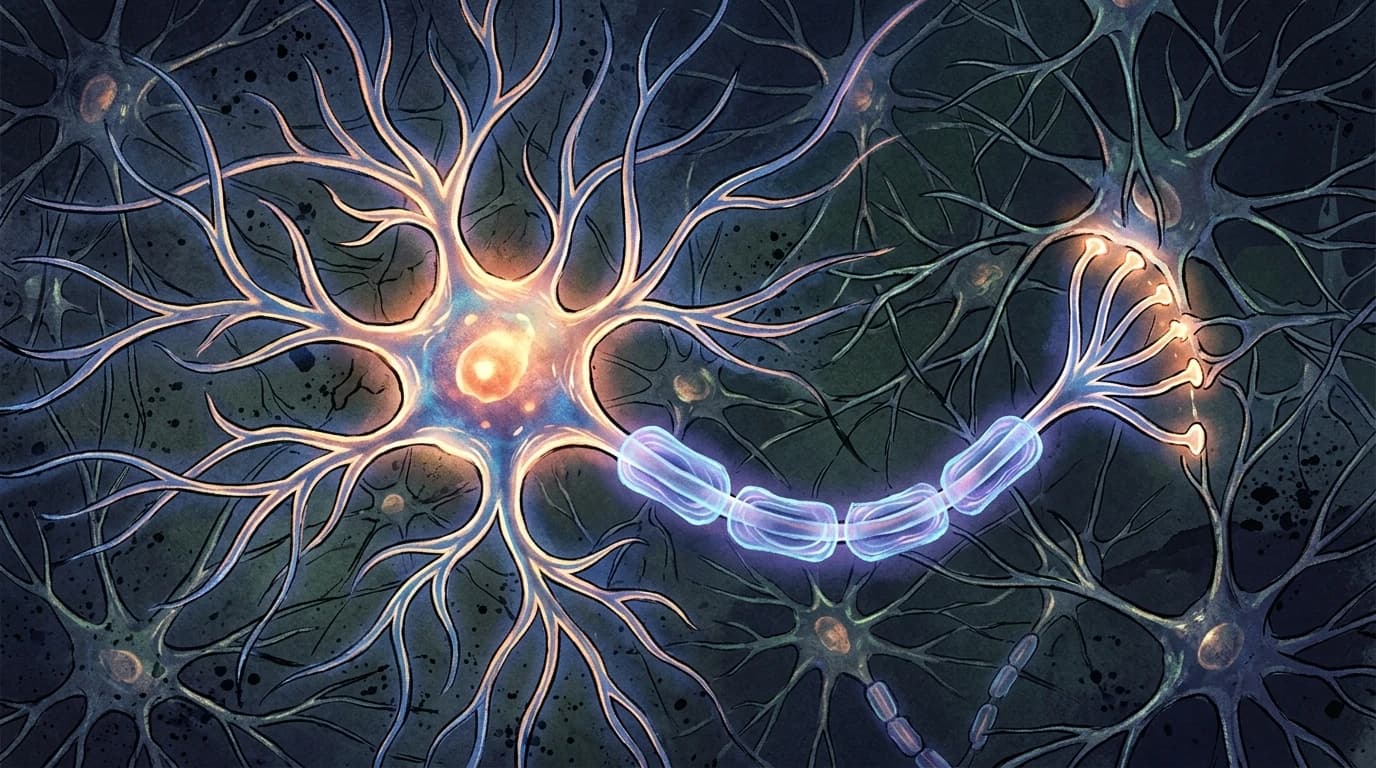
Imagine a future where doctors can repair genetic errors in the womb, preventing neurological conditions before a child is even born. By the time you graduate university, bio-engineers may routinely design targeted therapies to support brain development.
These results were observed under controlled laboratory conditions, so real-world performance may differ.
During early development, billions of brain cells travel long distances to organise the cerebral cortex. This process of neuronal migration is essential for building a functional brain, but it is also physically hazardous.
A new study reveals that as neurons squeeze through tight cellular gaps, the physical pressure breaks their DNA. Researchers found that migrating neurons suffer massive double-stranded DNA breaks due to this mechanical stress. Fortunately, healthy cells use a specific enzyme called ligase IV to repair these breaks without dying.
The Mechanics of Neuronal Migration
When researchers blocked this repair mechanism in mice, the animals accumulated DNA damage and developed motor coordination difficulties later in life. This suggests that unresolved physical damage during brain assembly could be an unrecognised cause of neurological disorders.
This discovery opens up new career paths at the intersection of mechanical physics and molecular biology. Future clinical biophysicists will need to understand how physical forces shape our genetic code. To join this field, start learning coding and molecular biology today to help build the diagnostic tools of tomorrow.