How Machine Learning Made Gold Nanoparticle Synthesis Cheaper and Greener
Source PublicationJournal of the American Chemical Society
Primary AuthorsMiao, Reffatto, Cattelan et al.
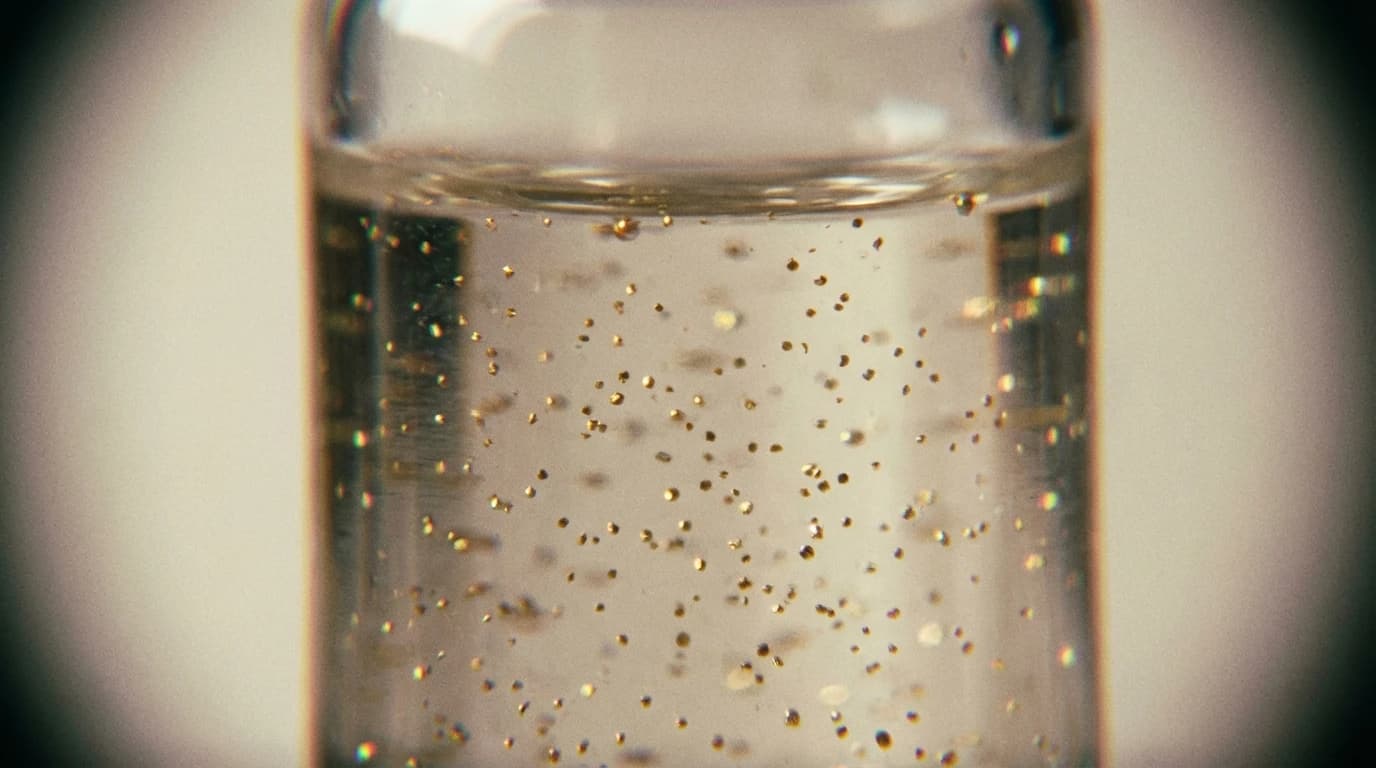
Imagine you are a high-end jeweller trying to craft microscopic gold beads. The standard method involves dunking raw gold into a vat of harsh chemicals.
These results were observed under controlled laboratory conditions, so real-world performance may differ.
You get your tiny beads, but they emerge coated in a sticky, toxic residue. If you want to use those beads inside the human body, that chemical sludge is a massive problem.
This is the exact headache scientists face with gold nanoparticle synthesis. We use these microscopic gold flecks in everything from targeted cancer therapies to advanced chemical sensors.
For medical applications, the gold must be exceptionally pure. Even a tiny trace of chemical contamination can ruin a delicate biological experiment or harm living tissue.
The Problem with Pure Gold
To get pristine particles, researchers prefer a physical method called laser ablation in liquid. Instead of using chemical baths, they submerge a solid piece of gold in water and blast it with a highly focused laser.
The intense energy vaporises tiny fragments of pure, uncontaminated gold. These fragments cool in the water, forming perfect nanoparticles.
But there is a catch. Firing high-powered lasers is incredibly expensive.
Until now, producing gold this way was simply too slow. It could not compete financially with the old, dirty chemical methods.
The Machine Learning Approach to Gold Nanoparticle Synthesis
A new lab study reveals a clever workaround. Researchers handed the complex laser controls over to a machine learning algorithm.
They trained the algorithm to optimise the laser ablation process. The software analysed the data and figured out the most efficient possible way to blast the gold.
The results measured by the team were highly impressive. Their AI-optimised laser setup achieved a 3.4-fold increase in productivity compared to previous laser records.
Furthermore, the initial equipment investment dropped to just one-eighteenth of the usual cost. This makes the laser method four times cheaper than standard chemical manufacturing.
Better Performance in the Lab
This optimisation does more than just save money. It completely strips away the toxic byproducts of traditional manufacturing.
Because these new nanoparticles are free of chemical residue, they perform much better in physical and biological tests.
The researchers measured several specific improvements over commercial, chemically synthesised nanoparticles:
- Better compatibility with living cells, making them safer for medical use.
- Higher catalytic activity, meaning they trigger chemical reactions faster.
- More intense light absorption, which is highly useful for medical imaging and diagnostics.
This study suggests that dirty chemical baths could soon be obsolete. By letting algorithms fine-tune the lasers, manufacturers might soon have a green, highly scalable way to mass-produce pure gold.