How gut microbes may help explain female liver protection
A study of over 9,000 people suggests oestrogen helps gut bugs make a bile acid that could help shield female livers by managing cholesterol.
Reading level
The full story with proper science words explained.
A biological puzzle in the gut
Why do females face lower rates of chronic liver disease than males? Long-term damage to liver tissue affects both sexes, yet women often seem to have an edge against it. To find out why, scientists searched a huge metabolomics database containing chemical profiles from 9,254 people. Metabolomics is the large-scale study of small molecules and chemical products left behind by metabolism. By scanning this vast collection of samples, the team spotted a candidate tied to this shield: a substance called isoursodeoxycholic acid, or isoUDCA.
How oestrogen helps clear out fat
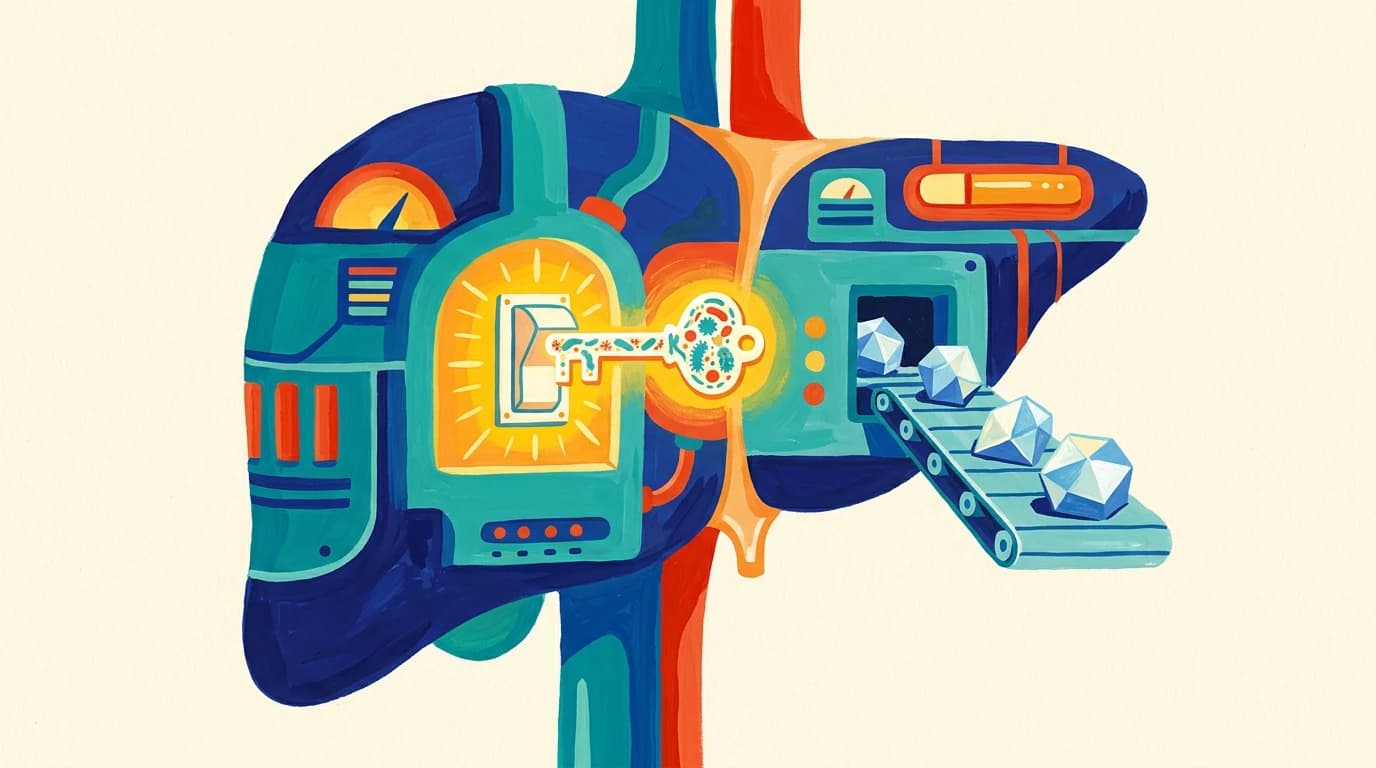
IsoUDCA is a secondary bile acid, a digestive juice made when gut bugs break down our own bile. The female hormone oestrogen shapes a specialised gut environment where these helpful microbes can flourish. Once these bugs make isoUDCA, the molecule sets off a helpful chain reaction in the liver.
Inside liver cells, isoUDCA encourages a helper protein called SREBP2 to gather in the cell nucleus, which acts as the cell's control centre. Once inside, SREBP2 switches on two key tools. The first is STARD4, a transport protein that carries cholesterol across the cell. The second is CYP7B1, an enzyme that chemically alters that cholesterol so the body can process it safely. By working together, STARD4 and CYP7B1 improve how liver cells handle fats, preventing dangerous build-up. This link between gut microbes, bile acids, and the liver offers a clear path that helps explain why females may be protected from liver damage.
The questions that remain
Although these findings are promising, we must not jump ahead. The evidence supports testing isoUDCA in future medical trials, but it does not yet prove that giving this bile acid to human patients will cure disease. Scientists still do not know the exact mix of bacterial species that manufacture isoUDCA in our guts. Testing the compound in real clinical trials will be the next step to confirm if it works as a genuine treatment.
Science words
- chronic liver disease
- Long-term progressive deterioration of liver functions.
- metabolomics
- The large-scale study of small molecules and chemical products of metabolism in biological samples.
- isoUDCA
- A specific secondary bile acid produced by gut bacteria.
- SREBP2
- A regulatory protein that moves to the cell nucleus to switch on cholesterol-management genes.
- STARD4
- A transport protein that moves cholesterol within cells.
- CYP7B1
- An enzyme that helps metabolise and convert cholesterol.
Check it yourself
This story is based on a real research paper in Cell by Li, Kuang, Chen et al. We write with AI help and check it against the paper, but the original is the final word.