How gut health tools could guide better care for farm soils
Scientists suggest that methods used to balance human gut health could guide better soil microbiome management. By pairing live microbes with custom food and virus treatments, growers might build more resilient land.
Reading level
The full story with proper science words explained.
Why one healthy meal never cures poor health
Eating one bowl of greens will not keep a body fit over decades. Lasting health takes steady, daily care. Farm ground acts in a similar way. In one long trial, growers spread manure on their plots and then stopped. Over time, the soil community drifted back to where it began. After 29 years, the ground looked almost identical to earth that had never received manure.
This drop highlights a severe issue in modern food production. Heavy land use strips away soil multifunctionality. This term means the power of ground to grow crops, cycle nutrients, and trap carbon all at once. To undo this damage, growers often spray helpful microbes over crops. They hope these tiny cells will thrive. Instead, native species hold a strong head start. They quickly starve out the added strains, causing the fix to fail.
Packed lunches and targeted hunters
To tackle this loss, scientists want to borrow ideas from human wellness to improve soil microbiome management. Doctors know a friendly bug cannot survive in an adult gut without support. Instead, they use synbiotics. These tools pair live beneficial microbes with custom food sources that only the new strain can digest easily.
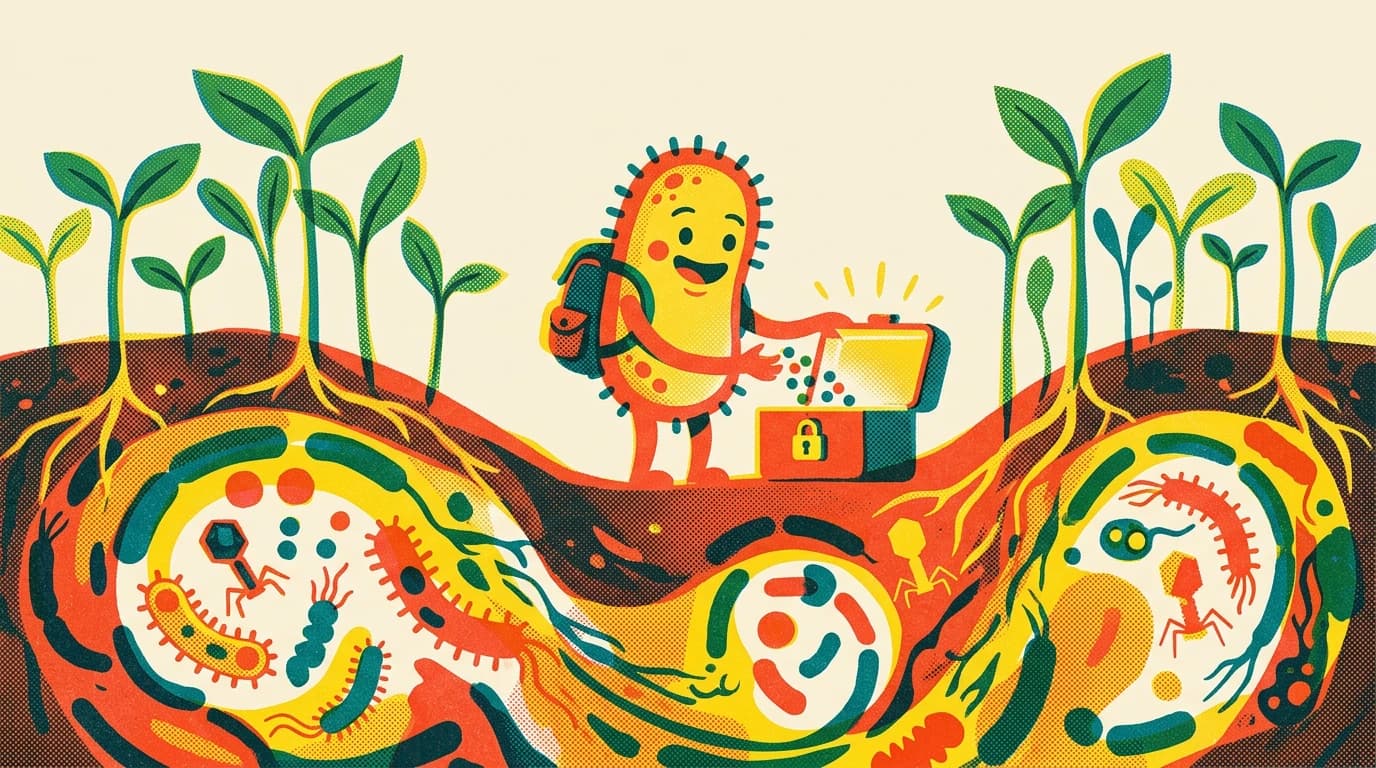
Think of an explorer venturing into the desert with a locked meal tin that only they can open. In one test, added Pseudomonas fluorescens cells failed to take root in natural dirt. Supplying them with toluene, a food only they preferred, completely reversed that failure. Scientists also suggest using bacteriophages, which are tiny viruses that infect bacteria. These phages cull dominant species, making room for newcomers. Some phages even supply auxiliary metabolic genes. These are extra genetic instructions that help host cells carry out useful internal work.
Tailored care for open fields
Doctors also rely on metabolic models. These digital tools map out how cells take in nutrients and grow. Paired with machine learning, they could help growers plan tailored treatments for specific field conditions.
The central caveat is that soil is not a warm, uniform human gut. Real farm ground is deeply uneven, full of mixed microhabitats, and packed with complex webs that tie plants, fungi, and tiny bugs together. Because of these sharp physical differences, concepts from human gut research cannot simply be copied onto farm fields without major changes.
What scientists still need to learn
Digital tools also run into a huge hurdle out in open dirt. Between 80 and 95 per cent of soil microbes are dormant, or asleep. In the gut, only about 20 per cent sleep. Standard software can mistake these sleeping cells for active eaters, skewing the final forecasts.
Several safety and practical questions also remain. Phages usually target a narrow set of hosts, making it hard to curb broad, diverse groups of species. Scientists still do not know how phages move across open acreage. They also do not know how many seasons of steady care a field needs before improvements turn permanent.
Science words
- Soil multifunctionality
- The ability of soil to handle many ecological tasks at once, such as feeding crops, recycling nutrients, and storing carbon.
- Synbiotics
- A mix of helpful live microbes and custom foods designed to give those new strains an exclusive feeding advantage.
- Bacteriophages
- Tiny viruses that infect and destroy specific bacterial cells.
- Auxiliary metabolic genes
- Extra genetic instructions carried by viruses that alter or boost chemical reactions inside an infected host cell.
- Metabolic models
- Computer simulations that calculate how living cells use nutrients, run internal reactions, and grow.
Check it yourself
This story is based on a real research paper in npj Soil Ecology by van Eijnatten, Vultaggio, Schram et al. We write with AI help and check it against the paper, but the original is the final word.