How gut bugs may shield the brain from toxic cadmium
A substance made by gut bacteria digesting soy can slip past the brain's defences to curb damage caused by cadmium poisoning in mice.
Reading level
The full story with proper science words explained.
Heads up: this study is a preprint, which means other scientists haven’t finished checking it yet.
A toxic threat from the world around us
Cadmium is an unavoidable environmental toxin found in food and tobacco smoke that is linked to cognitive decline and Alzheimer's disease mortality. Once inside the body, this heavy metal harms nerve cells, and few protective options exist to stop it. Now, researchers have spotted an unexpected line of defence that begins inside the gut.
The courier that crosses the border
In mice, cadmium breaks a key path linking the gut to the brain. It disrupts a gut bacterium named Adlercreutzia equolifaciens, which feeds on soy to produce a protective compound called S-equol.
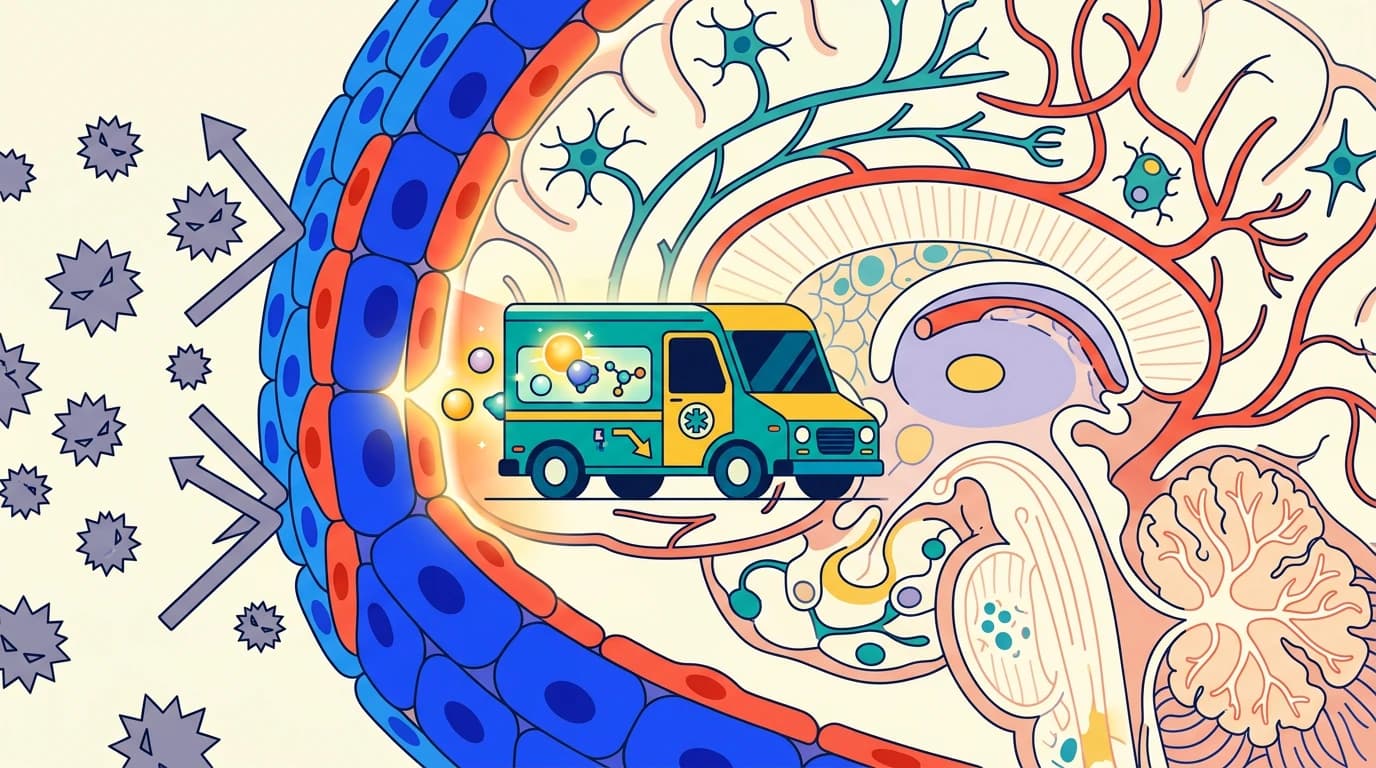
Think of S-equol as a courier van with a special pass. Most chemicals cannot enter the head. But S-equol drives straight through the blood-brain barrier, the tightly packed border of cells guarding the nervous system. Once inside, it attaches to estrogen receptor beta in the brain to deliver help.
Resetting damaged brain cells
To see how this works, researchers grew mouse neural progenitor cells—early cells that can develop into mature brain cells—and exposed them to cadmium. The toxic metal killed cells and scrambled essential activity. By observing these early cells in dishes, researchers could test gene responses directly under controlled conditions.
Adding S-equol lowered cell death. It also restored transcriptional programs, which are sets of genes that switch on or off together to control cellular activities like signaling. In simple terms, it helps injured cells reboot their normal operating instructions. The courier comparison helps us picture transport, though it does not capture how S-equol resets these gene programs.
What we still do not know
Studying these gut signals in humans is tricky. In older adults, blood levels of S-equol shift with body mass index. Levels also drop in people carrying apolipoprotein E4, a genetic variation tied to a higher risk of Alzheimer's disease.
We do not yet know why this gene lowers S-equol. Furthermore, these tests used mice and lab cells rather than clinical trials. We do not know if S-equol supplements can prevent or reverse brain harm in living people.
Science words
- Cadmium
- A toxic heavy metal commonly found in tobacco smoke and food that harms brain function.
- S-equol
- A protective compound produced by specific gut bacteria when they digest soy.
- Blood-brain barrier
- A tightly packed border of cells that stops dangerous chemicals in the blood from entering the brain.
- Neural progenitor cells
- Early-stage cells that have the ability to develop into neurons and other brain cells.
- Transcriptional programs
- Sets of genes that switch on or off together to control cellular activities.
- Apolipoprotein E4
- A genetic variation associated with an increased risk of developing Alzheimer's disease.
Check it yourself
This story is based on a real research paper in Scientific Publication by Suh, Wang, Li et al.. We write with AI help and check it against the paper, but the original is the final word.