How glowing fibres and heat cameras spot workplace stress
By combining wearable optical fibres with a thermal camera, an algorithm tracked stress levels across 20 participants with up to 94.75% accuracy.
Reading level
The full story with proper science words explained.
Connecting the clues
Your heart races, your breathing speeds up, and your face warms. Catching these quick bodily shifts matters when jobs get intense. Modern factories want to guard worker health without getting in the way. To do this, a team built a setup that tracks two separate body signals at once without tangled wires.
The system uses multimodal fusion, which blends information from very distinct sensors into one clear picture. A bendable plastic light strand, called a polymer optical fibre, sits on the chest to log heartbeats and breaths. From across the room, a thermal camera reads regional facial warmth without touching the skin.
Mapping heart and heat
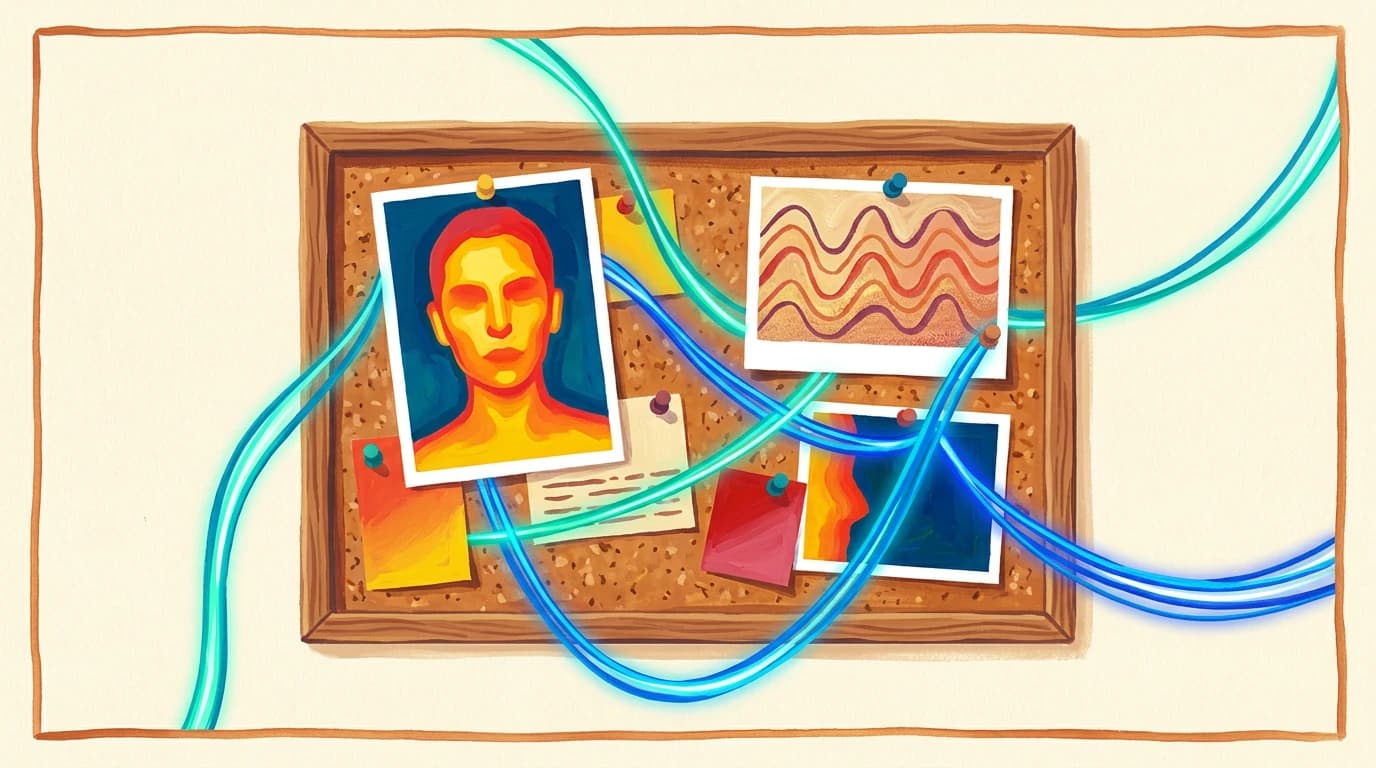
Putting these feeds together is like a detective pinning scattered clues to a board. The team fed the signals into a graph neural network, a computer model built to link related points. The network tracked how chest movements and face warmth rose and fell together.
Next, the computer grouped states into calm rest, low strain, or high strain across 20 volunteers. In tests on people the model already knew, it hit a success score of 0.7233 across all three states. On simpler tests, it reached 0.9475 separating rest from low strain, and 0.9225 against high strain. In five of six tests, it beat common machine setups.
What we still do not know
The system struggled more when meeting total strangers. Under a test method called leave-one-subject-out validation, where the model sees an unseen person, its three-state score dropped sharply to 0.5550. It still scored 0.7925 separating rest from low strain, and 0.7375 against high strain, but unseen people proved harder to read.
Questions also linger about real-world factory floors. We do not yet know how the kit handles heavy physical movement or shifting room warmth. Whether workers find the plastic chest strand comfortable over long shifts also remains untested.
Science words
- Multimodal fusion
- Combining information from different types of sensors to get a clearer picture.
- Polymer optical fibre
- A bendable plastic light-guiding strand used as a sensor to measure vitals like heart rate.
- Graph neural network
- A machine-learning model that analyses data structured as points connected by relationships.
- Leave-one-subject-out
- A testing method where the algorithm is evaluated on a person it has never trained on.
Check it yourself
This story is based on a real research paper in IEEE Journal of Biomedical and Health Informatics by Yan, Ma, Zhang et al. We write with AI help and check it against the paper, but the original is the final word.