How gene-edited bacteria brew biobutanol from dairy waste
By inserting two new genes into a common bacterium, researchers nearly doubled its ability to brew liquid biofuel from cheese-making waste.
Reading level
The full story with proper science words explained.
Turning cheese waste into fuel
Making cheese leaves behind a vast ocean of watery, sugary liquid called whey permeate. Disposing of this byproduct is an environmental headache for dairy processors, but it is packed with lactose. Could microbes turn it into green energy? Generating biobutanol from dairy waste sounds ideal, yet standard bacteria often struggle to ferment lactose efficiently.
Upgrading the bacterial engine
Researchers turned to the bacterium Clostridium beijerinckii NCIMB 8052. Using CRISPR/Cas9, a molecular tool for precise DNA editing, they altered the microbe's chromosome at the acetoacetate decarboxylase gene locus. They integrated a native lactose transporter gene called Cbei_4545 alongside an aldehyde reductase gene from Clostridium pasteurianum, which helps build alcohols.
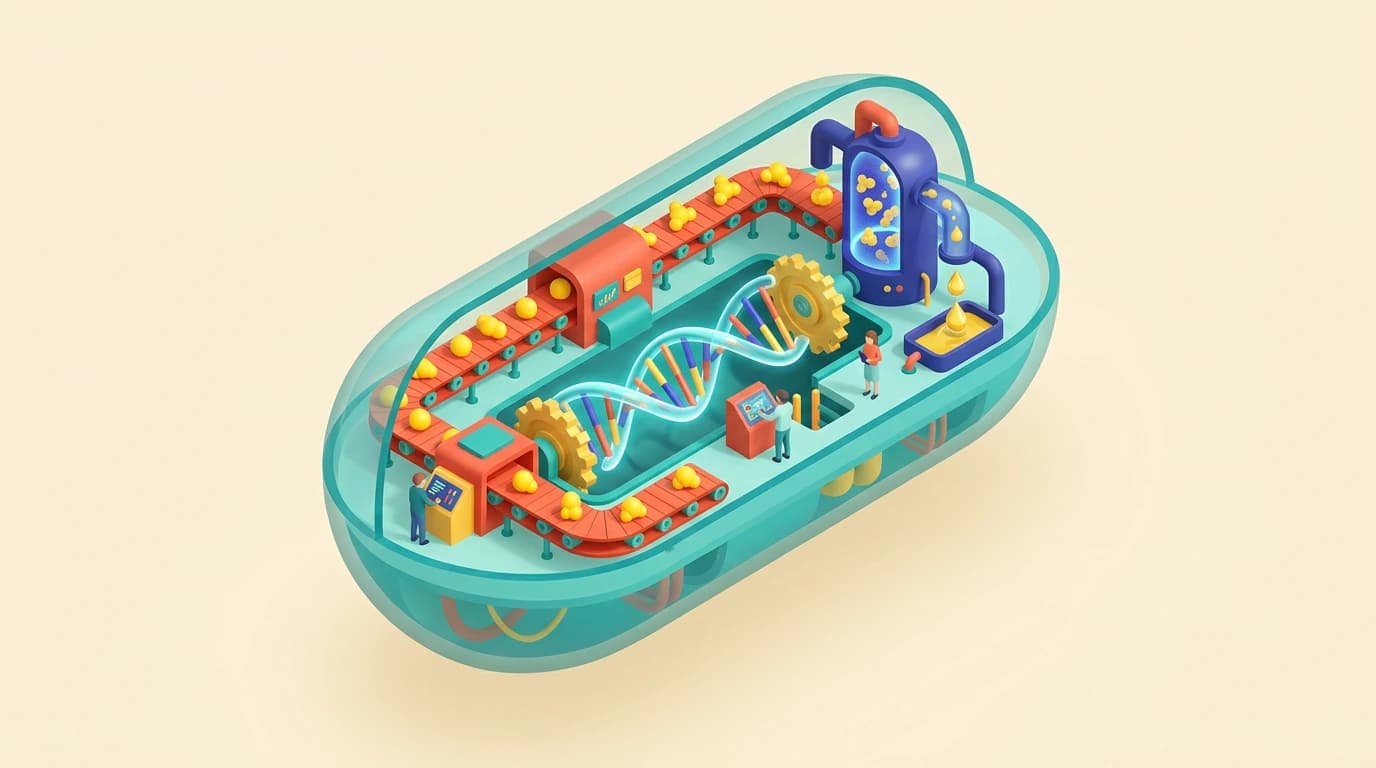
Think of it like modifying a factory engine: adding a dedicated unloading conveyor belt to drag raw lactose inside faster, combined with specialised machinery to churn out the final alcohol. The analogy halts when it comes to living biology, as real bacteria reproduce, grow, and regulate thousands of messy cellular processes that mechanical factories never have to manage.
Higher yields across every test
The changes worked. In lab dishes, the team tested both the wildtype and the engineered strain across three liquid feedstocks. In pure lactose, the modified strain reached a peak butanol titer of 7.9 grams per litre, nearly doubling the wildtype's 4.3 grams per litre. Fed raw, untreated whey permeate, the engineered bacterium hit 9.7 grams per litre compared to 7.1 grams per litre for the unmodified bug.
Pretreating the liquid helped even more. When grown on Amberlite resin-treated whey permeate, the altered strain hit a peak of 20.9 grams per litre, outperforming the wildtype's 11.3 grams per litre.
What we still do not know
These experiments demonstrate strain performance under strict lab testing conditions, but they do not evaluate economic viability or large-scale industrial deployment. Untreated dairy waste yielded less than half the fuel of resin-treated liquid, showing that costly prep work matters. We also do not know if these gene-edited microbes remain stable across repeated industrial cycles without losing their added genes.
Science words
- Whey permeate
- A lactose-rich liquid byproduct left behind during cheese and dairy processing.
- Biobutanol
- A four-carbon alcohol made through biological fermentation that functions as a renewable biofuel.
- CRISPR/Cas9
- A molecular tool used to make precise, targeted cuts and edits within an organism's DNA.
- Acetoacetate decarboxylase gene locus
- The specific physical address on the bacterial chromosome targeted for genetic replacement.
- Aldehyde reductase
- An enzyme that speeds up the chemical conversion of aldehydes into alcohols.
- Titer
- The concentration of a substance dissolved in a liquid, measured here in grams per litre.
Check it yourself
This story is based on a real research paper in Bioresource Technology by Okereke, Duduyemi, Ujor. We write with AI help and check it against the paper, but the original is the final word.