How forest elephant grazing reshapes rainforest birds
A study on Mount Cameroon finds that forest elephants reduce total bird species but boost the variety of ecological roles present. This shows megaherbivore disturbance reshapes tropical forests rather than simply degrading them.
Reading level
The full story with proper science words explained.
Heavyweights in the trees
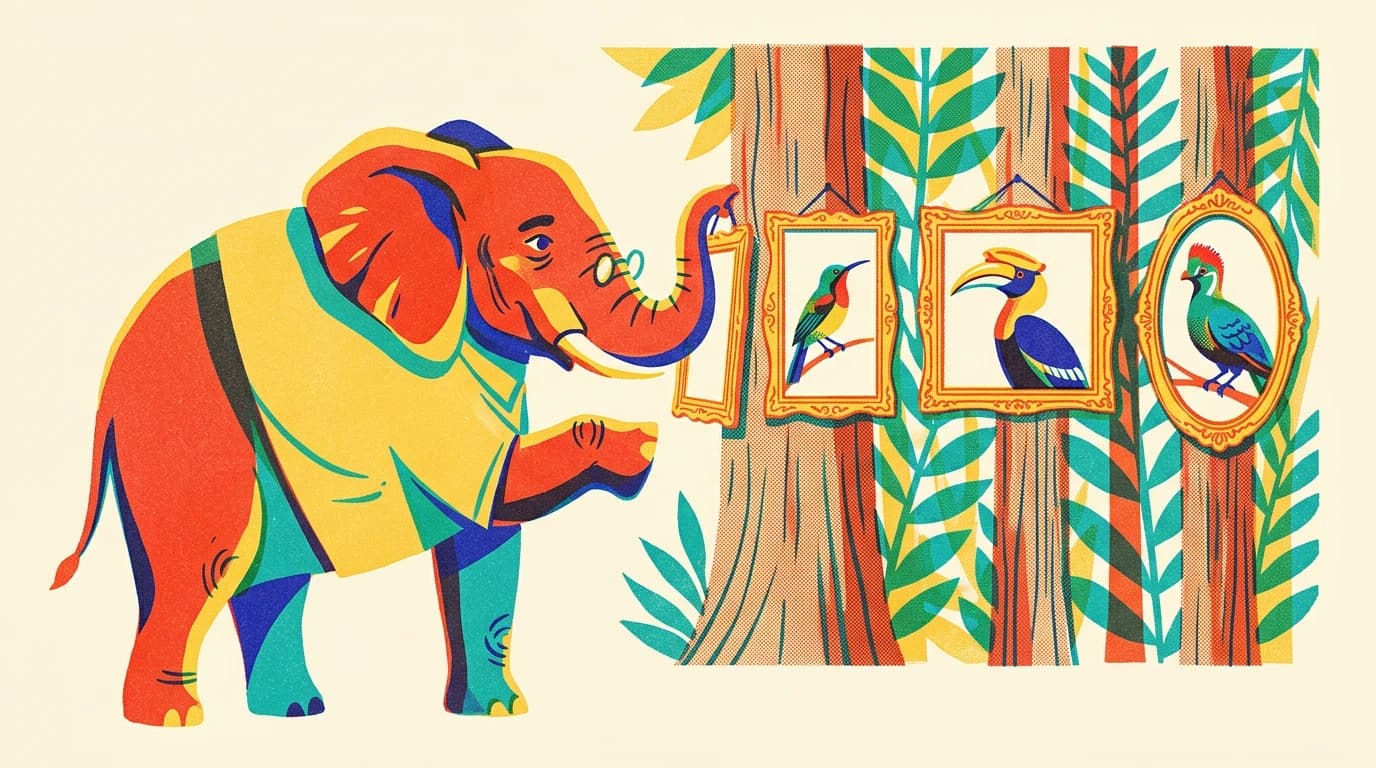
Picture a five-tonne giant crashing through thick jungle, snapping saplings and flattening shrubs. It looks like pure wreckage. Yet African forest elephant grazing turns thick woods into an open, patchy maze. For a long time, experts worried this heavy damage might harm wildlife just like human logging does. To find out, a team ran a four-year field study tracking forest birds across Mount Cameroon.
Fewer birds, wider jobs
The field counts showed a surprising pattern. The big plant-eaters did drop species richness—the raw count of different species in a habitat. In fact, bird numbers fell to levels seen in woods damaged by people. But the wildlife story took a very different path from that point on.
When people harm a forest, tough generalist birds usually rush in from open farmland. Elephants did not trigger that kind of invasion. Instead, their paths favoured invertivores, which are birds that hunt insects, worms, and spiders living on the ground and lower plants. At the same time, large frugivores—fruit-eating birds that live higher up—became far less common.
Most importantly, woods shaped by elephants held higher functional diversity than untouched forests. This term means the habitat had a wider mix of life roles, body shapes, and feeding habits. Yet these flocks also had lower functional redundancy, meaning fewer species carried out the exact same task. If one bird vanishes, no other species stands ready to do its job. Counting total species alone clearly misses the true value that big wild herbivores bring to a jungle.
What we still do not know
The findings come from just one four-year study on Mount Cameroon. We still do not know if this shift away from big fruit-eaters happens across all tropical woods with megafauna. Because these bird flocks have fewer backup species for each job, their long-term power to survive future shocks remains an open question.
Science words
- species richness
- The total number of different species living in a particular area.
- invertivores
- Animals whose diet consists mainly of invertebrates, such as insects and worms.
- frugivores
- Animals that primarily feed on fruit.
- functional diversity
- The range and variety of biological roles, behaviours, and ecological traits present in a community.
- functional redundancy
- When multiple species perform identical or very similar ecological jobs in an ecosystem.
Check it yourself
This story is based on a real research paper in Journal of Animal Ecology by Rueda. We write with AI help and check it against the paper, but the original is the final word.