How Dynamic Covalent Chemistry is Creating Shape-Shifting Inorganic Crystals
Source PublicationAngewandte Chemie International Edition
Primary AuthorsHe, Zhang, Zhou et al.
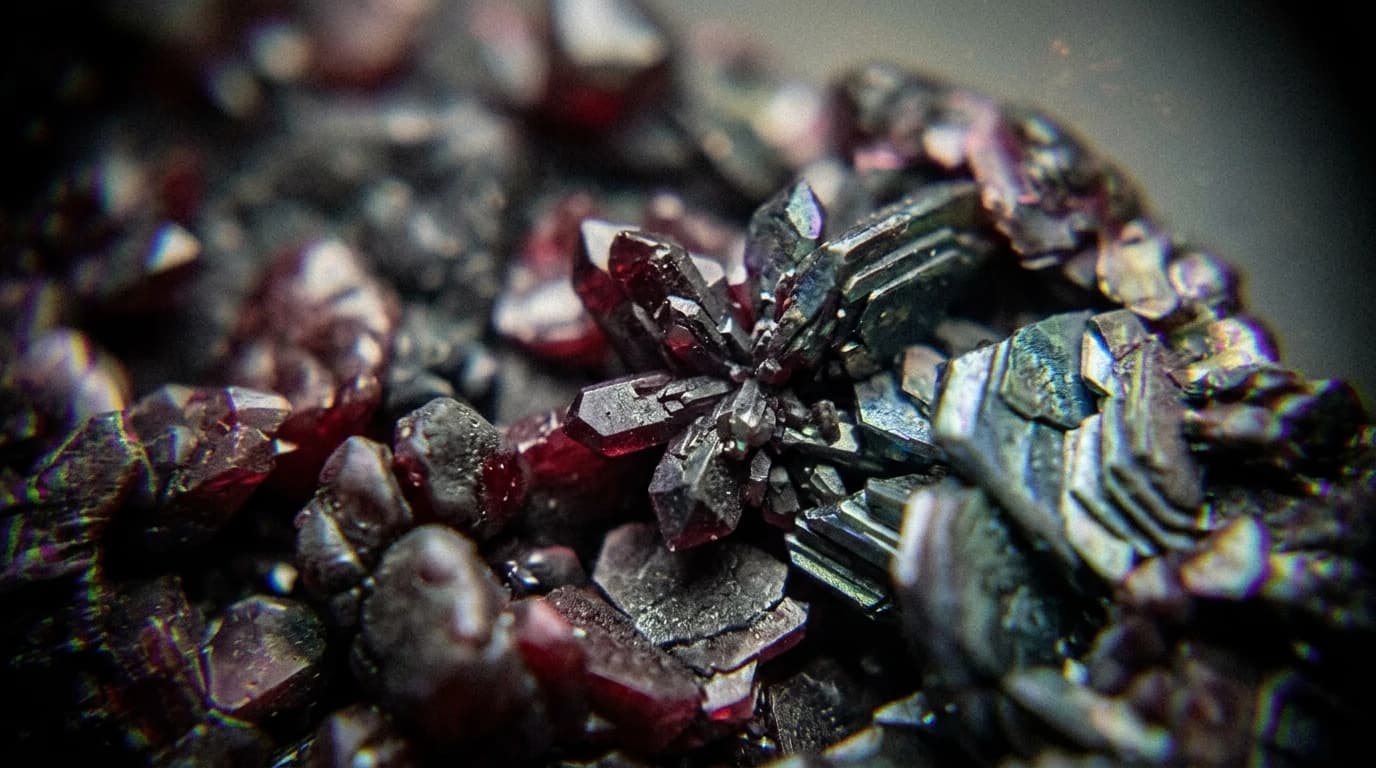
Imagine Lego bricks that can melt and reform their connections while remaining solid, like a shape-shifting toy that adapts to how hard you squeeze it. For a long time, scientists could only build these self-healing, adaptive materials using soft, organic plastics.
This trick relies on dynamic covalent chemistry—a process where chemical bonds break and reform on demand. While common in carbon-based polymers, keeping this behaviour active inside rigid, inorganic crystals was previously thought to be nearly impossible.
Adapting with Dynamic Covalent Chemistry
Now, researchers have measured this exact phenomenon in elemental selenium. By applying mechanical pressure or shining a light, they drove selenium-selenium bonds to split and reconnect, altering the crystal's structure without melting it.
When they embedded the selenium into a crosslinked polymer matrix, they observed that the crystals branched out differently depending on the stiffness of the surrounding material. The matrix exerted real-time mechanical signals that the crystals actively responded to.
This suggests we could design adaptive electronics that change their electrical properties in response to physical stress or light. The researchers measured a direct change in the composite's dielectric behaviour, which could lead to:
- Sensors that self-repair under physical stress.
- Optoelectronic devices that reprogramme their circuitry in real-time.
- Flexible electronics that adapt dynamically to bodily movements.