How direct repair could change battery recycling
A new review explores how direct repair could fix spent lithium-ion cells instead of melting them down, though major hurdles still stand in the way.
Reading level
The full story with proper science words explained.
The problem with melting old cells
When a lithium-ion cell dies, what happens next? Standard recycling uses high-heat (pyrometallurgical) or chemical-dissolving (hydrometallurgical) methods. These processes break complex parts down into basic metals and salts. They work, but they use lots of energy and harsh liquids. Worse, they destroy the carefully built structures inside.
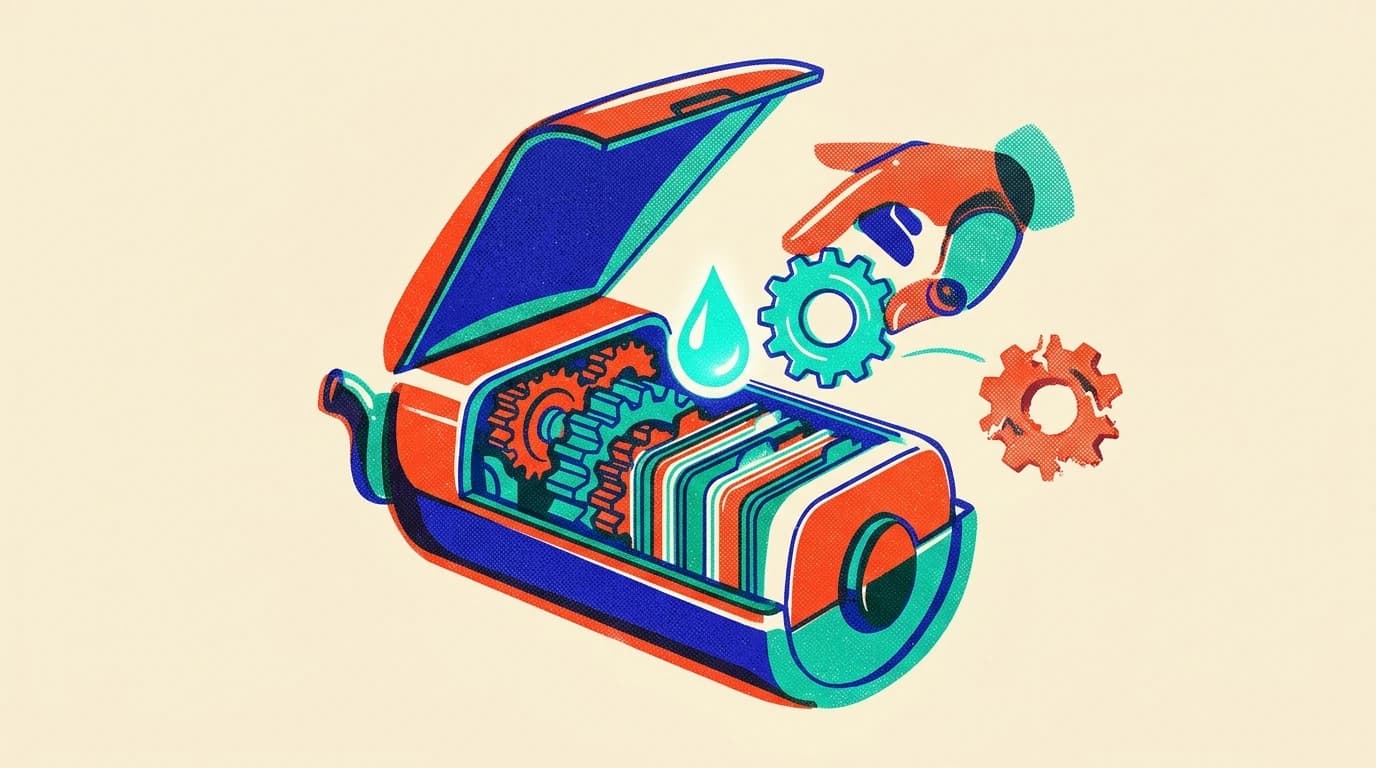
A new review looks at a smarter idea: direct repair. Instead of destroying spent cells, it aims to fix them.
Fixing the engine, not melting it
Standard recycling is like melting a broken car engine into scrap metal to cast a new one. Direct repair is like swapping out only the worn parts and fluids so the old engine runs again. Of course, a cell is not a car engine. Its damage happens at the atomic level, so you cannot just bolt on a spare part.
The review lists seven ways a cell fails. These range from losing lithium to decaying cathodes and corroded current collectors. Because cells use varied recipes, the fix must match the chemistry.
The authors focus on two common cathode types: layered oxides (crystals arranged in sheets) and LiFePO4 (lithium iron phosphate). One method, called relithiation, adds lost lithium back into the crystal. Another uses deep eutectic solvents, which are special liquids that work at low heat. Even graphite anodes and liquid electrolytes can be saved.
Why it matters for the future
As the pile of spent cells grows, we need cleaner ways to handle them. Direct repair keeps the value of the parts intact. It could cut energy use, lower harm to nature, and even turn old parts into better ones.
What we still don't know
This review only sums up past studies. It does not share new lab numbers or cost figures. Several real-world hurdles still block its use. Spent cells arrive in messy, mixed batches. We still lack good ways to sort and test them without taking them apart. Setting standard steps, proving long-term wear, and checking the full impact from start to finish all remain unsolved.
Science words
- pyrometallurgical
- using high-temperature heat to extract metals from spent batteries
- hydrometallurgical
- using chemical solutions and liquids to dissolve and recover metals from spent batteries
- layered oxides
- a common type of lithium-ion battery cathode material with a layered crystal structure
- LiFePO4
- lithium iron phosphate, a cathode material used in many lithium-ion batteries
- relithiation
- adding lost lithium back into a degraded battery electrode to restore its function
- deep eutectic solvents
- special liquid mixtures that can dissolve or treat materials at relatively low temperatures
Check it yourself
This story is based on a real research paper in Small by Wu, Xu, Li et al. We write with AI help and check it against the paper, but the original is the final word.