How deep sleep reshapes your working memory overnight
During deep sleep, rhythmic brain waves reorganise mental circuits so sensory areas handle more information with less effort from control regions.
Reading level
The full story with proper science words explained.
The night shift in your head
Why do mental tasks often feel easier after a solid night of rest? To find out, a team studied sleep and working memory. Working memory acts as your brain's temporary mental scratchpad. People performed a test inside an fMRI scanner both before and after a full night of rest.
Delegating the mental workload
During the first 2.5 hours of sleep, sensors tracked slow oscillations. These are slow, rhythmic brain waves typical of deep, non-rapid eye movement rest. Next morning, the brain scans showed a clear shift. Taking in and holding facts overnight led to less work in the dorsal precuneus. This is an upper parietal brain area that guides focus. At the same time, recalling those facts used less frontal brain power.
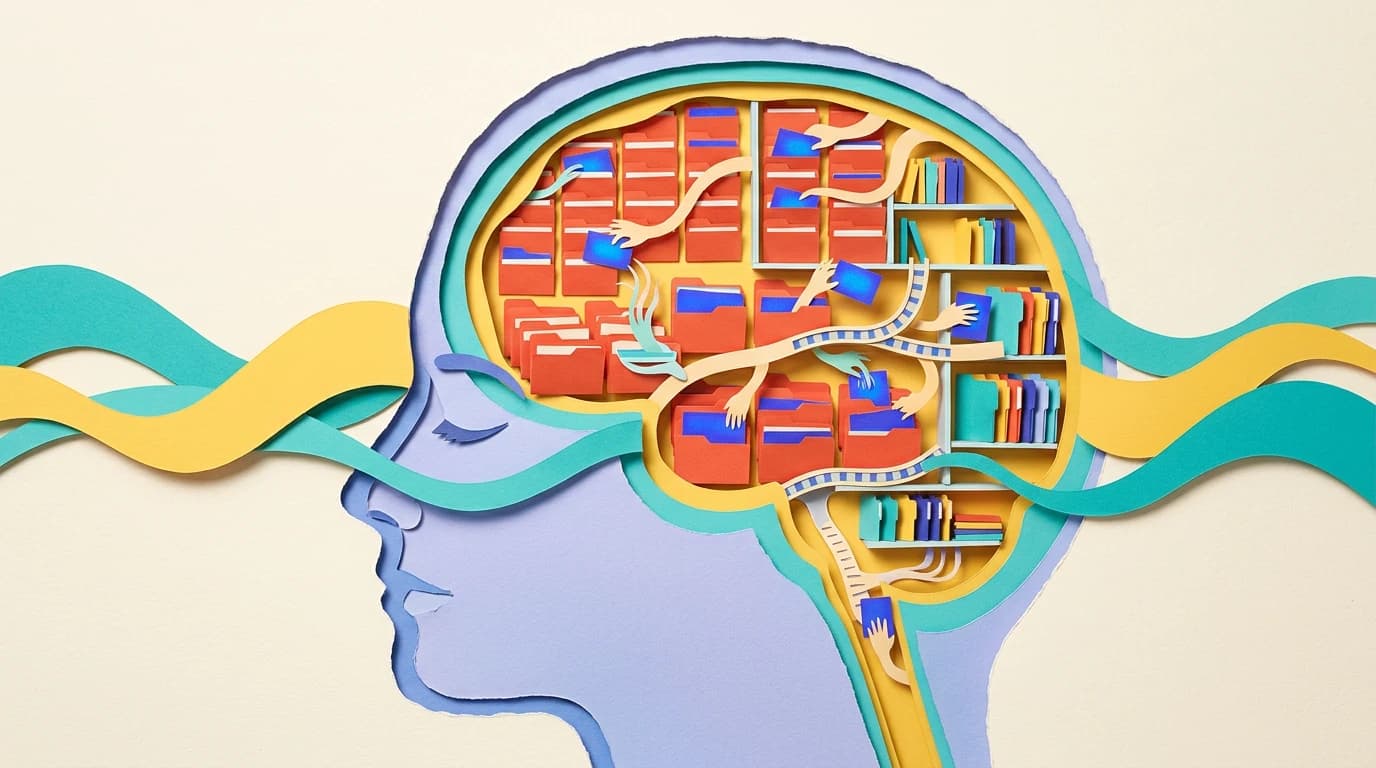
The brain needed less top-down control, which is the mental effort directed by higher regions to steer focus. Instead, it showed stronger item-specific reinstatement. This means sensory regions replayed the exact neural firing seen when a person first viewed an item. Think of a busy manager delegating tasks to a skilled clerk. The local desk handles the fine details, freeing the boss from micromanaging every step.
Waves that rebuild networks
The power of those slow oscillations really mattered. Stronger slow-wave bursts in the premotor cortex and ventromedial prefrontal cortex linked to larger overnight drops in task work. Scans showed a matching drop in the ventral attention network, which spots noticeable sights. In short, sleep waves forecast how much the brain reorganised its circuits.
What we still do not know
Even so, big questions remain. Scans clearly showed rewired circuits, but the data does not report if test scores actually went up. Furthermore, tools only tracked the first 2.5 hours of slumber. Later sleep cycles might bring extra changes, and scientists still do not know how long-term training interacts with this nightly rewiring.
Science words
- working memory
- The temporary storage and manipulation of information in the mind.
- slow oscillations
- Slow, rhythmic brain waves characteristic of deep, non-rapid eye movement sleep.
- dorsal precuneus
- An upper region of the parietal cortex involved in attention and memory processing.
- top-down control
- Brain processes directed by higher-order regions to guide focus and behaviour.
- item-specific reinstatement
- The precise reactivation of sensory brain patterns that occurred when an item was first perceived.
- ventral attention network
- A network of brain regions involved in detecting noticeable or unattended stimuli.
Check it yourself
This story is based on a real research paper in Journal of Cognitive Neuroscience by Zhang, Chen, Mednick et al. We write with AI help and check it against the paper, but the original is the final word.