How Crystal Conformations Dictate Colour in Room-temperature phosphorescent materials
Source PublicationChemical Communications
Primary Authorsd'Agostino, Vitale, Kapadiya et al.
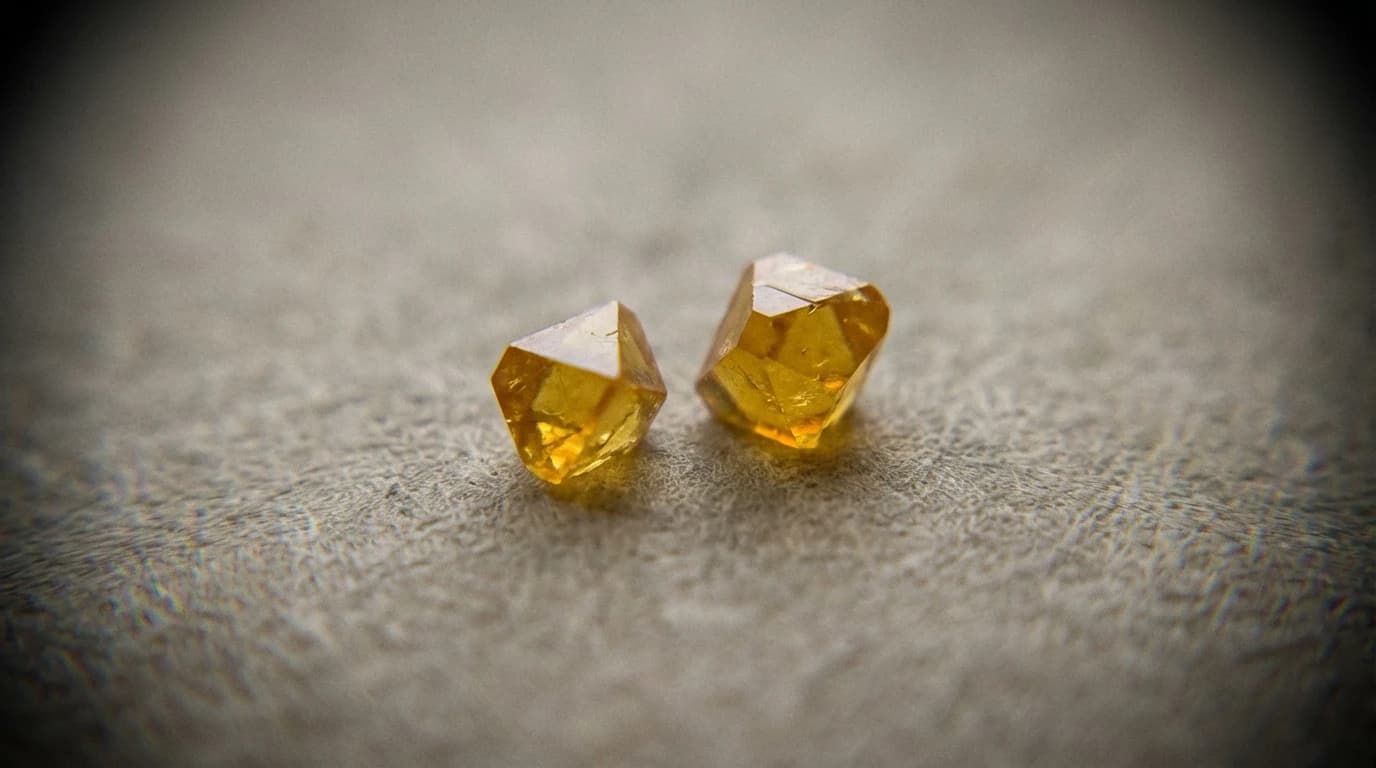
The Hook: The Geometry of Room-temperature phosphorescent materials
Working in a controlled laboratory setting, chemists have successfully isolated two distinct crystal forms of a persulfurated benzene compound, proving that molecular geometry directly dictates the colour of light it emits. This structural control highlights the efficiency of Room-temperature phosphorescent materials, whose emission properties are shown to depend strongly on solid-state organisation.
These results were observed under controlled laboratory conditions, so real-world performance may differ.
The Context
Phosphorescence occurs when a molecule absorbs light and releases it slowly over time. In organic molecules, achieving this efficiently at ambient temperatures requires precise structural conditions.
Persulfurated benzenes are already known as efficient room-temperature phosphorescent materials. However, the exact mechanics of how their solid-state organisation dictates specific emission profiles have required deeper investigation.
This study examines how these molecules self-organise into crystal lattices. The researchers focused on how inherent crystal structures and intermolecular interactions govern the nature of the emissive triplet state.
The Discovery
The research team synthesised a specific persulfurated benzene derivative, known as A6-iPr. They successfully crystallised it into two distinct polymorphs, labelled I and II.
These two crystal forms exhibited entirely distinct room-temperature phosphorescent colours. Quantum chemical calculations confirmed that the variation stems from different molecular conformations within the crystal lattice.
The calculations established specific factors governing this behaviour:
- Molecular conformation directly alters the nature of the emissive triplet state.
- Intermolecular interactions within the crystal lattice further govern these emission properties.
While the quantum chemical calculations provide a clear mechanism for the observed colours, the findings are currently limited to the specific A6-iPr polymorphs studied at the bench scale. Further research is required to determine if these exact conformational rules apply universally across all persulfurated benzenes.
The Impact
This research suggests that chemists could potentially design organic phosphors with highly specific emission profiles simply by altering their crystallisation conditions. It highlights the importance of optimising the physical packing and conformation of existing molecules, rather than solely relying on new chemical formulas.
However, the practical application of this structural control remains to be seen. For now, the study provides valuable computational and experimental evidence for understanding how solid-state geometry and intermolecular interactions control light emission in purely organic materials.