How cotton drought tolerance was linked to five candidate genes
By tracking an experimental cotton cross with three genetic screening methods, scientists flagged five candidate genes tied to surviving severe dry spells.
Reading level
The full story with proper science words explained.
A tale of two parents
How can two cotton plants of the same species react so differently to dying of thirst? To find out, a team crossed a weak plant with a tough relative. This produced an F2 population, meaning a second generation of plants with vast gaps in their ability to cope with dry soil.
Filtering the city blocks
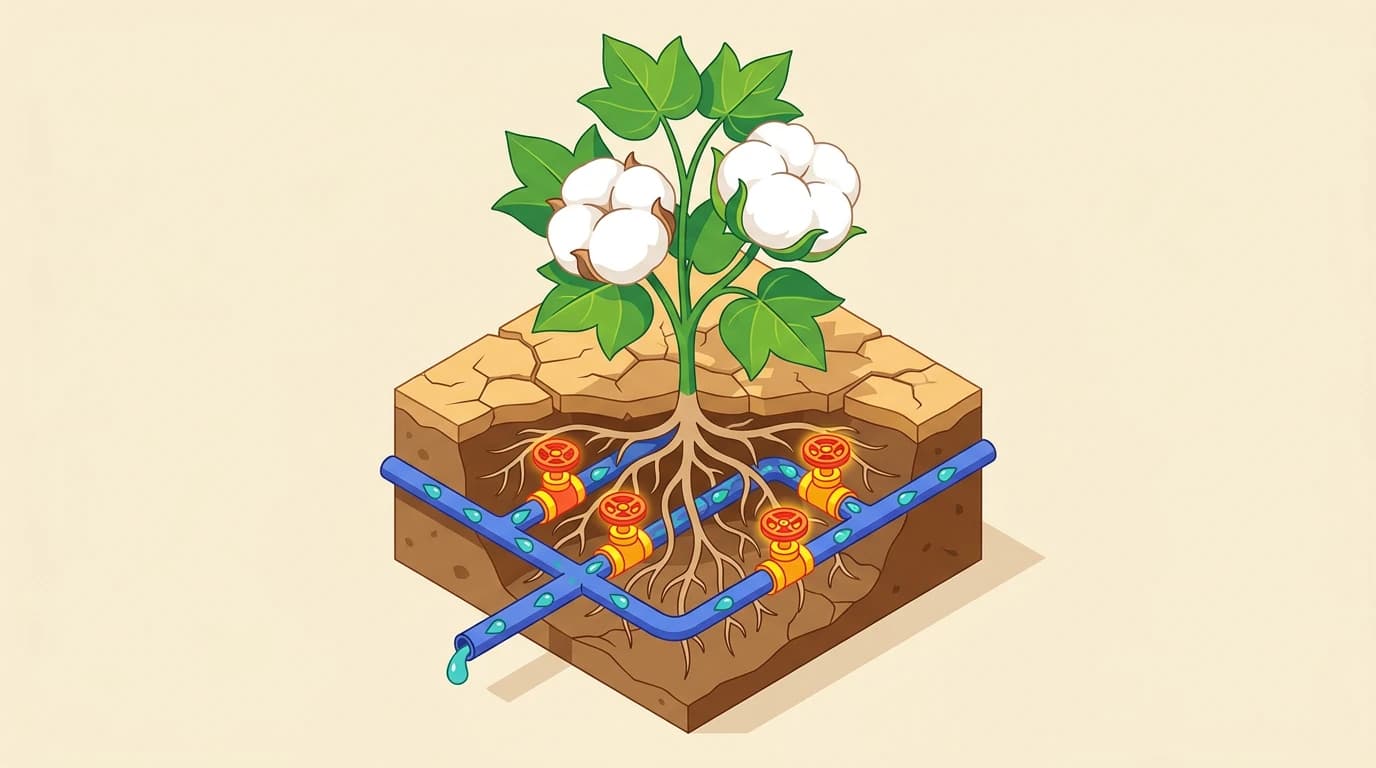
Locating the right DNA is like hunting for a leak in a large water grid. The team first ran BSA-seq, a tool that pools DNA from plants with extreme traits. This flagged five suspect zones across the cotton genome, known as QTL regions. These zones sat on chromosomes A02, A07, A09, D03, and D04. But finding five broad zones still leaves thousands of possible spots to check.
Next, the team checked which parts reacted to abiotic stress, which means harm from non-living causes like drought. They used RNA-seq, a tool that counts active gene messages. They saw 5,844 shifting genes in the weak line and 6,586 in the tough line. Then they turned to proteomics, which studies the full set of working cell proteins. This test found 1,352 changing proteins in the weak parent and 3,440 in the tough parent.
Five candidate survivors
The team combined both layers of data inside the five suspect chromosome zones. Only five candidate genes showed matching shifts in both gene messages and finished proteins. These were GH_D04G0687, GH_A02G0703, GH_A07G1211, GH_A07G1202, and GH_D04G0702. While the water pipe idea helps picture the search, living cells are far more complex, with genes switching on and off in tangled loops.
What we still do not know
These five units are promising candidate genes, not proven cause genes. The study tested one cross between two specific parent lines. No one yet knows how these genes work out in farm fields or in other cotton lines. Their exact biological actions remain unconfirmed until lab tests test each gene on its own.
Science words
- F2 population
- The second generation of offspring bred from hybrid parents, showing a wide mix of inherited traits.
- BSA-seq
- A sequencing method that pools DNA from plants with extreme physical traits to quickly locate linked areas on chromosomes.
- QTL
- Quantitative trait locus, a section of DNA tied to a measurable physical trait like drought survival.
- Abiotic stress
- Harm to an organism caused by non-living factors, such as drought, intense heat, or salty soil.
- RNA-seq
- A lab technique that reads and counts active gene messages across the whole genome.
- Proteomics
- The large-scale study of the full set of proteins produced by an organism.
Check it yourself
This story is based on a real research paper in Biology by Tian, Zhao, Dong et al. We write with AI help and check it against the paper, but the original is the final word.