How Core-Bouncing Waves from the Tohoku-Oki Earthquake Redefine Future Seismic Careers
Source PublicationScience
Primary AuthorsPark, Kanamori, Rivera
"Imagine shouting into a deep canyon and having the echo return with enough force to knock over a domino standing on the edge."
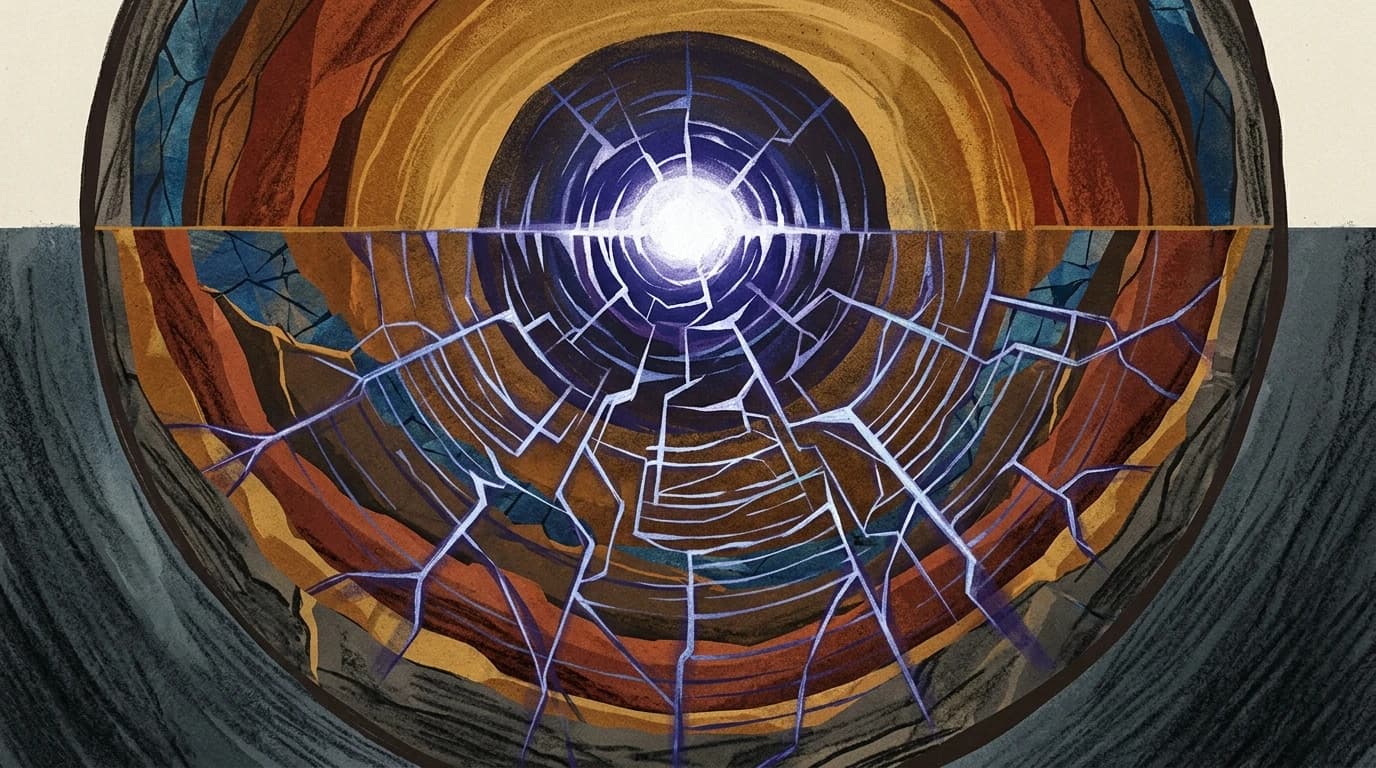
Imagine living in a world where coastal cities receive rapid, automated alerts about secondary earthquakes triggered by waves bouncing deep inside the planet, giving communities critical minutes to react. This future relies on understanding how energy travels through the deepest layers of our Earth.
During the devastating 2011 Tohoku-Oki earthquake, seismic waves did not just travel outward across the surface. Some plunged deep into the Earth, bounced off the liquid outer core, and returned to the surface roughly 15 to 20 minutes later.
The Core Echo of the Tohoku-Oki Earthquake
Researchers analysing Global Navigation Satellite System (GNSS) data detected an unexpected eastward displacement of five to six millimetres across Japan. This movement coincided with the arrival of the ScS shear wave, which had travelled to the Earth's core and back. While this observation was documented during an exceptionally powerful magnitude 9.0 event, the data suggests this returning wave triggered immediate, secondary slips along multiplate boundaries.
Predicting Deep Seismic Hazards
This feedback loop represents a previously unrecognised seismic hazard. Returning core waves may reactivate mainshock zones and adjacent faults, creating rapid, cascading risks.
To map these deep-earth echoes, the world needs a new generation of earth scientists. By the time you graduate, the geophysics and hazard-assessment fields will need professionals who can:
- Analyse complex global geodetic datasets to track subtle ground movements.
- Assess multiplate interface risks to help communities prepare for cascading seismic events.
- Integrate deep-earth wave mechanics into regional hazard-response frameworks.
Learning physics, geophysics, or data science today will prepare you to contribute to the next generation of hazard monitoring.