How computers learn to spot actions you only picture in your mind
A smart neural network uses multi-lens filtering and focus tools to read imagined body actions from scalp brainwaves more reliably than older systems.
Reading level
The full story with proper science words explained.
Reading actions from a quiet brain
Think about waving a hand without twitching a single muscle. Even when your body stays still, your brain makes tiny voltage ripples called motor imagery EEG signals. Engineers want to read these signals to guide a brain-computer interface. This setup connects neural impulses straight to prosthetic limbs or screens. The hitch is that human brainwaves are messy. They drift quickly and change from one second to the next.
When a person pictures a limb in action, rhythmic brainwaves dip on one side of the head and rise on the other. But scalp sensors pick up lots of background static alongside these shifts. To fix this, a modelling study tested a deep neural network named MSTCANet on 32 healthy people across three benchmark sets.
Filtering time and tuning into channels
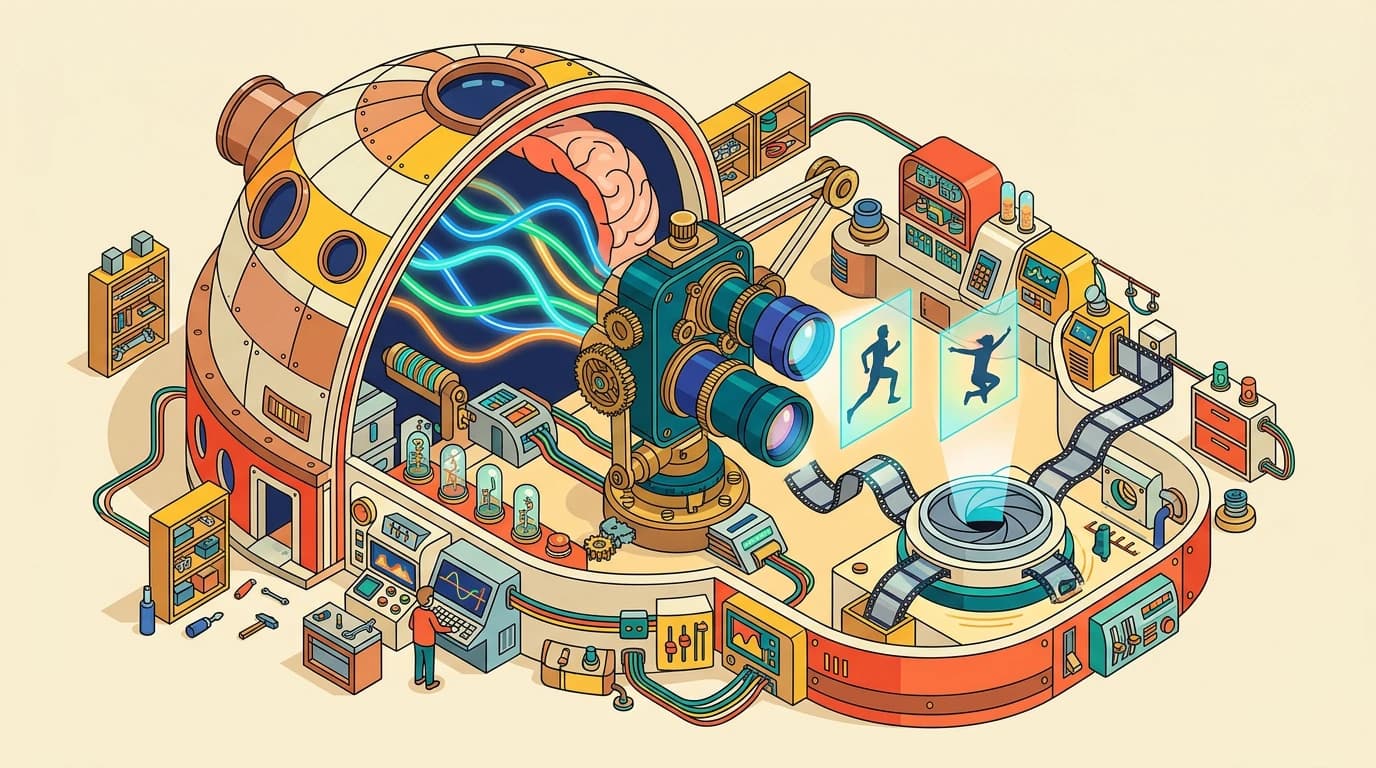
The system works in several clear steps. First, the data enters four parallel paths that act like cameras with different lenses. Each path looks at the brainwaves through a different time frame, from brief blips to broader waves. At the same time, spatial filters track how the sensors on the scalp relate to one another.
Next, each path feeds its findings into a Transformer block. This block uses self-attention, a computing step that measures how much past and future moments in a stream depend on one another. It links quick dips to later rises across the full timeline. After that, the system combines the streams and runs a module called ECANet. This channel focus tool highlights which sensor streams carry the sharpest clues and turns down weaker ones. Finally, a output layer names the guessed action.
Higher scores across tricky tests
The network tackled tasks with two and four imagined movements. It ran tests across distinct sessions and across completely new people. On Dataset 1, it scored an average correctness rate of 80.21%, beating the rival tool FBCNet by 2.59%. On Dataset 2, it achieved 90.19%, and on Dataset 3, it reached 97.32%. Both marks beat the strong baseline tool MSFBCNN.
Tests on stripped-down versions proved why this design works. Dropping either the time focus step or the channel focus tool dropped the overall score. The team also sliced and rebuilt training samples to generate more examples. This boost helped the model learn better on two benchmarks.
What remains to be solved
The model is not without trade-offs. It carries the highest weight count, took 2,526 seconds to train on one set, and ran 627.174 K computing operations. That makes it heavier than simpler tools.
Furthermore, the data boost trick only chopped up time. It failed to add good variety for everyone and actually harmed scores for 4 out of 14 people in Dataset 3 by boosting background noise. We do not know yet if slicing data across wave pitches as well as time might stop this drop. We also do not know how well the model works during live, instant control with real users outside set test files.
Science words
- Motor imagery EEG
- Voltage recordings from the scalp taken while a person mentally rehearses a physical action without moving.
- Brain-computer interface
- A system that translates electrical brain signals directly into control signals for external machines.
- Self-attention
- A computing step that calculates how much different points in a sequence relate to each other.
- ECANet
- A lightweight neural network tool that captures links between data streams without shrinking dimensions.
Check it yourself
This story is based on a real research paper in PLOS One by Zhu, Shi, Wu et al. We write with AI help and check it against the paper, but the original is the final word.