How Chirality Induced Spin Selectivity Could Power Next-Gen Bioelectronics
Source PublicationopenRxiv
Primary AuthorsSukenik, Harris, Yadav et al.
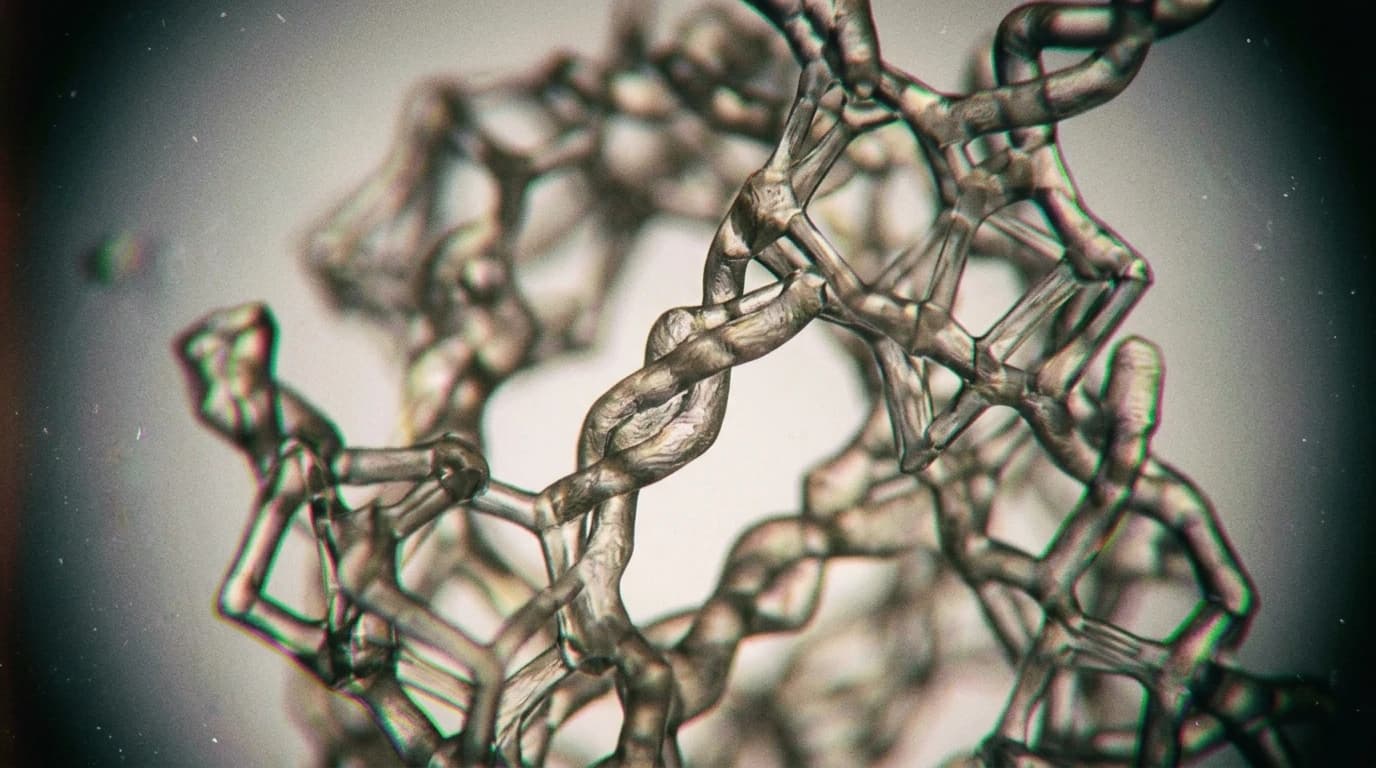
Bioelectronic interfaces often face efficiency challenges because controlling electron flow at the microscopic scale remains highly complex. A newly observed quantum phenomenon in living systems, known as chirality induced spin selectivity, offers a biological pathway to optimise these electronic pathways.
These results were observed under controlled laboratory conditions, so real-world performance may differ.
For years, physicists observed that twisted, chiral molecules filter electron spins, allowing only one spin direction to pass. However, whether living organisms actually use this effect to power their metabolism remained unproven until now.
In laboratory tests on Geobacter sulfurreducens biofilms, researchers cultivated the bacteria on magnetised electrodes. They measured a significant asymmetry in respiratory current when switching between opposite substrate spin states, and observed that in situ magnetisation reversal directly altered respiratory flux. This measurement demonstrates that spin selectivity influences extracellular respiration in vivo, suggesting that biology actively exploits quantum mechanics to optimise energy transport.
The Future of Chirality Induced Spin Selectivity
Over the next decade, this discovery could reshape green energy harvesting and bioelectronic interfaces. By integrating living bacteria with magnetic materials, engineers may develop highly efficient bio-hybrid systems that exploit the spin degree of freedom.
Downstream applications may include:
- Advanced bioelectronic interfaces that leverage spin-polarised electron pathways.
- More efficient microbial energy-harvesting systems that optimise extracellular electron transfer.
- Next-generation biosensors designed around quantum spin selectivity.
This interface of quantum mechanics and microbiology suggests a future where green energy harvesting is guided by spin control.