Chemistry & Material Science20 March 2026
How Chiral Metal Halide Perovskites Could Fix Energy-Hungry Displays
Source PublicationAdvanced Materials
Primary AuthorsGaurav, Kim, Fiuza‐Maneiro et al.
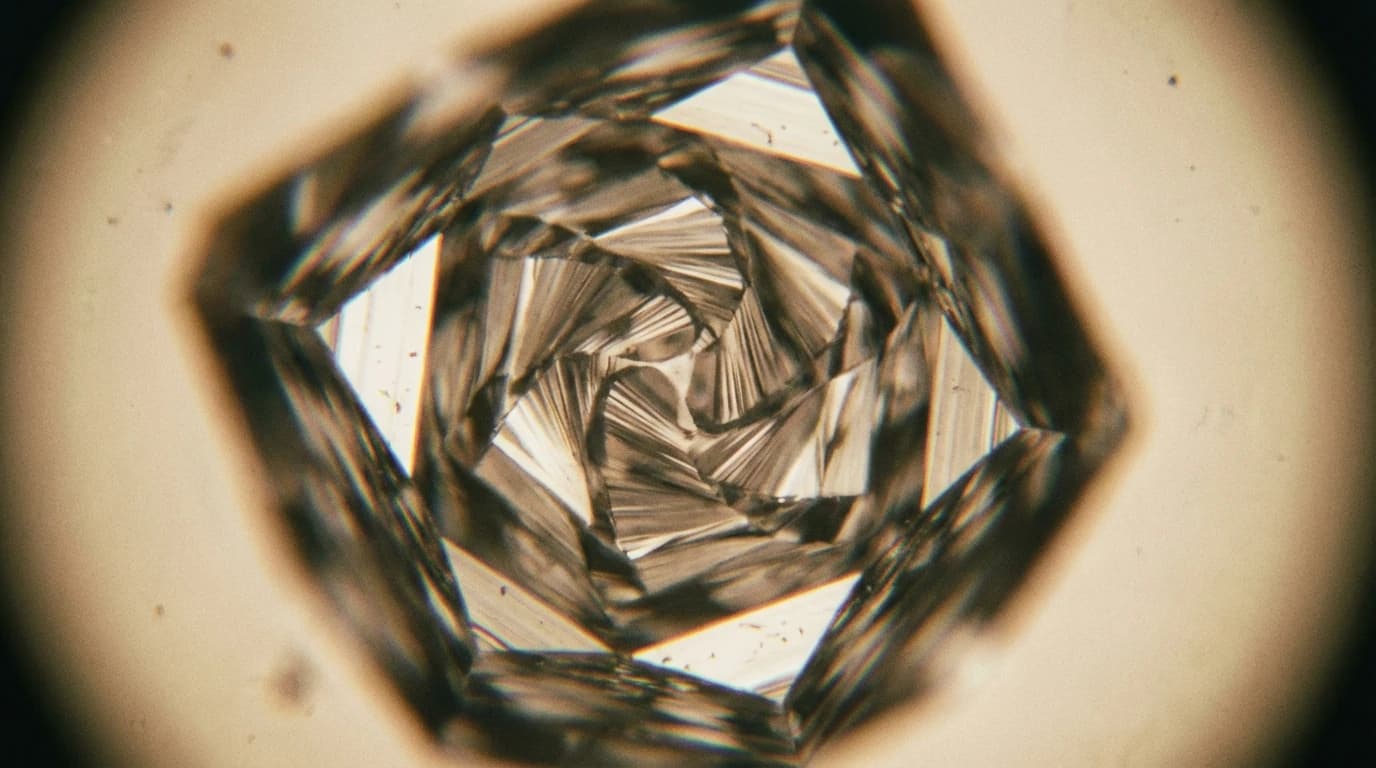
These results were observed under controlled laboratory conditions, so real-world performance may differ.
The Problem with Modern Screens
To understand why this matters, look at your smartphone or laptop screen. Generating specific visual outputs requires precise control over light waves. Currently, we achieve this by shining a bright light through blocking filters. It is an incredibly inefficient system. Generating circularly polarised light directly at the source presents a low-power alternative. By removing external optics, engineers can eliminate the associated energy losses entirely.How Chiral Metal Halide Perovskites Work
Researchers have identified a class of solution-processable semiconductors that natively couple light polarisation and electron spin. A recent scientific perspective examined how chiral metal halide perovskites perform this exact function. The researchers reviewed laboratory measurements showing that these colloidal nanocrystals emit circularly polarised light with high efficiency. While currently demonstrated primarily at the bench scale, the data indicates that their strong spin-orbit coupling allows for spin-selective charge transport. This means scientists can observe both the manipulation of electron spin and its effect on light emission within a single material layer. While current applications are limited by low polarisation anisotropy, the study highlights specific intrinsic and extrinsic chemical routes to improve this metric.The Next Decade of Display Technology
Over the next five to ten years, the development of energy-efficient photonic-electronic platforms will become increasingly critical. Because these materials are solution-processable, they offer a compelling blueprint for scalable manufacturing. If engineers can perfect the circularly polarised electroluminescence of these materials, the downstream effects will be substantial. The research suggests we could eventually manufacture filter-free spin-LEDs capable of room-temperature spin control. The potential advancements over the next decade include:- Next-generation optoelectronic displays that operate with drastically reduced power consumption.
- Filter-free spin-LEDs that eliminate the need for external waveplates and polarisers.
- Advanced photonic-electronic platforms utilising room-temperature spin control.