How Cheap Ammonia Decomposition Catalysts Could Power Your Future Ride
Source PublicationThe Chemical Record
Primary AuthorsFauzan, Ali, Siddiqui et al.
"Ammonia is like a secure, heavy-duty digital safe used to transport a fragile video game item (hydrogen). The catalyst is the lockpick needed to safely retrieve the item once it arrives at your base."
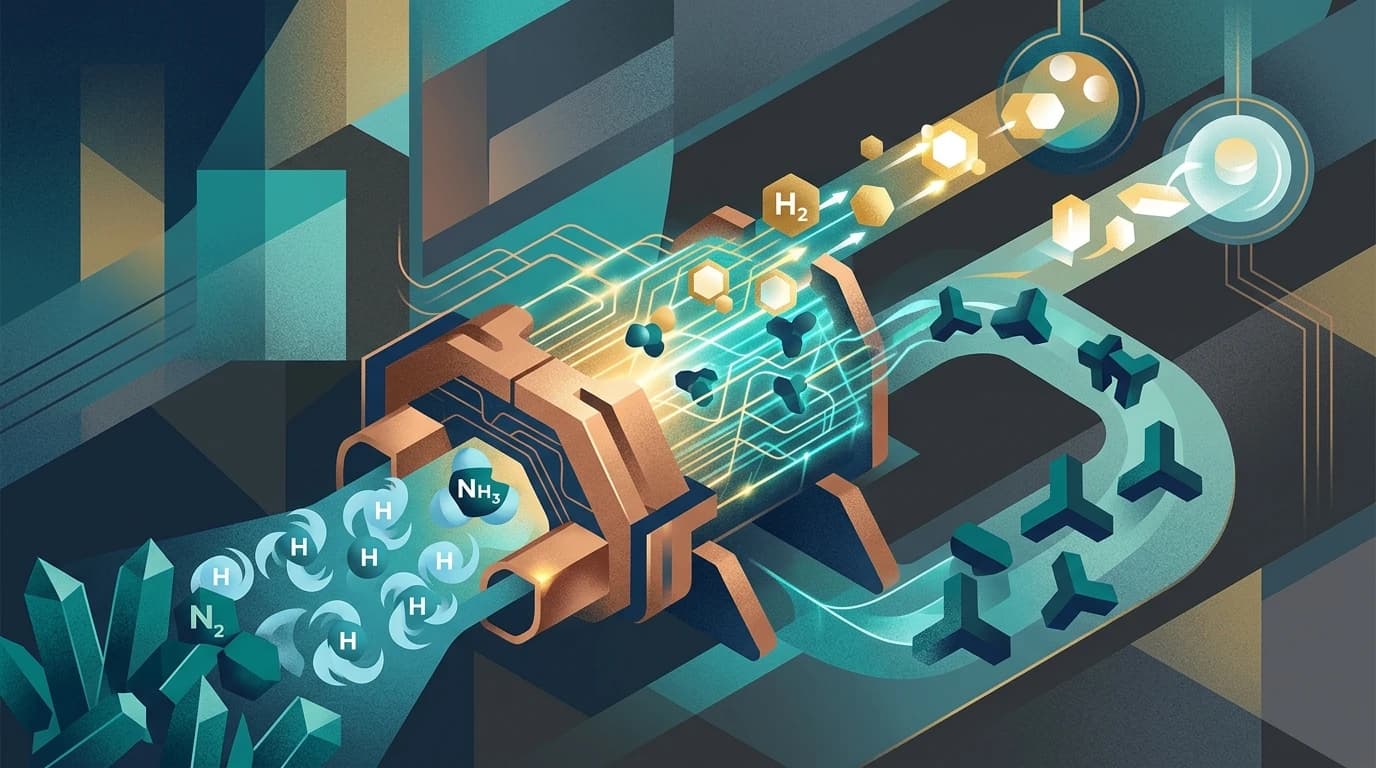
Imagine trying to carry water across a school yard in a sieve. That is what transporting pure hydrogen gas is like—it is incredibly leaky and difficult to store safely. To solve this, scientists pack hydrogen into ammonia (NH3), which is far easier to liquefy and organise.
But there is a catch. Once the ammonia arrives, you must break it apart to retrieve the clean hydrogen. This reaction requires high heat and specialised helper molecules called ammonia decomposition catalysts to speed up the process.
Evaluating Ammonia Decomposition Catalysts
A recent review analysed the efficiency and cost of different metal-based systems:
- Ruthenium (Ru): The premium option that works at lower temperatures, but is far too expensive for mass adoption.
- Nickel (Ni): When combined with aluminium oxide, this metal offers a practical, budget-friendly alternative.
- Cobalt (Co): When paired with perovskite supports, it shows surprising potential despite being naturally less active.
This analysis suggests that refining these metal combinations may lower the cost of green hydrogen. Developing cheaper, stable catalysts could allow us to distribute carbon-free fuel globally using existing transport networks.