How cell fuel alters heart disease metabolism
A review of clinical and experimental research outlines how cellular fuel supply influences heart health, pinpointing metabolic pathways that could guide future therapies.
Reading level
The full story with proper science words explained.
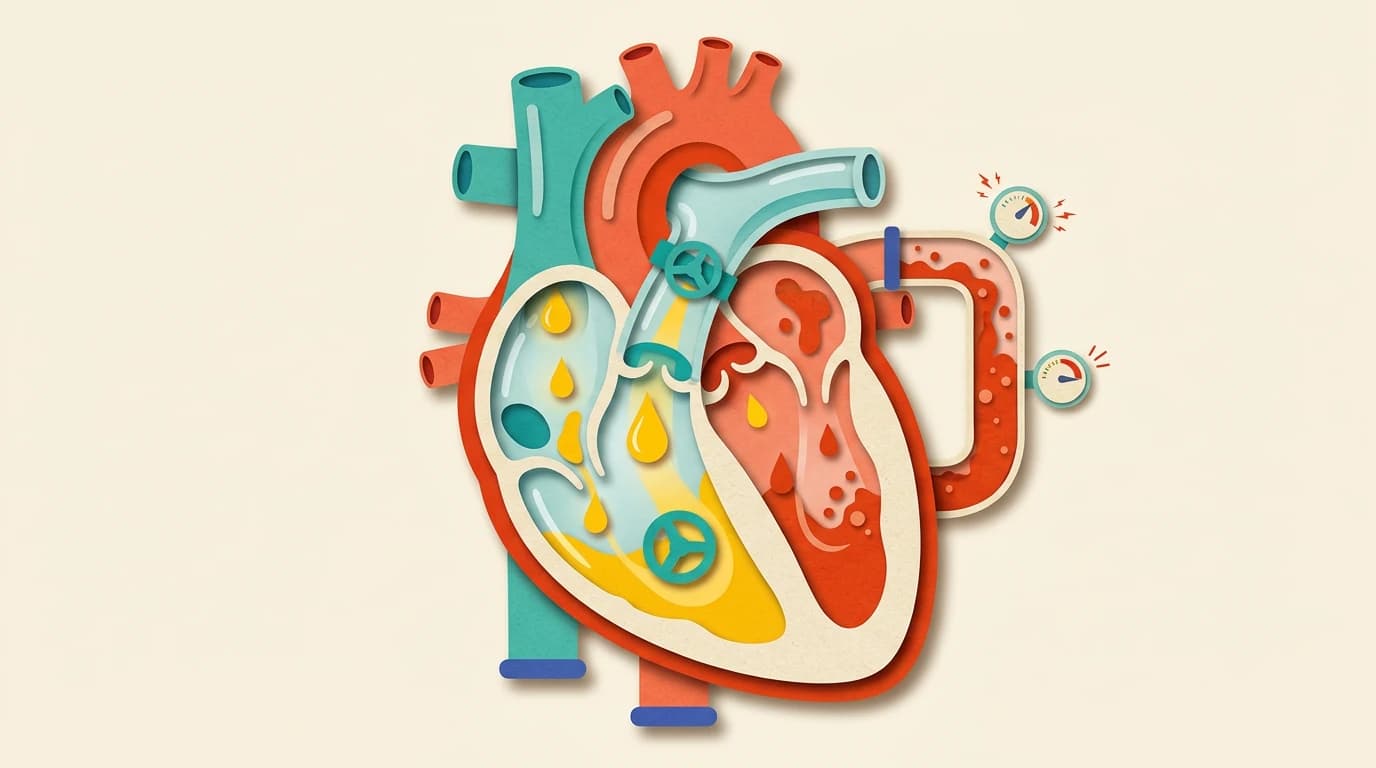
Faulty fuel in the body
Cardiovascular disease remains the leading cause of death worldwide. Keeping blood flowing requires steady power, so heart disease metabolism is linked to how cells handle fuel.
Think of your blood vessels as a busy plumbing network. If sticky waste builds up, the fluid corrodes the pipes and triggers alarms. In a similar way, when human cells mismanage fats and sugars, they drive conditions like atherosclerosis and heart failure.
The hidden chemical routes
Doctors know that poor handling of sugars and lipids, or blood fats, harms the heart. Yet recent reviews show that deeper pathways also drive disease. Cells must also break down amino acids and make power inside mitochondria. When these steps fail, they disrupt redox signalling, which is cell communication via electron-swapping molecules. They also alter immunometabolic pathways, where immune defences and cell fuel networks interact.
These cellular errors cause real physical harm. First, they trigger oxidative stress and vessel swelling. Next, they impair endothelial function, which is the normal working behaviour of the inner lining of blood vessels. Over time, this damage leads to cardiac remodelling, causing the heart muscle to change shape, stretch, or stiffen abnormally.
Finding targets with new tools
To map these subtle shifts, teams turn to metabolomics, the large-scale tracking of small molecules made by cells. Combining these scans with artificial intelligence and organ-on-chip models—tiny micro-engineered devices holding living tissue—helps find drug targets. These tools let specialists test whether fixing fuel pathways can protect blood vessels without putting patients at risk.
What we still do not know
Big hurdles remain before these tools reach the clinic. Many targets are still early concepts tested only in cell dishes. Altering how the body burns fuel carries clear safety risks. In addition, current lab tests cannot match the complex biology of human organs. Until long-term studies follow patients over time, we will not know which ideas will truly succeed in hospitals.
Science words
- Redox signalling
- Cellular communication driven by chemical reactions involving the transfer of electrons and free radicals.
- Immunometabolic pathways
- Biological processes where immune cell responses and cellular energy metabolism interact and regulate each other.
- Endothelial function
- The normal working behaviour of the inner cellular lining of blood vessels.
- Cardiac remodelling
- Changes in the heart's size, shape, and function resulting from injury or disease.
- Metabolomics
- The large-scale study of small molecules and chemical products produced by cellular processes.
- Organ-on-chip
- Micro-engineered devices containing living cells that mimic the physiological structure and function of human organs.
Check it yourself
This story is based on a real research paper in Drug Design, Development and Therapy by Kansakar, Hyman, Volpe et al. We write with AI help and check it against the paper, but the original is the final word.