How cancer drug resistance creates new weaknesses doctors can target
When cancer cells adapt to survive therapies, their biological workarounds create distinct new dependencies. Researchers have mapped how these survival pathways can expose tumours to targeted follow-up treatments.
Reading level
The full story with proper science words explained.
When a detour becomes a trap
What happens when a tumour outsmarts the medicine designed to kill it? Tumours often dodge medicines by switching their survival tactics. Yet this escape comes at a cost.
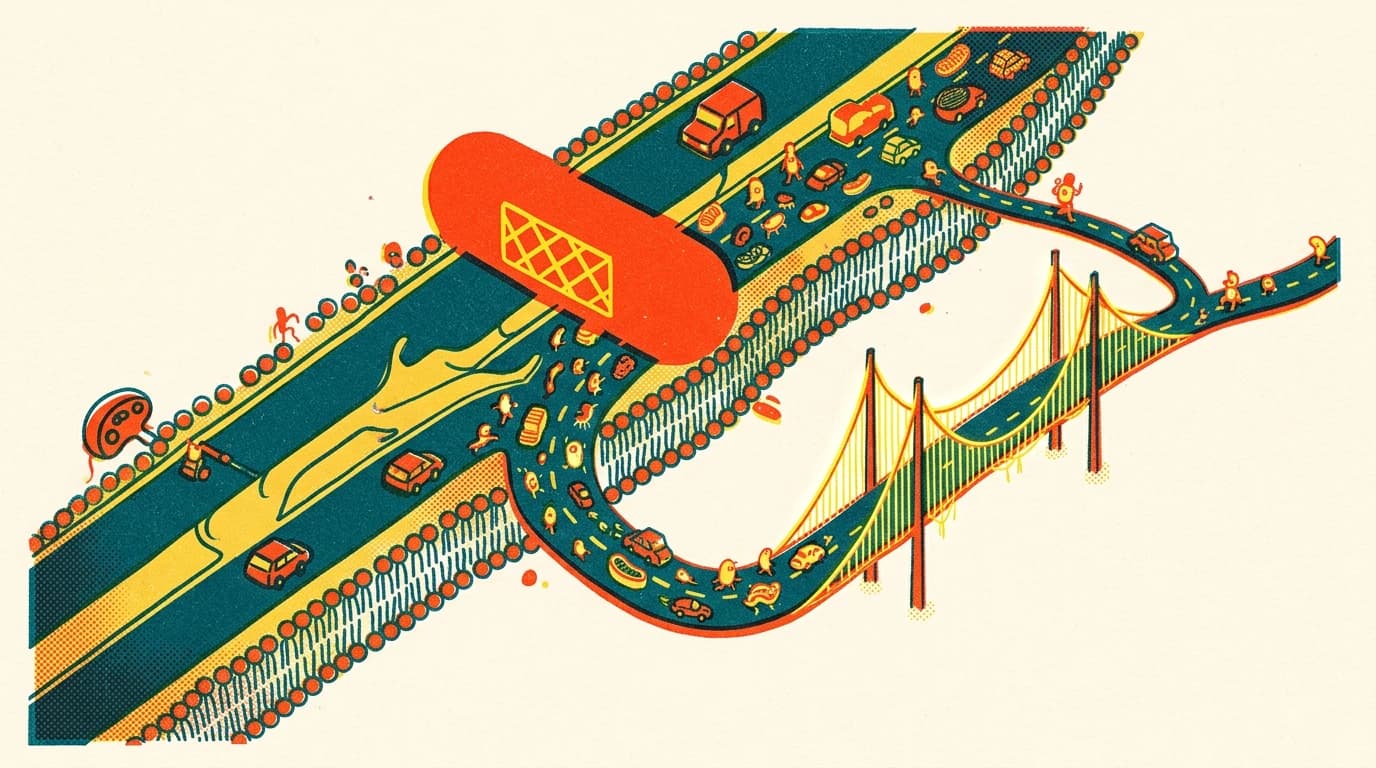
Think of it like heavy traffic rerouting around a shut motorway onto a single narrow country lane. The detour keeps the cars moving. But that single lane is now an easy bottleneck. If that back road is blocked too, the entire journey stops.
Cancer drug resistance works in a very similar way. When medicines shut down a tumour's favourite growth pathway, surviving cells rewire their internal systems. This shift makes them deeply rely on backup support routes, creating fresh targets for treatment.
Uncovering tumours' backup wiring
A systematic review gathered data across lab tests and human trials in solid and blood cancers. Instead of seeing resistance as an impossible dead end, scientists mapped the secondary weaknesses that appear after first treatments fail.
The OReO trial tested patients with ovarian cancer whose disease had returned. Giving these patients a second round of the drug olaparib gave a modest delay before tumours grew again. This delay happened whether patients carried an inherited fault in the BRCA gene or not. The trial showed that drug benefit cannot be assumed from gene labels alone.
Tissue type also shapes these emergency detours. Blocking a mutated gene called BRAF works well in skin cancer. But in bowel cancer with the exact same mutation, cells quickly turn on their growth loops through a partner switch called EGFR. Giving two drugs together—encorafenib and cetuximab—shuts down both the main driver and its detour. This team effort helps patients where a single drug fails.
Other changes warn doctors about poor treatment matches. In rectal cancer, tumours with broken DNA mismatch repair grew more often during early chemotherapy than tumours with working repair systems.
Surviving on biological life support
Even when chemotherapy clears most of a tumour, a few stubborn cells can linger behind. This tiny surviving group is called minimal residual disease, and it can trigger a relapse later.
Across many cancers, scientists found that a gene called DUSP1 was boosted most after chemotherapy. Surviving cells seem to lean on this switch to handle drug stress. Blocking these safety switches could destroy stressed cancer cells before they can regrow.
Yet we must read trial data with care. A drug's success does not prove that an associated biological marker works. Success in first-time care also does not guarantee results once a tumour has actively learned to resist treatment.
What we still do not know
Real-world hurdles remain before every patient can get tailored follow-up care. Many newly spotted targets cannot yet be hit with current drugs. Differences between cells inside the same tumour also make single-drug follow-ups shaky.
Scientists also do not know the best time window to hit drug-tolerant persister cells. These are slow-growing cells that survive drugs without permanent genetic shifts. Clear test thresholds to match patients to these drug combinations still need work in future trials.
Science words
- Minimal residual disease (MRD)
- A small number of persistent cancer cells that remain in the body after treatment and can lead to relapse.
- Drug-tolerant persister (DTP)
- A slow-cycling or adaptable subpopulation of cancer cells that survives initial drug exposure without acquiring permanent genetic mutations.
Check it yourself
This story is based on a real research paper in Cancer and Metastasis Reviews by Li, Zhang, Piao et al. We write with AI help and check it against the paper, but the original is the final word.