How buzzing your ear helps your brain work smarter, not louder
Gentle buzzes to the ear improve working memory not by boosting incoming sights, but by cutting brain noise to run more smoothly.
Reading level
The full story with proper science words explained.
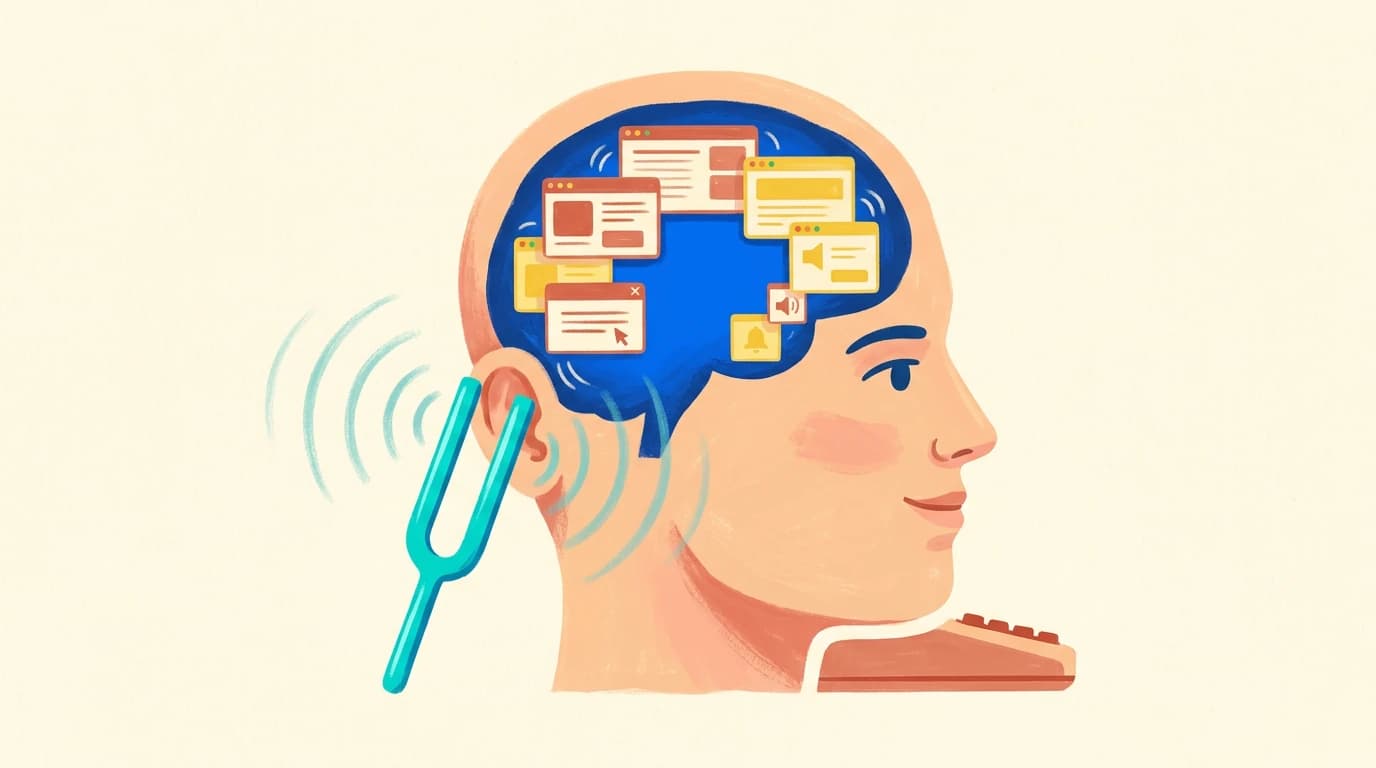
A quiet shortcut in the ear
Can a soft buzz against your ear sharpen your memory? Experts wanted to know how non-invasive vagus nerve stimulation changes how the brain works. They tested a clear puzzle. Does this buzz help memory by making sights seem louder, or does it help the brain run more smoothly?
Quieting the brain's chatter
To find out, researchers tested two groups. First, 20 healthy adults wore scalp caps. These caps recorded event-related potentials, which are electrical brain waves sparked by sights or sounds. While wearing the caps, the adults took a tricky memory test called an N-back task. Next, 19 epilepsy patients who already had wire sensors placed inside their brains took a spatial memory test. These inside sensors tracked high-gamma activity, which shows quick electrical bursts in brain cells. Both groups tried real buzzes and fake, harmless buzzes on their ears.
The findings surprised the team. Active ear pulses did not make brain signals bigger. Instead, they shrank the visual waves and curbed high-gamma bursts in the temporal lobes. Smaller visual spikes led to better recall on the hardest four-item memory test. The brain did not need to shout. It worked better with less fuss.
Finding the sweet spot
Why does this happen? The pulse targets an ear branch of the vagus nerve. This nudges the locus coeruleus-norepinephrine pathway, an alertness network in the brainstem that guides attention. Rather than cranking up sensory volume, the pulse clears out mental clutter. This shift brings the brain closer to criticality, a balanced state poised right between rigid order and wild chaos. In this sweet spot, the brain handles hard tasks with much less effort.
Questions that remain
These lab trials had small groups, and deep brain tracks came only from people with epilepsy. We do not know yet which clinical groups, like stroke or Alzheimer's patients, will gain the most. Finding the best buzz settings for everyday life will also take more work.
Science words
- vagus nerve stimulation
- Sending mild sensory pulses or buzzes to the vagus nerve via the outer ear.
- event-related potentials
- Measurable electrical brain waves sparked directly by sights, sounds, or tasks.
- N-back task
- A memory test where you spot if a current item matches one shown several turns earlier.
- high-gamma activity
- Fast electrical waves recorded inside brain tissue that track local processing.
- locus coeruleus-norepinephrine pathway
- A brainstem network that uses a chemical messenger to tune alertness and focus.
- criticality
- A sweet spot where brain networks balance evenly between strict order and total chaos.
Check it yourself
This story is based on a real research paper in Scientific Publication by Tan, Demarest, Kardashina et al. We write with AI help and check it against the paper, but the original is the final word.