How Brush-Like Polymer Networks Could Mimic Human Tissue
Source PublicationScience Advances
Primary AuthorsMoses, Wang, Collins et al.
"Think of a car's suspension system. Normally, if you make the springs softer for a gentler ride, the car bounces endlessly because the damping is tied to the stiffness. This new molecular design is like inventing a magical suspension system where you can have the softest ride imaginable, but the car still stops bouncing instantly when you hit a bump."
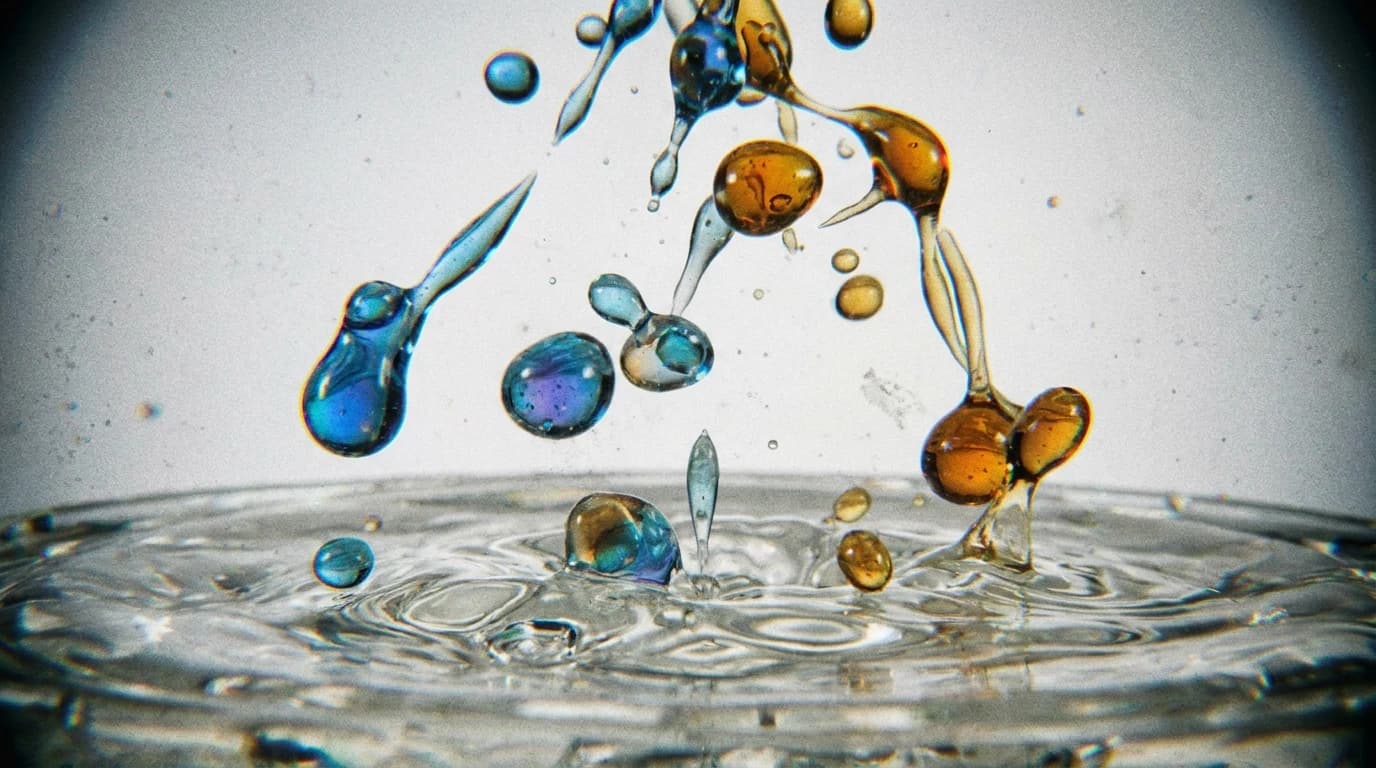
The Elegance of Biological Chaos
Have you ever wondered how the apparent messiness of biology manages to build structures of such perfect order and function?
Nature loves a good compromise. In the tissues that make up our bodies, evolution has balanced the need for things to be soft enough to bend, yet firm enough to hold their shape. For decades, human engineers have struggled to copy this biological behaviour. When we build soft materials, we usually face a stubborn rule: if you make a material softer, it naturally loses its ability to bounce back quickly. Stiffness and squishiness were locked together.
Breaking the Rules of Polymer Networks
This is where a recent lab study changes the picture. Researchers measured how different microscopic structures handle stress in a controlled bench setting. They focused on polymer networks, which are basically microscopic webs of long molecules. In conventional designs, these webs behave predictably. If you want a softer web, you get a slower, more energy-absorbing material.
But the researchers tried something different. Instead of simple strings, they built brush-like structures. By changing the physical shape of these microscopic strands—specifically their volume and flexibility—they found they could adjust the stiffness of the material drastically. Surprisingly, they achieved this without changing the underlying chemical makeup or how quickly the material relaxes after being stretched.
The Intrigue of Tissue-Mimetic Design
This brings us to a fascinating philosophical detour. Why are engineers so eager to replicate the mechanical independence found in living organisms? Think about the physical demands placed on biological tissues. They must be flexible enough to move continuously, but they cannot afford to lose energy and become sluggish. While biology separated stiffness from damping long ago through its own intricate evolutionary architectures, synthetic materials have always struggled to keep up. Now, by using these synthetic, brush-like structures, engineers can finally mimic this biological resilience. By separating these traits, we can create highly adaptable, tissue-mimetic materials.
What This Means for the Future
This new approach to designing materials suggests we might soon build artificial tissues that closely mimic human biology. Because the study measured a clear separation between stiffness and energy dissipation, engineers could use this framework to design better biomedical devices. It may also lead to safer transportation materials that absorb impacts without being rigidly hard. By observing the chaotic brilliance of the natural world, we are learning to build a softer, more resilient future.