How Arctic seabirds absorb climate shocks until hidden limits hit
A 20-year study shows little auks cope with warming seas by changing their habits, but storms and toxic mercury place hard limits on their resilience.
Reading level
The full story with proper science words explained.
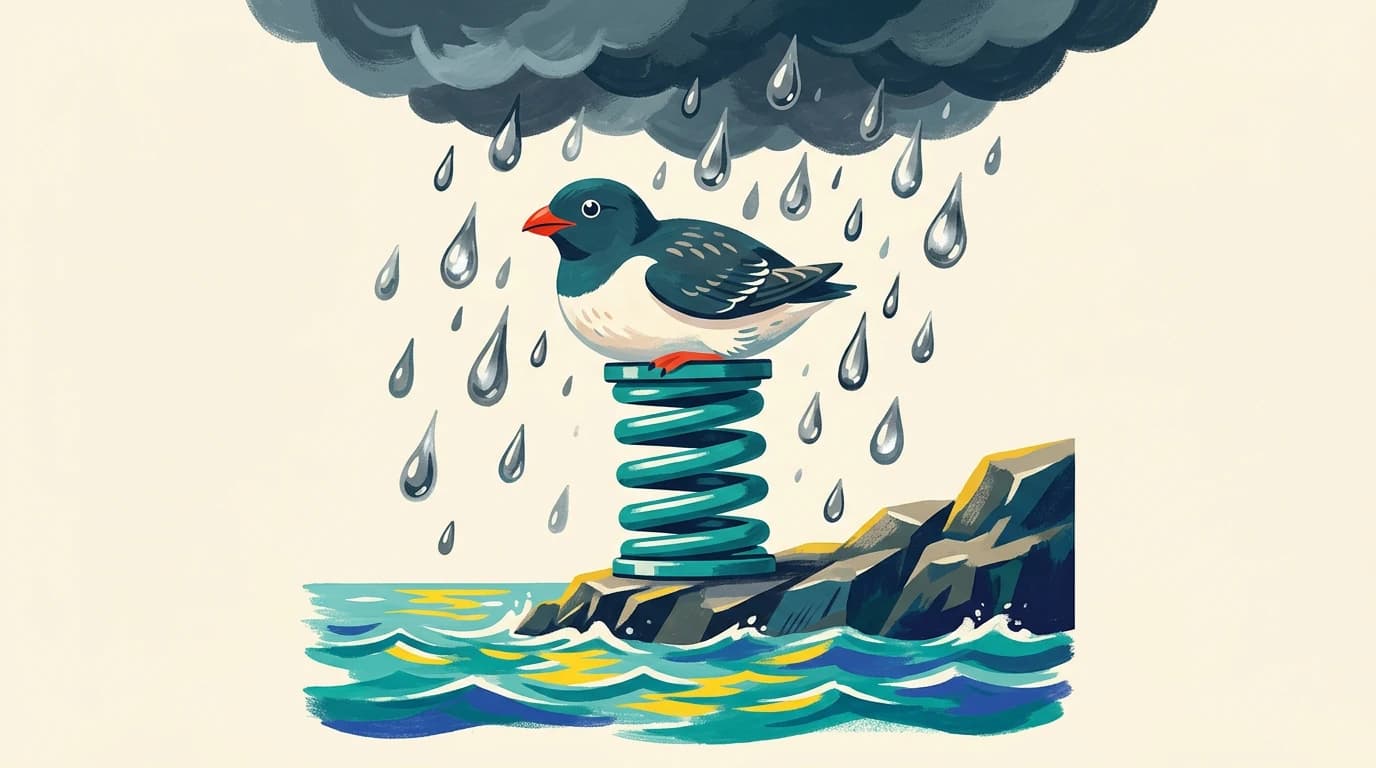
Flexible survivors in a warming north
The Arctic warms almost four times faster than the rest of the planet. Even with melting sea ice and shifting prey, little auks—the Far North's most numerous seabirds—seem to manage well. A 20-year study tracked a colony in East Greenland from 2005 to 2024. Long-term studies like this matter because multi-decade records of Arctic wildlife are extremely rare. Across most years, the birds kept healthy weights and raised chicks steadily. They pulled this off through behavioural plasticity, which means they changed their hunting effort and food choices when their surroundings shifted.
These birds act as vital ecosystem engineers, organisms that physically alter their local habitats. By dropping nutrient-rich waste on land, colonies fertilise tundra plants near their nesting cliffs. Their health provides an early warning sign for wider Arctic marine life.
Where the shock absorber bottoms out
Flexibility does not protect the birds forever. By uniting field counts with ecotoxicology—the study of pollutants and their effects on wildlife—researchers spotted clear boundaries to the birds' resilience. High levels of mercury built up in eggs, chicks, and adults. This toxic metal led to poorer breeding output. Researchers suspect mercury may also lower an adult bird's aerobic diving capacity and heat tolerance, weakening their hunting endurance and ability to manage warm days.
Bad weather delivers another heavy blow. Summer storms disrupted fishing trips and dropped provisioning rates, the frequency and amount of food parents bring to their young. Chicks starved of meals showed stunted growth during storm-heavy years. Winter storms also threaten the cold-season survival of full-grown birds. When foul weather and poison strike at the same time, the birds run out of ways to cope.
What scientists still do not know
This work followed one colony in East Greenland, so patterns might differ elsewhere. Biologists still do not grasp the exact body pathway that links mercury to reduced diving capacity or thermal limits in wild birds. Most of all, the precise tipping point where multiple combined pressures will overwhelm these seabirds remains unknown.
Science words
- Behavioural plasticity
- The ability of an animal to change its habits, such as what it eats or where it hunts, in response to new conditions.
- Ecosystem engineer
- A species that heavily shapes, modifies, or maintains its local physical environment.
- Ecotoxicology
- The scientific study of how toxic pollutants enter and affect natural ecosystems and wild animals.
- Provisioning rates
- The frequency and amount of food that parent animals deliver back to their young.
Check it yourself
This story is based on a real research paper in Journal of Animal Ecology by Grémillet, Amélineau, Harding et al. We write with AI help and check it against the paper, but the original is the final word.