How aqueous iodine batteries double their charge without corrosive chemicals
Scientists have shown a reversible four-electron reaction in water-based iodine cells using a halogen-free electrolyte recipe. This method protects fragile iodine ions in lab tests without harsh additives.
Reading level
The full story with proper science words explained.
Doubling the charge
Batteries that run on water are safe from fires. Storing lots of power in them remains hard, though. To hold more charge, aqueous iodine batteries try to run a four-electron iodine conversion. This chemical process lets each iodine pair swap four electrons instead of the usual two. It doubles the cell's stored charge. For a long time, running this swap back and forth without messy side reactions stumped scientists.
A protective shield
The main snag is that this reaction makes hypervalent iodine cations. These positively charged iodine bits react very quickly and break apart. In the past, keeping them stable relied on interhalogen complexation. That older method used harsh halogen chemicals like chlorine or bromine to bind the bits together. Those chemicals are corrosive and hard to handle safely. In this study, the team replaced them with three gentler parts: polar anions, kosmotropic anions, and nucleophilic species.
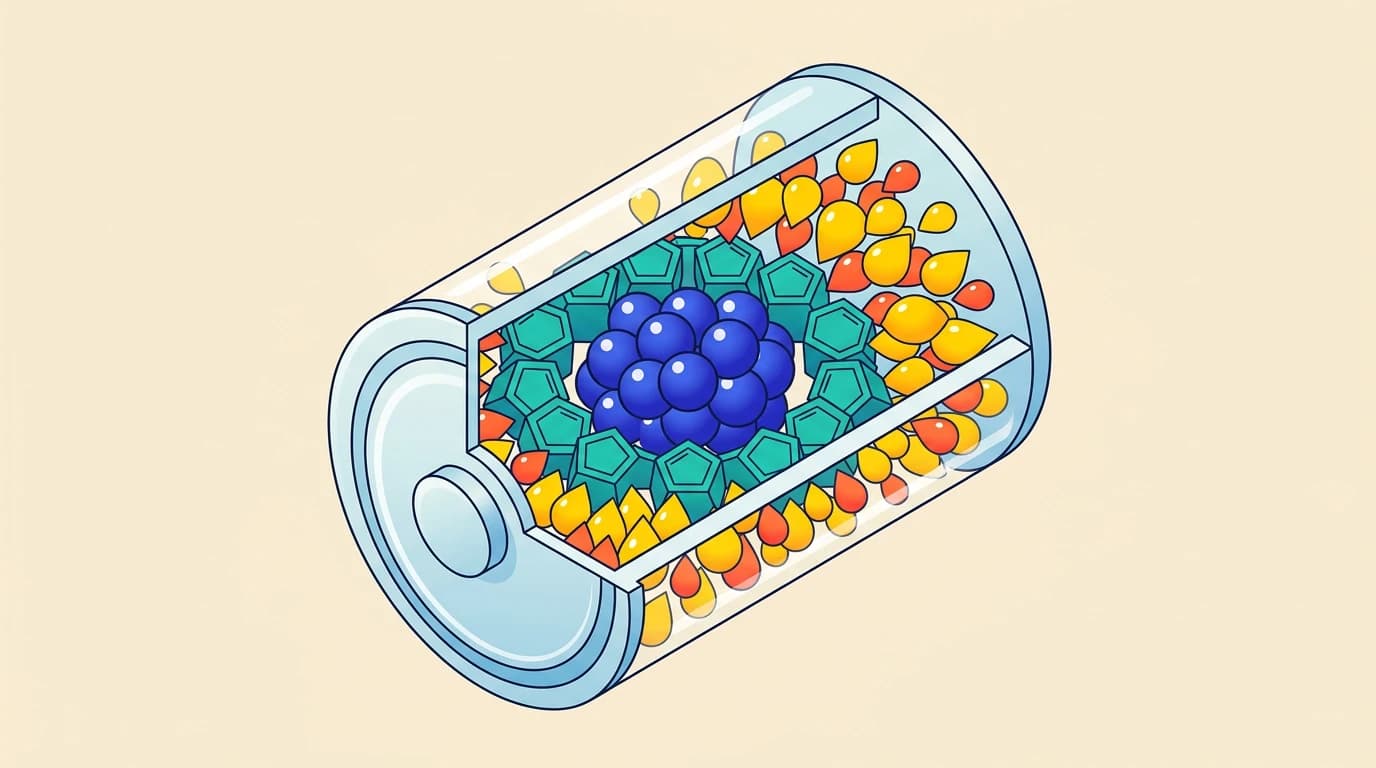
Think of the liquid electrolyte as a team of guards. First, the polar anions push water away from the active surface. This step builds a dry, water-free zone. At the same time, kosmotropic anions organise the water nearby. This lets the nucleophilic species step up and do their job. These helper bits donate electron pairs directly to the reactive iodine bits. They form neat halogen bonds that shield the iodine from water attacks.
Testing two battery types
The researchers tested this setup in the lab. It kept the four-electron swap working smoothly in both zinc-iodine and aluminium-iodine cells. It also worked well across different helper molecules, showing great chemical flexibility. The study does not claim to replace every existing battery type. Instead, it offers a fresh way to bypass old chemical limits without caustic additives.
What we still do not know
These tests only happened inside small lab cells. The study does not provide numbers for long-term cycling over thousands of runs. It also leaves out final energy density and production costs. More work is needed to see if these cells can power everyday tools or power grids.
Science words
- four-electron iodine conversion
- A reaction where an iodine pair exchanges four electrons, doubling standard energy capacity.
- hypervalent iodine cations
- Positively charged, highly reactive iodine units that need chemical protection to stay stable.
- interhalogen complexation
- Binding different halogen atoms together to stabilise reactive species, often using corrosive additives.
- kosmotropic anion
- A negatively charged ion that shapes water structure to influence how nearby molecules interact.
- nucleophilic species
- Molecules or ions that donate electron pairs to bond with and protect electron-poor targets.
Check it yourself
This story is based on a real research paper in Nature by Chen, Dong, Dai et al. We write with AI help and check it against the paper, but the original is the final word.