How a Copper Express Lane Achieves Ballistic Transport
Source PublicationNature Communications
Primary AuthorsCho, Kim, Jung et al.
The Hook: The Commuter Express
Imagine trying to sprint through a crowded London Tube station during rush hour. You bounce off tourists, trip over suitcases, and completely lose your momentum.
This is exactly how electrons usually move through standard metal wires. They constantly collide with atomic defects, losing their speed and their delicate quantum states in the process.
But what if those electrons had a completely empty, private express tunnel? In physics, this frictionless commute is known as ballistic transport.
The Context: Why Ballistic Transport Matters
Achieving this frictionless flow is incredibly difficult. It requires materials that let charge carriers zoom forward without hitting anything.
When electrons travel undisturbed, they maintain their quantum coherence. Their microscopic properties—like spin and quantum phase—stay perfectly intact over much longer distances.
Physicists have measured this behaviour in nanoscale materials like carbon nanotubes and graphene. However, these exotic materials are notoriously difficult to manufacture at a commercial scale.
Deposited metal films are much easier to mass-produce for microchips. Yet, standard metals usually have short electronic mean free paths, meaning the electrons crash into obstacles too frequently to maintain their quantum states.
The Discovery: Clearing the Path
Now, researchers have found a way to clear the path using a highly familiar material: copper. They engineered a way to remove the microscopic roadblocks that usually cause electron pile-ups.
To achieve this, the team followed a very specific process:
- First, they fabricated extremely thin copper films, measuring just 90 nanometres in thickness.
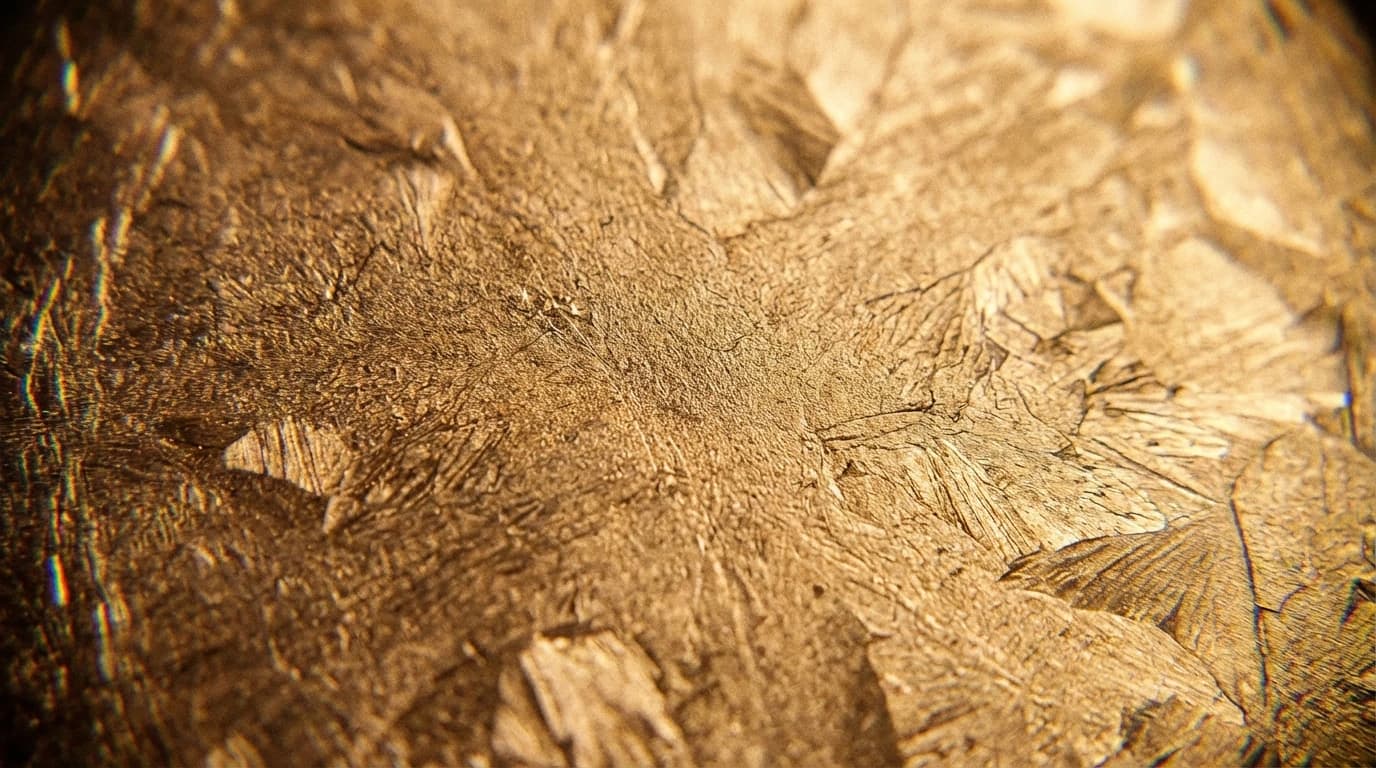
- Second, they engineered these films to be completely free of grain boundaries, removing the internal borders that usually scatter electrons.
- Third, they etched the copper into cross-geometry devices with tiny channels just 150 nanometres wide.
- Finally, they cooled the entire setup to below 85 Kelvin to minimise thermal vibrations.
Under these strict conditions, the researchers measured negative bend resistance in the devices. This specific metric confirmed that the electrons were flying through the channels unimpeded.
The Impact: Scaling Up Quantum Tech
This finding suggests we might not need hard-to-make materials for future quantum devices. Copper, a standard element in modern electronics, could actually do the job.
By removing the grain boundaries, manufacturers could potentially build highly efficient quantum components using existing fabrication techniques. The researchers note this platform provides a reliable way to study how metals behave at the quantum level.
If these techniques scale up, they might eventually lead to faster, more efficient hardware. It represents a practical step toward building next-generation electronic quantum technologies.