How a clever soapy catalyst helps nylon microplastic recycling
A reusable soap-like catalyst uses scandium to break stubborn nylon microplastics in water down into their original chemical building blocks.
Reading level
The full story with proper science words explained.
Tiny plastic, big problem
Tiny nylon particles floating in water are remarkably tough to destroy. These synthetic materials belong to a family called polyamides, plastics built from tightly packed molecular chains that naturally repel water. Normally, breaking them apart demands harsh chemicals, extreme heat, or very slow natural breakdown.
Soapy scissors
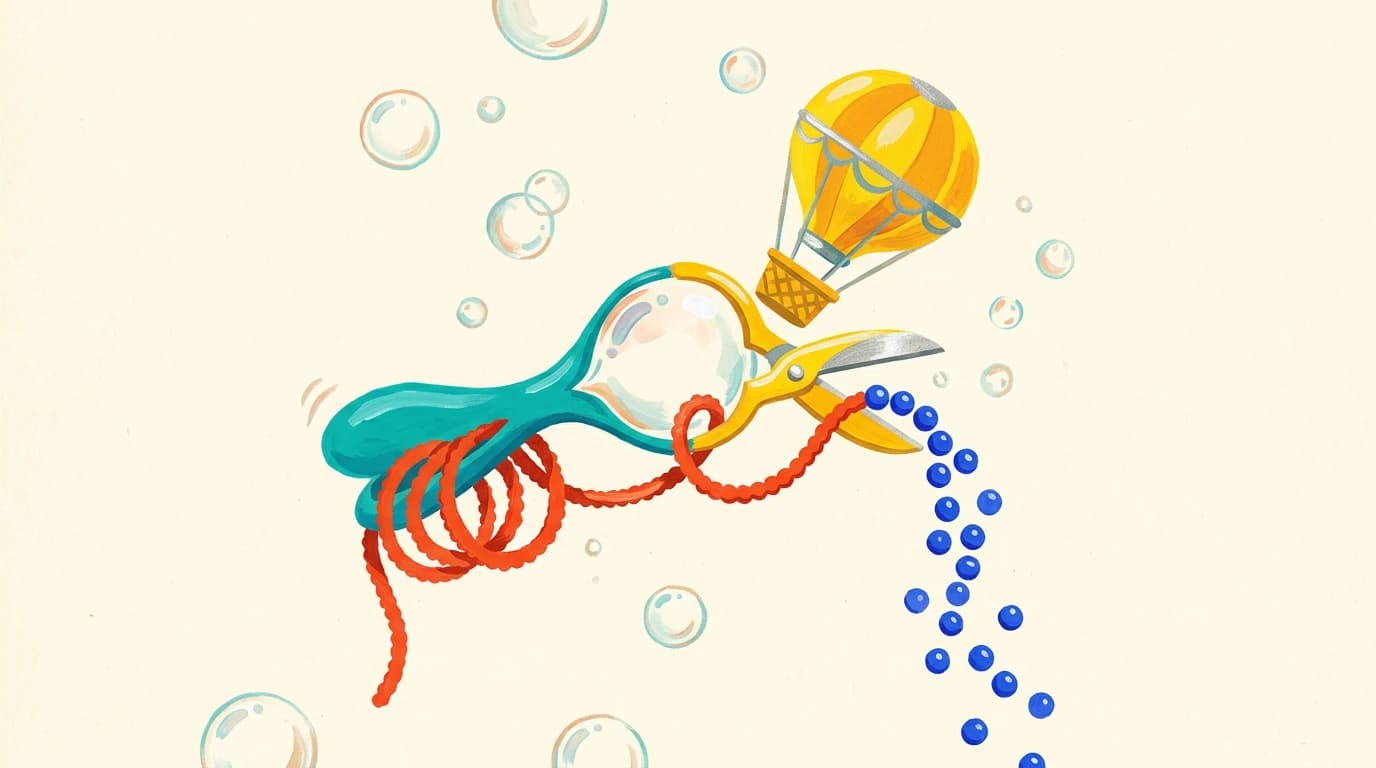
To tackle this challenge in nylon microplastic recycling, scientists designed a special surfactant catalyst. It works like a soap molecule tipped with chemical scissors. One part of the molecule is amphiphilic, meaning it possesses both water-loving and water-repelling segments. This soapy structure lets the catalyst stick directly to the plastic particle instead of drifting uselessly in the surrounding liquid.
At the business end sits a Lewis-acidic core containing scandium ions (Sc3+). Once the surfactant pulls the core close to the plastic, this metal headgroup snips the tough chemical bonds along the polymer chain. In lab tests, the reaction degraded three common types: Nylon-6, Nylon-6.6, and Nylon-12. The process turned these microplastics back into monomers, the individual chemical building blocks used to manufacture fresh plastics.
The distance matters
The soapy design turned out to be completely essential. Non-amphiphilic catalysts failed to break down the plastic because their catalytic cores simply could not get close enough to the polymer backbone to cut it.
Remarkably, the team isolated and collected the catalyst afterwards to run again without losing any active scandium metal.
What we still don't know
These experiments succeeded in pure laboratory water on specific types of nylon. The researchers have not yet measured how many cycles the catalyst survives before it fouls or slows down. It is also not known how efficiently it performs in messy environmental water full of mud, salts, and mixed chemical pollutants.
Science words
- Polyamide
- A category of synthetic plastics, including nylon, made of repeating units linked by amide bonds.
- Surfactant catalyst
- A reaction-speeding substance that also acts like a detergent, helping it gather at liquid surfaces.
- Amphiphilic
- Having both water-attracting and water-repelling parts, similar to ordinary soap.
- Lewis-acidic
- A chemical property where an atom or ion accepts an electron pair to help a reaction happen.
- Monomer
- A small single molecule that bonds with others to build a long polymer chain.
Check it yourself
This story is based on a real research paper in Chemistry – A European Journal by Botev, Witt, Polarz. We write with AI help and check it against the paper, but the original is the final word.