From Land to Sea: How Yeasts Packed Light for Marine Fungi Evolution
Source PublicationopenRxiv
Primary AuthorsChristensen, Deal, Brem
"Downsizing from a suburban house to a tiny city-centre apartment, discarding bulky tools like lawnmowers (fermentation) to invest in space-saving essentials (salt tolerance)."
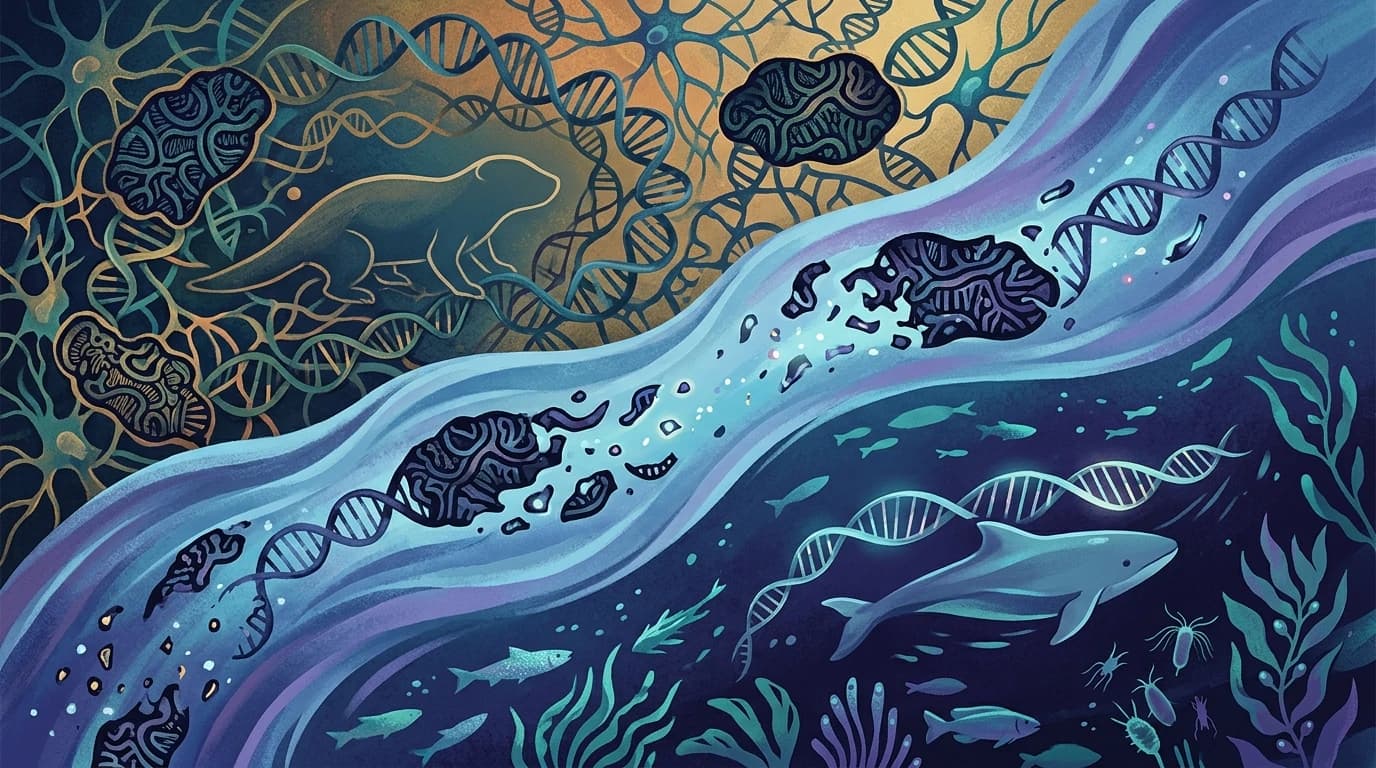
Imagine moving from a spacious suburban house to a tiny, high-tech studio apartment in the city centre. You dump your heavy winter coats and bulky lawnmower because they do not fit, but you invest in a better security system. This is how yeasts transitioned from land to the ocean.
These results were observed under controlled laboratory conditions, so real-world performance may differ.
While we know a lot about land mushrooms, we are just beginning to comprehend how marine fungi survival works. Understanding this transition helps us map how life rewires itself when environments shift.
Researchers analysed the genomes of Kluyveromyces yeasts from land, estuary, and sea environments. They measured a contraction in genome size and gene count in the marine species.
The Genomics of Marine Fungi Evolution
In laboratory cultures of these specific yeasts, the team observed clear evolutionary trade-offs:
- Marine yeasts lost genes for alcoholic fermentation, which terrestrial yeasts use to poison nearby bacterial competitors.
- They lost resistance to drying out (desiccation) and cold temperatures.
- They gained superior salt tolerance and showed positive selection in genes related to respiration.
In the open ocean, releasing ethanol to kill rivals is useless because the water dilutes it instantly. The study suggests that these fungi discarded energy-expensive fermentation to focus resources on surviving salt stress. While these insights are currently limited to laboratory-grown Kluyveromyces strains, they offer us a beautiful, clear model of the genomic strategies fungi use to conquer the sea.