Physics & Astronomy4 May 2026
Fast-Tracking Early Black Hole Seed Growth: A New Transport Model
Source PublicationSpringer Science and Business Media LLC
Primary AuthorsSacha
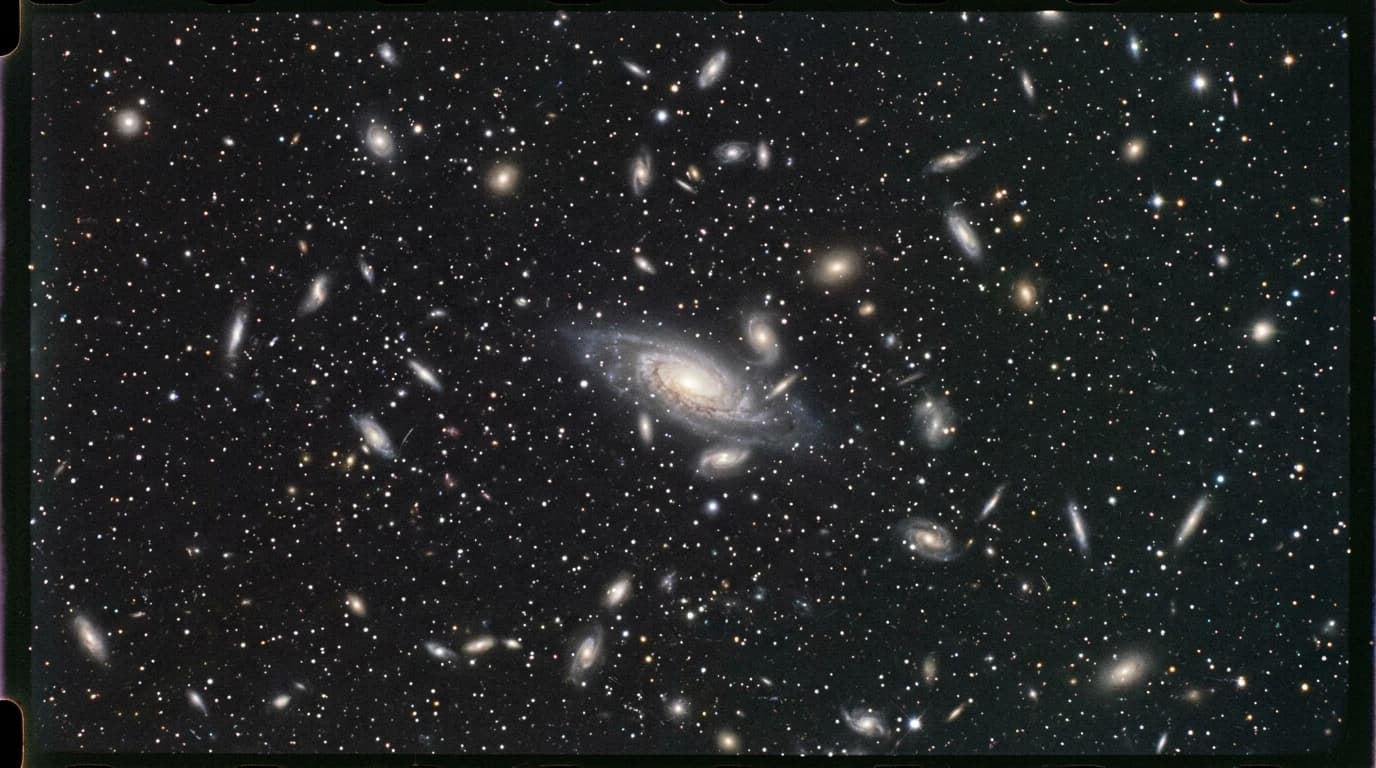
A new mathematical operator may explain how the first black holes grew so quickly by bypassing standard gas transport bottlenecks. This preliminary framework addresses the supply-limited component of early black hole seed growth by moving gas to the inner tens of parsecs on local dynamical timescales.
Early Black Hole Seed Growth and the Supply Bottleneck
Standard radiation-hydrodynamics often fails to deliver gas to the inner galactic regions within required timescales. This supply problem at cosmic dawn creates a discrepancy between theoretical models and the massive objects observed by the James Webb Space Telescope. This early-stage research, currently awaiting peer review, introduces a method called screened copy-time transport. Unlike traditional simulations that treat gas flow as a simple fluid variable, this method uses a projected Onsager current driven by a Fisher likelihood ratio associated with radiative records. The model predicts:- Order-unity increases in central gas supply for specific galactic halos.
- Higher obscuring column densities that align with observed X-ray systems.
- A moderate reduction of effective radius while leaving the Eddington law intact.
Cite this Article (Harvard Style)
Sacha (2026). 'Screened Copy-Time Transport at Cosmic Dawn: A Microscopic Onsager Mechanism for Early Galaxy Compaction and Black-Hole Seed Growth'. Springer Science and Business Media LLC. Available at: https://doi.org/10.21203/rs.3.rs-9572138/v1