Evaluating Scalability in Site-Controlled Single-photon sources
Source Publication
Primary AuthorsReitzenstein, Gaur, Barua et al.
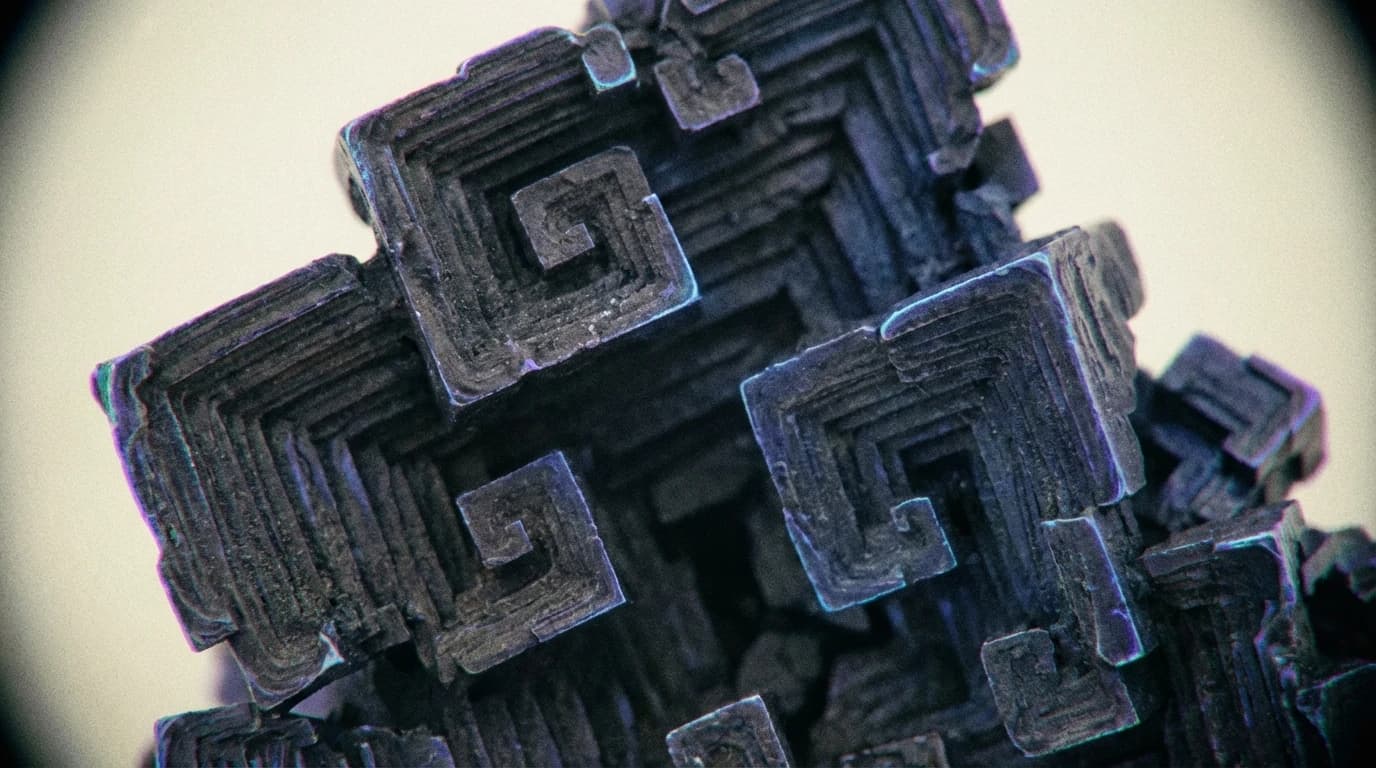
The authors claim to have established a robust pathway for integrating InGaAs quantum dots into photonic structures, specifically targeting the randomness that plagues current fabrication methods. However, this demonstration remains confined to a 6x6 array, limiting immediate extrapolation to industrial scales. By utilising a buried-stressor technique, the team attempted to control the site of quantum dot growth, aligning them with circular Bragg grating (CBG) resonators without relying on complex deterministic lithography.
Assessing the Yield of Single-photon sources
The methodology centred on pre-defining nucleation sites. In the fabricated array, 35 of 36 devices achieved spatial alignment within a range where simulated photon-extraction efficiency (PEE) exceeds 20%. This is a high yield for a laboratory setting. Yet, efficiency is not uniform. The data indicates that performance relies heavily on precise radial alignment. As displacement increases, the metrics deteriorate.
The best-performing device recorded a PEE of 47.1% and a single-photon purity of 99.58%. These figures are promising. Nevertheless, the Hong-Ou-Mandel visibility—a measure of photon indistinguishability—sat at 81%. While functional, this figure suggests that charge-noise fluctuations, influenced by the emitter's position, remain a significant variable.
Implications for Scalability
This approach offers a theoretical alternative to mapping random emitters. It simplifies the workflow. But the variance across the five systematically selected devices shows that 'site-controlled' does not equal 'identical'. The study suggests that while the fabrication is reproducible, the resulting optical properties are sensitive to minor spatial deviations. Future applications will depend on tightening these tolerances further.