Did Chemists Just Capture Elusive Gold Nitrenes?
Source PublicationNature Chemistry
Primary AuthorsMartín, Fernández-Sabaté, Spingler et al.
"It is like using heavy-duty gold oven mitts to grab a bare electrical wire—the gold safely holds onto the hyper-reactive nitrogen long enough to direct its power where you want it."
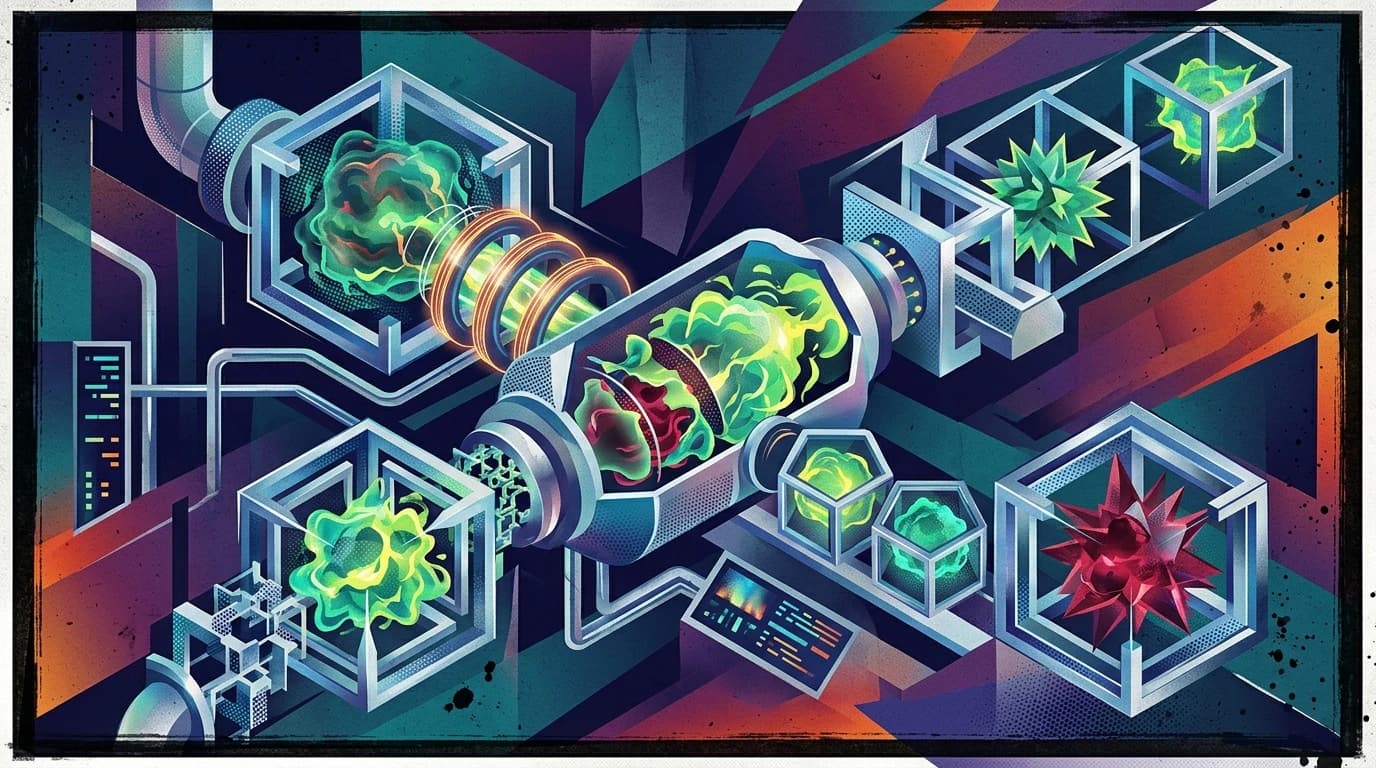
Did you know that gold isn't just for shiny jewellery, but can also tame insanely reactive chemical species? ⚡
These results were observed under controlled laboratory conditions, so real-world performance may differ.
Gold has emerged as a powerful catalyst for building carbon-nitrogen bonds, but scientists long assumed gold nitrenes—a gold atom bound to a single, hyper-reactive nitrogen atom—were consistently bypassed as intermediates because they were too unstable to catch.
Researchers recently shattered that assumption. By shining light on a gold(III) azide complex, the team forced out nitrogen gas and successfully trapped authentic gold nitrenes inside solid crystals.
Using solid-state analysis and computer simulations, they measured its true identity: a triplet ground state where the nitrogen atom acts as a diradical, carrying two unpaired electrons while σ-bonded to the gold centre.
Why Gold Nitrenes Matter for Synthesis
Once captured, the team observed this reactive species performing several distinct chemical steps:
- Activating strong, normally stubborn C-H bonds
- Reacting directly with oxygen to create nitro groups
- Fixing carbon monoxide and binding to alkynes
This study proves that gold can stabilise these wild nitrogen species rather than bypassing them. While these initial observations are limited to specific solid-state laboratory conditions, the findings establish a completely new conceptual framework for gold-mediated nitrogen-atom transfer.