Decoding the African Humid Period to Predict Future Droughts
Source PublicationNature
Primary AuthorsSylvestre, Melles, Wennrich et al.
Predicting the Unpredictable
Predicting exactly how fast massive global weather patterns can collapse remains a severe limitation in modern climate science. This blind spot leaves vulnerable regions entirely unprepared for the sudden onset of decadal droughts.
These results were observed under controlled laboratory conditions, so real-world performance may differ.
Now, a highly detailed sedimentary archive from Lake Yoa in Chad provides critical insight into this challenge. By mapping the rapid climate shifts of the past, researchers have created a precise timeline of how ancient ocean changes triggered rapid drying on land.
The Context of the African Humid Period
Between 14,800 and 6,000 years ago, the Sahara and Sahel regions were lush and green. This era is widely recognised as the African Humid Period.
While scientists knew this green phase experienced dry spells, the exact timing, speed, and severity of these events remained poorly constrained. Understanding these ancient mechanics matters deeply today, as mapping historical extremes highlights the gaps in our current forecasting abilities.
Reading the Sediment
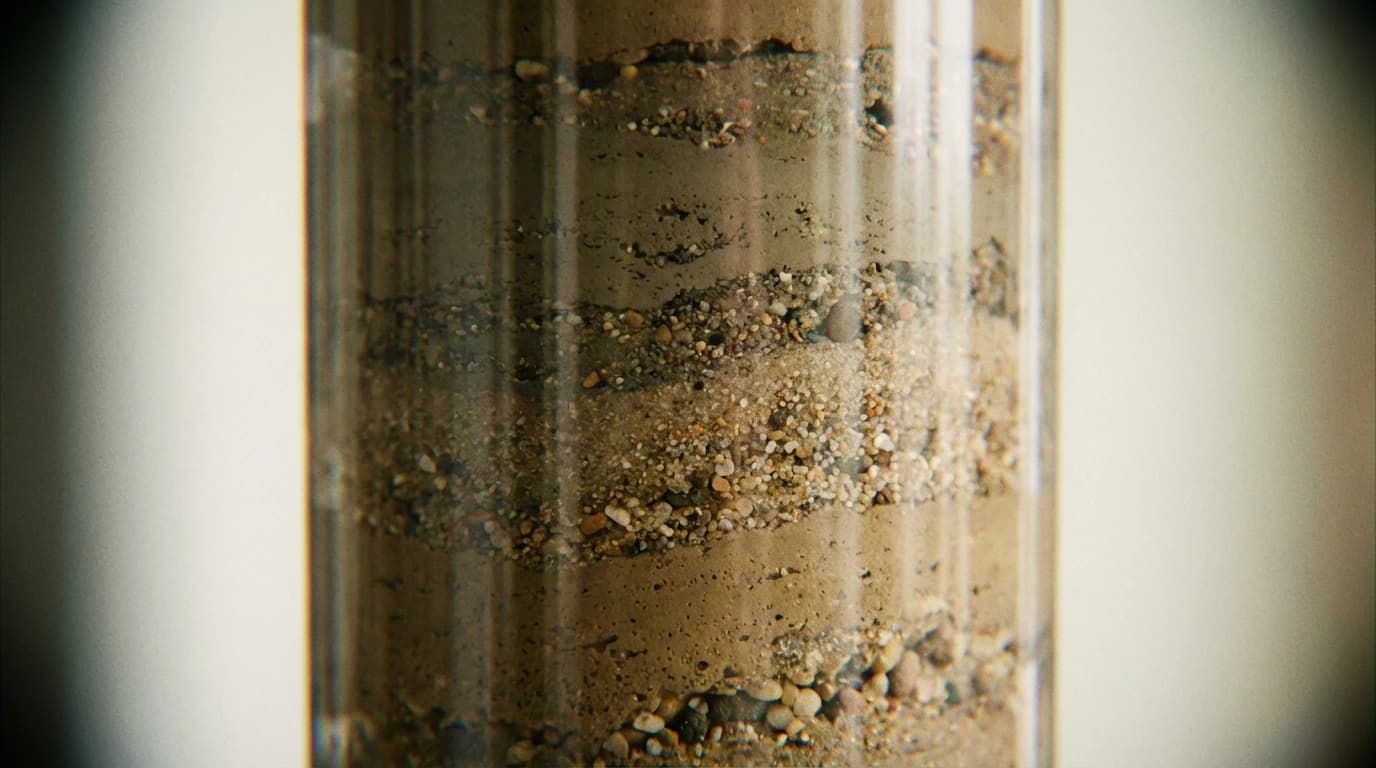
To reconstruct this timeline, researchers analysed a continuous 10,250-year record of lake sediment. They systematically measured pollen, diatom data, and leaf-wax isotopes to track environmental shifts.
The team found that two severe, decadal-scale droughts interrupted the greening at roughly 9,300 and 8,200 years ago. During the 8,200-year event, the physical data showed a sharp drop in lake levels and an expansion of shore reeds, indicating a massive reduction in local rainfall.
While drawn from a single, specific lake system in Chad, when combined with climate simulations, the physical measurements suggest this drought was a rapid response to a weakened Atlantic Meridional Overturning Circulation (AMOC). This weakening likely occurred due to sudden freshwater input into the North Atlantic.
The Next Decade of Climate Forecasting
Over the next five to ten years, this type of data will be essential for the trajectory of climate science. By understanding the historical link between North Atlantic freshwater inputs and sudden Saharan drying, researchers can better define the parameters needed to anticipate similar drought risks in the future.
These historical baselines offer a clearer picture of how rapidly environmental conditions can shift. Future developments in this field will likely focus on:
- Clarifying the timeline and severity of ancient rapid-onset droughts.
- Providing concrete proxy data to test and refine global climate simulations.
- Highlighting the critical need to upgrade decadal weather prediction capabilities.
Instead of viewing ancient climate shifts as abstract history, meteorologists can use this continuous sedimentary archive as a benchmark. This foresight provides a clear, data-driven foundation for building the forecasting tools vulnerable regions will ultimately need.