Crystal Engineering: A New Trajectory for Hydrocarbon Separations
Source PublicationAdvanced Materials
Primary AuthorsLi, Mukherjee, Zaworotko
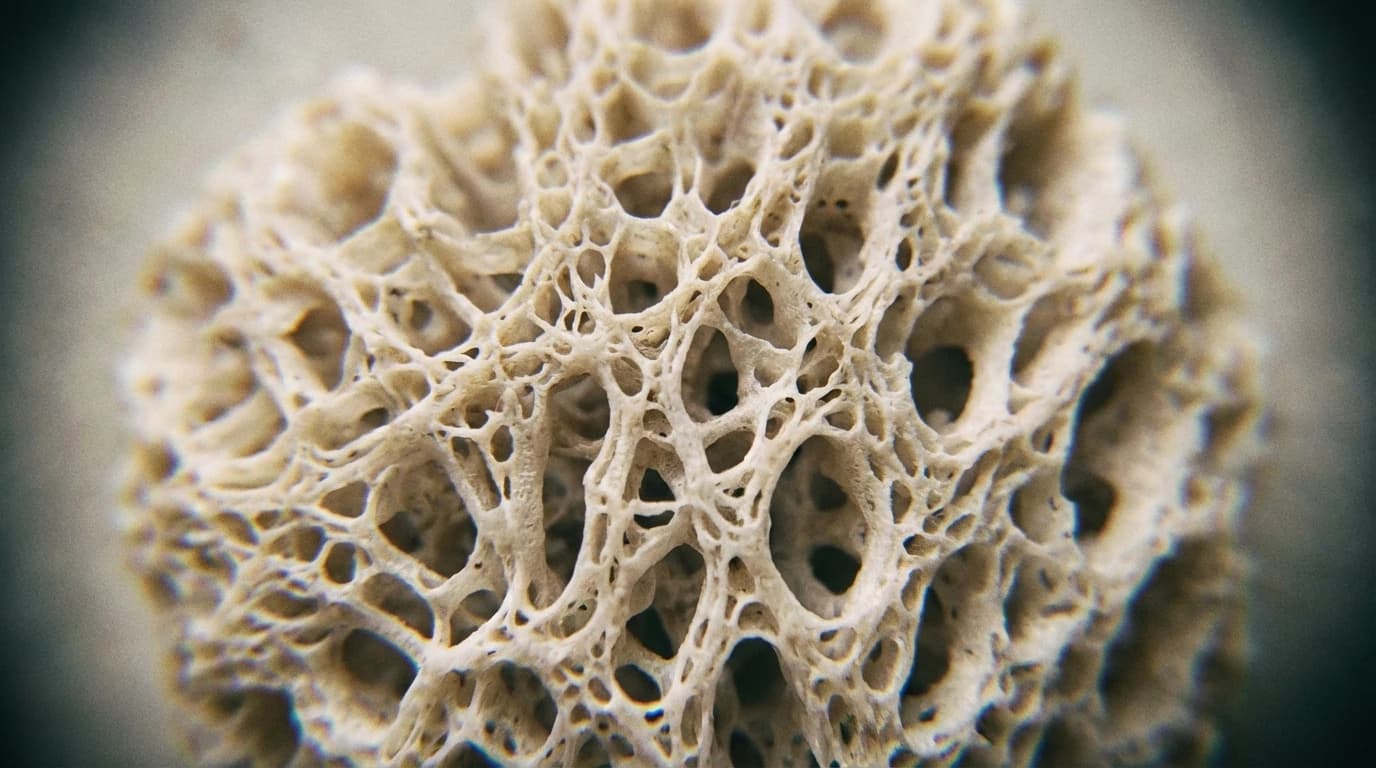
Industrial chemistry has hit a wall. For decades, the separation of chemical mixtures has relied on brute force: heat. Distillation columns, towering over refineries, consume vast amounts of energy to boil and condense liquids. It is an old, inefficient way of doing things. We are burning fuel simply to process fuel. The sector needs a shift toward passive, smart materials. This is where crystal engineering enters the frame.
These results were observed under controlled laboratory conditions, so real-world performance may differ.
The Mechanics of Hydrocarbon Separations
A recent review examines the potential of porous coordination networks (PCNs) and covalent organic frameworks (COFs). These materials are not dug from the ground; they are built, atom by atom. The review highlights that these structures are inherently modular. Chemists can snap molecular building blocks together, almost like a construction kit, to create specific network structures.
This modularity allows for the precise adjustment of pore size and chemistry. Such systematic fine-tuning is infeasible with other classes of porous solid. By tuning these pores, researchers have developed physisorbents capable of performing hydrocarbon separations with remarkable selectivity. These materials act as molecular sieves, trapping specific impurities while letting the desired product flow through. The study notes that this method requires significantly less energy for recycling compared to thermal processes.
Scalability and Future Applications
The implications extend far beyond the current oil and gas sector. If we can separate hydrocarbons without intense heat, we lower the carbon footprint of the entire chemical industry. However, the review is careful to distinguish between laboratory success and industrial reality. While the selectivity levels are unprecedented, the authors note that significant challenges remain before these materials can be produced at a commercial scale.
Looking ahead, the precision of reticular chemistry suggests a fundamental shift in material science. If we can design a crystal to catch a specific hydrocarbon molecule, we validate the concept of materials designed for singular, specific functions. We are moving toward a future where separation is defined by geometric fit rather than boiling points.