Chasing Time: The Early Promise of a Mutation-Agnostic Progeria Gene Therapy
Source PublicationSpringer Science and Business Media LLC
Primary AuthorsCha, Kim, Kwon et al.
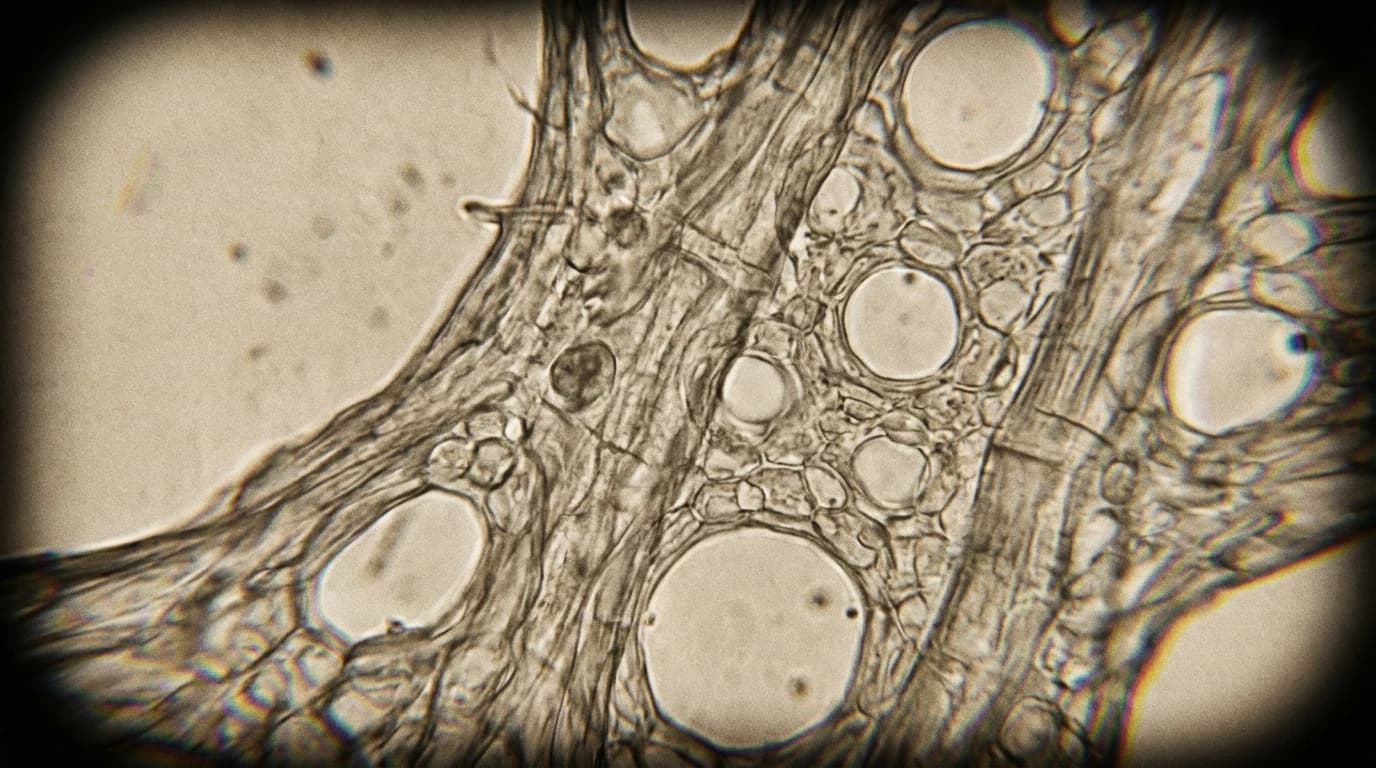
Inside a healthy human cell, the nucleus acts as a smooth, protective vault for our DNA. But in a child with Hutchinson-Gilford progeria syndrome, this vault warps, buckles, and collapses in on itself. A sticky, deformed protein accumulates along the inner walls, accelerating the biological clock and ageing a fragile body decades in mere years.
For decades, scientists have watched this microscopic structural failure with a profound sense of helplessness. The disease works silently at first, but soon strips away fat, hardens arteries, and weakens bones. Current medicines offer only a modest delay to an inevitable tragedy, leaving families waiting for a more precise intervention.
The Sticky Anchor
The central villain in progeria is a faulty protein called progerin. In a healthy cycle, proteins meant to support the nucleus are temporarily fitted with a chemical anchor—a farnesyl group—that attaches them to the membrane. Once the protein is in place, the anchor is supposed to be snipped off.
In progeria, a genetic error prevents this final cut. The protein remains permanently bolted to the membrane, piling up and dragging the nuclear envelope out of shape. Existing drugs attempt to block the creation of these anchors entirely, but these medicines lack molecular specificity.
They interfere with dozens of other healthy proteins that also rely on farnesyl anchors to function properly, leading to limited survival benefits. Furthermore, attempts to fix the genetic error directly have been complicated. Because the disease can stem from various atypical mutations, a custom-built editor is often required for different patients.
The Promise of a Mutation-Agnostic Progeria Gene Therapy
Recently, a team of researchers detailed a highly targeted alternative. While these proof-of-concept findings remain in the early stages of laboratory testing, the mechanics of their proposed platform—named Farnesylation Amino acid Targeted Editing (FATE)—offer a remarkably elegant workaround.
Rather than trying to correct the various different genetic typos that cause progeria, FATE ignores the mutations entirely. Instead, it precisely alters the specific genetic sequence that codes for the farnesyl anchor attachment site on the lamin A protein. By doing so, it ensures the toxic protein can never be bolted to the nuclear membrane in the first place, without disrupting the farnesylation of other vital proteins.
The researchers tested this theory using isogenic human pluripotent stem cell-derived neuromuscular organoids. These lab-grown, three-dimensional tissues mimic the complex interaction between human muscle and nerve cells.
Rebuilding the Microscopic Architecture
To deliver the FATE system, the scientists used lipid nanoparticles carrying mRNA, a method familiar to anyone who received an mRNA vaccine. The delivery was transient, meaning the editor did its job and then faded away. The laboratory measurements revealed striking physical changes within the organoids.
The researchers observed several specific improvements in the treated cells:
- A near-total clearance of the toxic progerin protein from the nuclear perimeter.
- The normalisation of the cell's internal heterochromatin architecture.
- The successful reconstitution of natural DNA repair mechanisms.
While these laboratory results are preliminary and currently limited to engineered organoid models, they suggest a highly efficient way to bypass the limitations of current treatments. If these findings hold up through rigorous clinical testing, this RNA-based strategy could offer a universal approach for patients with varying progeroid mutations. It points toward a future where we might simply erase the anchor holding toxic proteins in place, allowing the cell to finally breathe and repair its own broken vault.