Chaos in the Vertical Tube: AI Masterminds Pool Boiling Heat Transfer
Source PublicationScientific Reports
Primary AuthorsSha, Thakare, Kar et al.
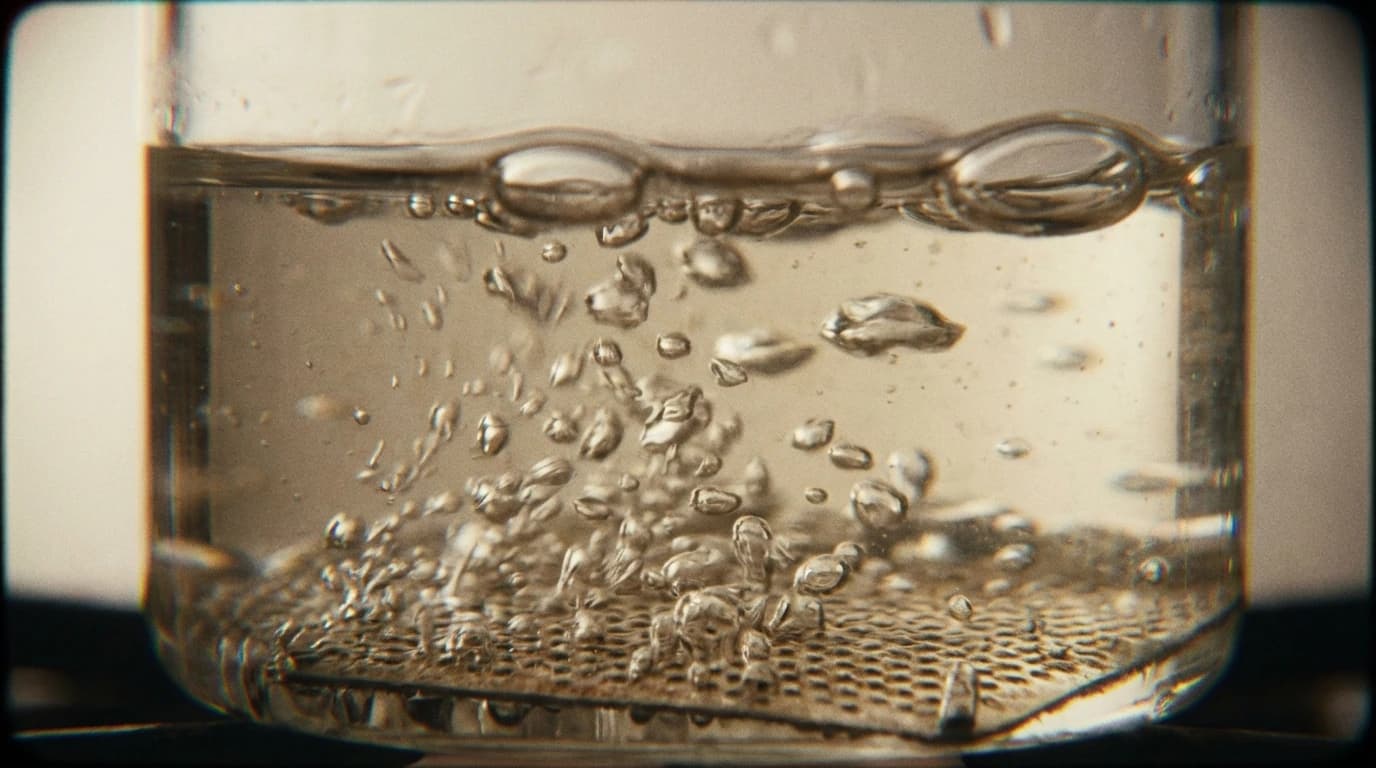
Imagine the interior of a vertical tube within a nuclear facility. It is a violent, inhospitable place. Here, liquid does not merely warm; it tears itself apart. Vapour rises in frantic clusters, fighting the drag of the fluid and the pull of gravity. This is the domain of chaos. Engineers fear the point where these bubbles merge into a film, insulating the metal, causing temperatures to spike uncontrollably. It is a silent killer of machinery. For decades, we have stared at this turbulence, trying to guess the rhythm of the madness. The bubbles are capricious. They nucleate, coalesce, and depart with a randomness that defies simple equations. They are the antagonists in the quest for safe energy. To misjudge them is to risk catastrophe. The stakes are not merely efficiency, but the structural integrity of the plant itself. Traditional sensors struggle to map this erratic behaviour in real-time. They offer only a glimpse of the thermal reality. The liquid keeps its secrets close, hiding behind a wall of white noise and turbulence, daring us to predict its next move. It is a high-stakes gamble where the house—physics—usually wins.
But the odds may have shifted. A new tool has entered the fray, one capable of seeing patterns where human eyes see only disorder. Researchers have introduced a machine learning approach that acts as a translator for this chaotic language. The solution is not a stronger pipe or a colder coolant, but a smarter observer.
Decoding Pool Boiling Heat Transfer
The study correlates high-quality, high-speed imaging with the thermal dynamics of the system. The framework employs deep learning models, specifically convolutional neural networks, to watch the bubbles. But here lies the twist: the algorithm did not simply memorise shapes. It extracted "hierarchical and physics-based features". In effect, the machine began to understand the physical laws governing the bubbles' existence.
By training on these features, the model learned to statistically describe how bubbles are born and how they die. The results are sharp. The data indicates an average prediction error of approximately 6 per cent, maintaining an overall classification accuracy of 88 per cent across various levels of intensity. This suggests that pool boiling heat transfer can be monitored in situ without invasive probes. The computer vision system sees the bubbles, recognises the physics, and predicts the heat flux instantaneously. It is a significant step towards automated safety, turning a camera into a precision instrument that never blinks.