Carbon dots: The microscopic chemical workbenches rewiring science
Source PublicationScientific Publication
Primary AuthorsMorbiato L, Sbacchi M, Dosso J, Pengo P, Gobbo P, Filippini G, Prato M.
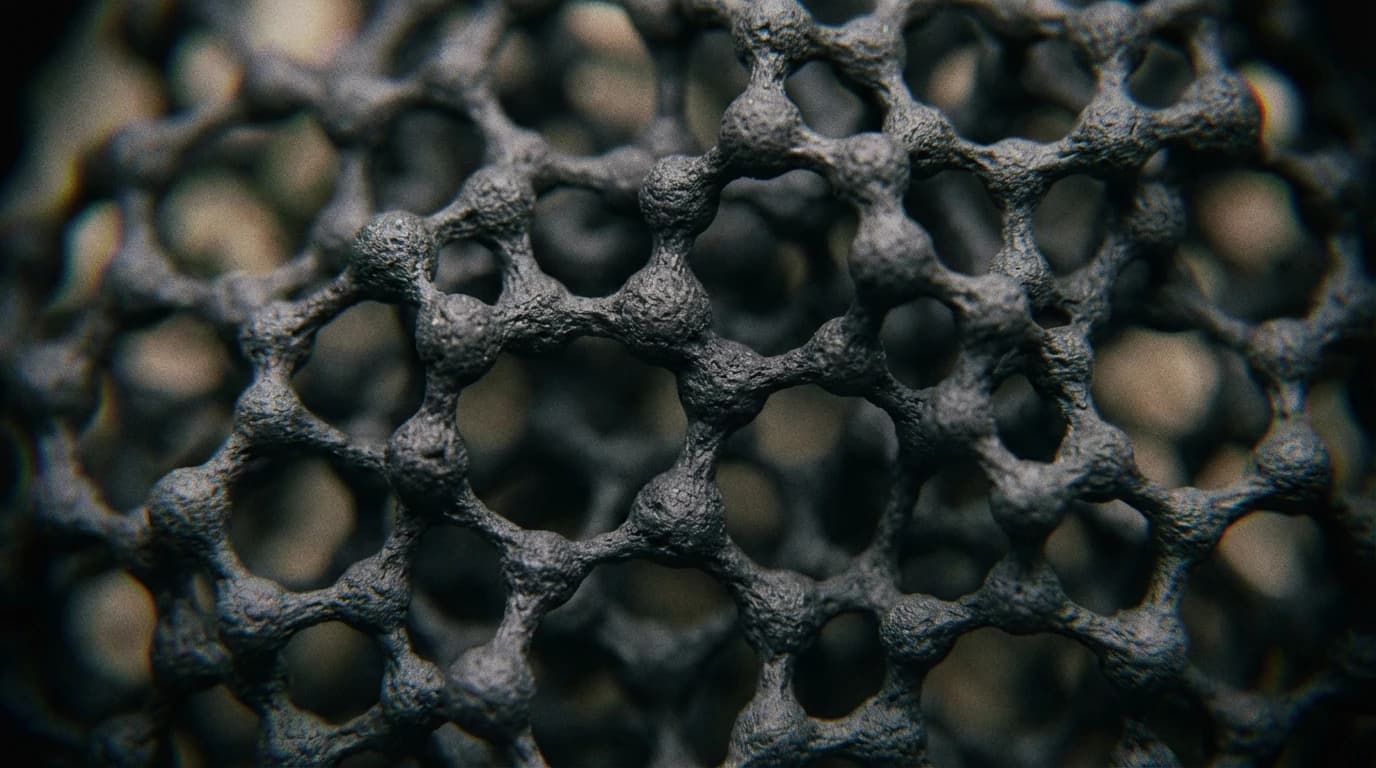
The microscopic workbench
Imagine a microscopic workbench floating in a liquid. On its own, it is just a tiny block of carbon. But attach tiny robotic arms to its surface, and suddenly it can grab passing molecules and hand them electrons.
If you just scatter those robotic arms loosely on the floor, they cannot build anything. They must be bolted to the workbench, working in pairs, to get the job done.
What are Carbon dots?
Carbon dots are exactly that kind of workbench. They are incredibly small, cheap to synthesise, and covered in chemical hooks that dictate their behaviour.
Scientists want to use carbon dots to speed up chemical processes, a trick known as catalysis. Because they are so small and customisable, they are highly attractive for industrial chemistry.
Yet, the exact way these nanoscale specks transfer electrons has remained frustratingly vague. We knew they worked, but we did not know exactly how the surface parts fitted together to drive the reaction.
The secret is in the robotic arms
Recently, researchers set up a lab study to watch these particles in action. They cooked up three different batches of carbon dots, varying the number of "robotic arms" on their surfaces.
In chemistry terms, these arms are called surface amines. The team measured how quickly the different dots could transfer electrons to a test dye called resazurin.
The results were striking. The carbon dots packed with the highest density of surface amines performed significantly better. This boost in activity happened both in the dark and under bright light.
But here is the clever part. When the researchers tested loose molecular amines floating in the liquid without the carbon dot base, absolutely nothing happened. The electron transfer only worked when the chemical arms were anchored to the dot.
Using advanced tools like magnetic resonance spectroscopy, the team measured the physical interactions at play. The data suggests that at least two neighbouring arms must work together. They act like tweezers to grab the target molecule and pass the electron along.
A new recipe for future materials
By mapping exactly how these chemical arms interact, scientists can now write a literal recipe book for electron transfer. We no longer have to guess how many surface amines are required for a specific reaction.
This suggests we could soon custom-build carbon dots for highly specific jobs. The researchers believe this framework could lead to several major advances:
- Creating more efficient, low-cost catalysts for organic chemistry.
- Designing smarter nanomaterials that react to light.
- Developing new diagnostic tools for chemical biology.
By understanding the exact layout of these tiny workbenches, researchers might completely alter how we manufacture chemicals. It is a brilliant reminder that sometimes, the biggest scientific leaps happen at the smallest possible scale.