Biokos and the Evolutionary Quirks of Kelp Aquaculture Disease Control
Source PublicationJournal of Phycology
Primary AuthorsFarrugia Drakard, Fester, Stekoll
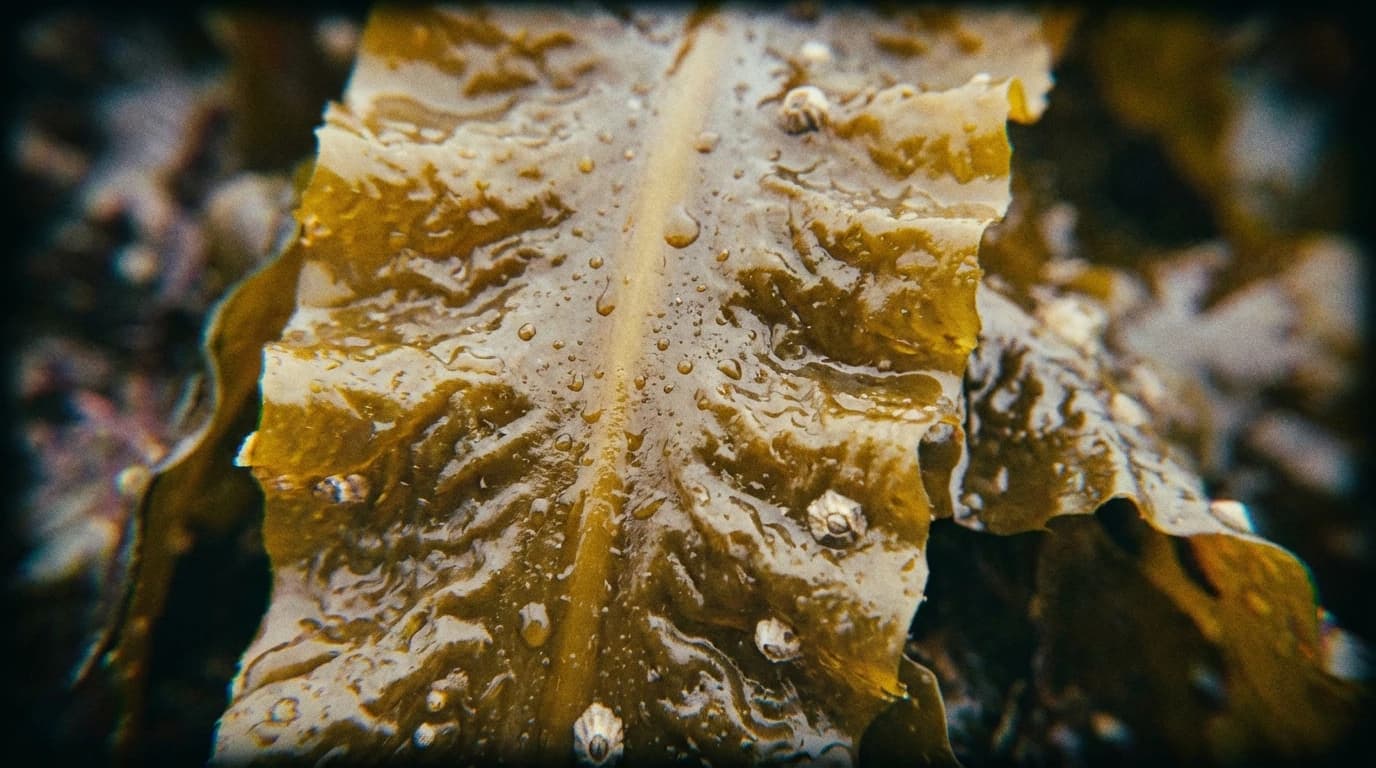
Is there not a strange, frantic elegance to the way life scrambles for a foothold in the microscopic soup? We attempt to impose order on the ocean through farming, yet the chaos of the microbial world often intervenes. In the case of sugar kelp (Saccharina latissima), that chaos comes in the form of ciliates. These microscopic grazers are the bane of the hatchery. They consume the crop before it truly begins. A recent study sought to mitigate this, testing a surfactant called Biokos® originally designed for fish parasites.
These results were observed under controlled laboratory conditions, so real-world performance may differ.
The premise was simple enough. Apply the treatment. Count the dead ciliates. Check if the kelp survives. In the Petri dish, the first part worked beautifully. The researchers measured near-total mortality of the ciliates within 24 hours. A clean sweep.
The biology behind kelp aquaculture disease control
Here is where the data gets interesting. Biology rarely gives you a free lunch. While the vegetative growth of the kelp gametophytes remained steady, their density dropped. They had trouble sticking to the substrate. But then, a surprise. The female gametophytes began producing eggs and sporophytes at a significantly higher rate than the untreated control group.
Why would a chemically stressed plant reproduce more? It is a classic evolutionary reflex. A "fecundity of the doomed".
When an organism perceives an existential threat—in this case, likely a sharp shift in pH caused by the treatment—it stops investing in its own longevity. It panics. It pours every remaining ounce of energy into the next generation. It is a biological hail mary. The genome says: "I am dying, but perhaps my offspring will find better water."
The authors suggest this reproductive spike may be a direct response to the pH changes associated with the surfactant. This implies that while Biokos® has potential, it is not a gentle tool. The study recommends that future applications include buffering agents to stabilise the pH. We have a weapon against ciliates, yes. But we must learn to aim it without terrifying the crop into a panic response. The line between medicine and poison, as always, is the dose.