Biodegradable Plastic Degradation: How Marine Fungi Eat Trash
Source PublicationEnvironmental Science and Pollution Research
Primary AuthorsNiccolini, De Simone, Seggiani et al.
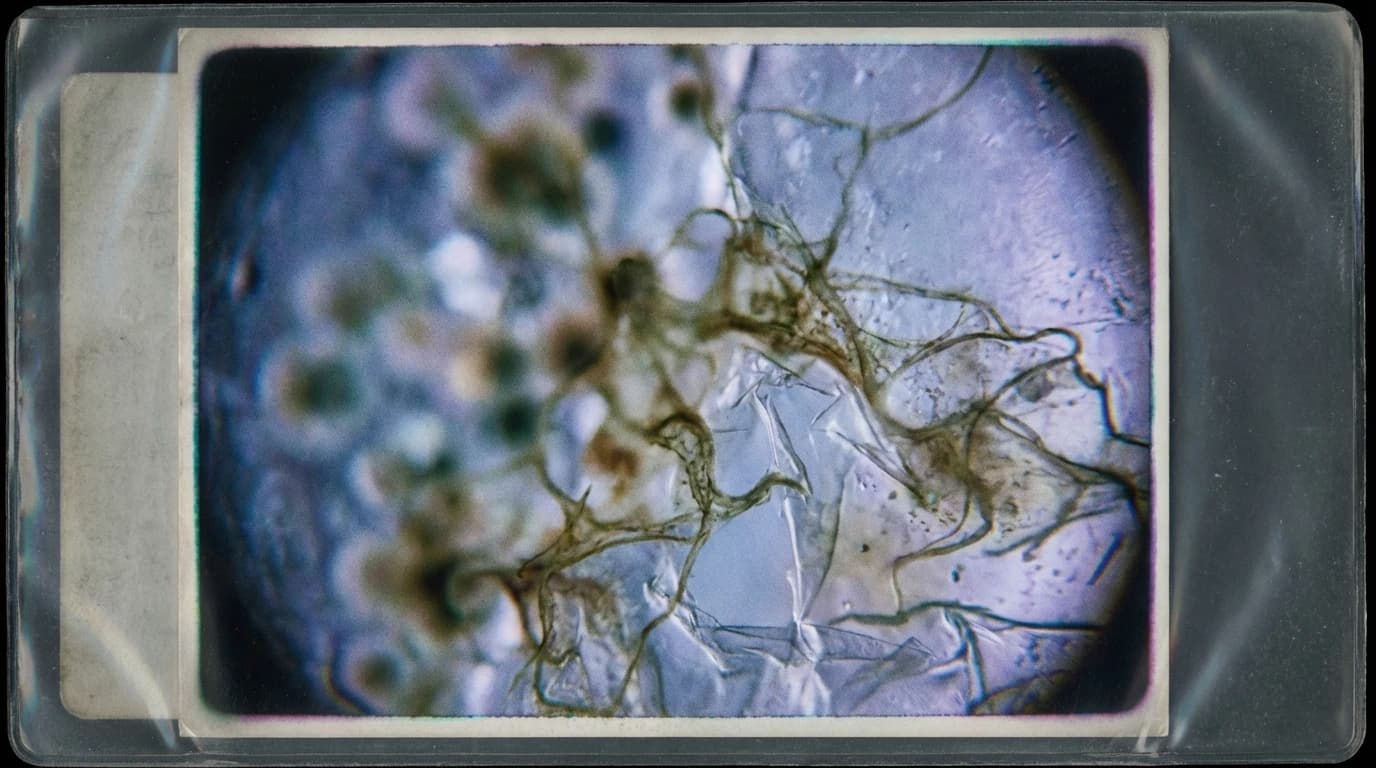
When microscopic sea creatures like copepods die, they drift down into the ocean's depths like falling snow. It is a natural cycle. However, scientists recently discovered something unexpected hitching a ride on these tiny carcasses: fungi with a very specific appetite.
We often assume that 'biodegradable' plastic simply vanishes when it hits the water. It does not. It persists. But nature is adapting.
The mechanism of biodegradable plastic degradation
Researchers isolated a fungus called Cladosporium psychrotolerans from the remains of the marine copepod Acartia tonsa. They wanted to see if this organism could tackle Poly(Butylene Succinate-co-Adipate), or PBSA, a common biodegradable plastic.
The results were startling. The fungus is voracious.
If the fungus attaches to the plastic, it releases specific enzymes known as carboxyl-ester hydrolases. These enzymes act like molecular scissors. They snip the chemical bonds holding the plastic polymer together. In the experiment, the fungus achieved a weight reduction of 80.5% in just 92 days.
Surface erosion and selective eating
The process is not random. It is precise.
If you look at the plastic under a microscope after the fungus has attacked, you see significant surface erosion. The fungus prefers the 'amorphous' parts of the polymer—the messy, disorganised sections—rather than the hard, crystalline structures. It eats the soft parts first.
This study suggests that the microbiome on dead zooplankton plays a massive role in biodegradable plastic degradation. The ocean has its own cleanup crew; we are only just learning how to recruit it.