Beyond the Pattern: How Forensic Fingerprint Analysis Could Reveal Your Exercise Habits
Source PublicationAnalytical Methods
Primary AuthorsPatten, Buckman Johnson, Forsman et al.
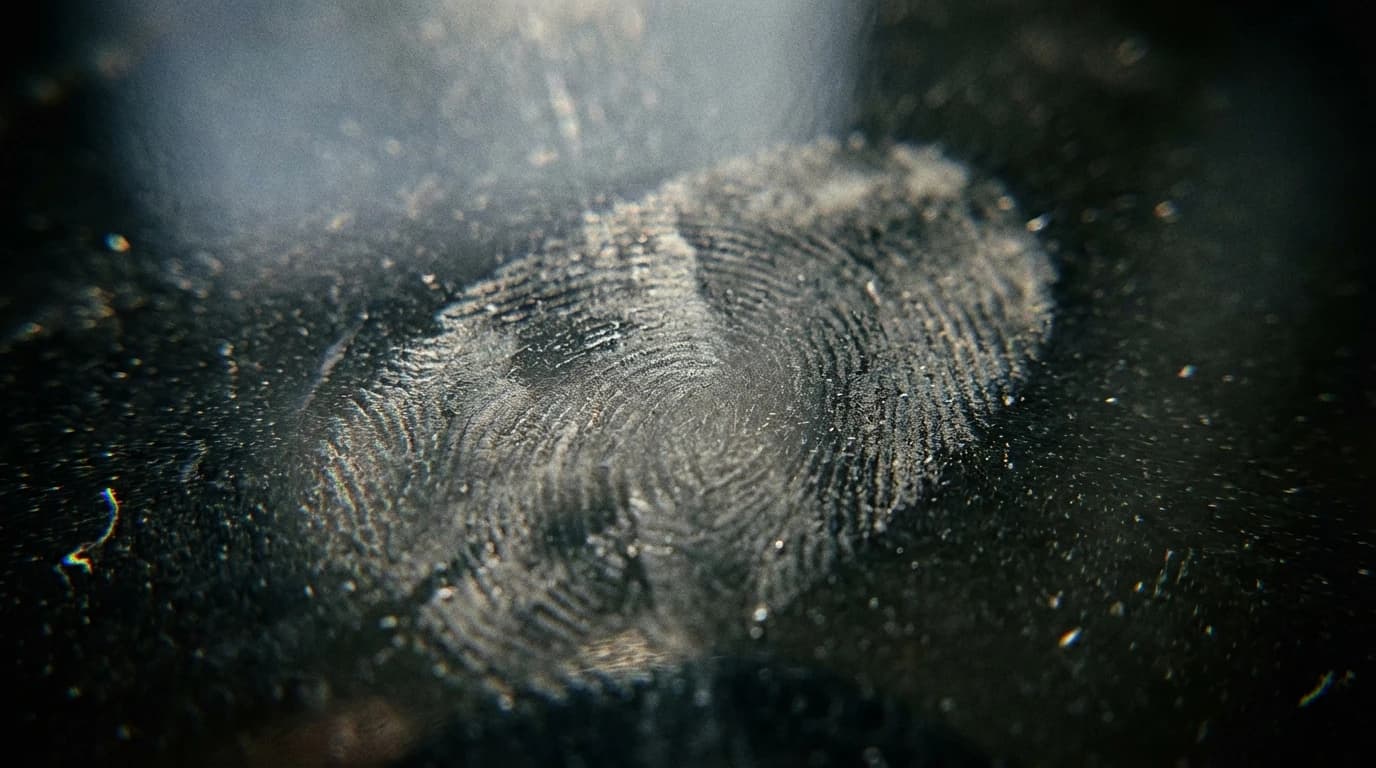
The Supermarket Receipt
Imagine a fingerprint is like a till receipt from a supermarket. Usually, detectives only care about the logo printed at the top. If that logo matches a known store in their database, they know exactly where the receipt came from.
But what if the logo is smudged, or the store is brand new? Traditionally, that piece of paper becomes entirely useless.
Now, look closer at the itemised list of groceries on that slip. If you see protein powder, chicken breasts, and sports drinks, you can confidently guess the shopper works out. This is exactly how researchers are rethinking trace evidence. By looking at the chemical "groceries" left behind in our sweat, forensic fingerprint analysis is moving beyond simple pattern matching.
The Limits of Forensic Fingerprint Analysis
For over a century, police have relied on the unique loops and whorls on our fingertips to identify suspects. It is a highly effective system, provided the suspect is already catalogued in a database.
When an investigator lifts a latent print at a crime scene, they usually run it through an optical imaging system. If the computer finds no match, the trail goes completely cold.
The physical shape of the print offers zero clues about who the person actually is, how they live, or what they do. Researchers wanted to see if the actual chemistry of the smudge could offer a backup plan.
Reading the Chemical Leftovers
Every time you touch a surface, you leave behind microscopic traces of lipids, or fats. The research team decided to measure these molecular leftovers using a technique called matrix-assisted laser desorption/ionization mass spectrometry (MALDI-MS).
To make sense of the chemical data, the team relied on a few specific steps:
- They collected latent prints alongside validated surveys detailing the subjects' exercise routines.
- They extracted the molecular data, focusing entirely on the lipid profiles left in the sweat.
- They trained algorithms, like neural networks, to spot correlations between the fats and the survey answers.
The results were striking. The top-performing models correctly classified a person's physical activity level with an accuracy of around 75 per cent. The study measured specific lipid features and found they reliably encoded biological information about the person's lifestyle.
Building a Behavioural Profile
This chemical approach suggests that a fingerprint could be incredibly valuable even without a direct identity match. Instead of a name, investigators might get a behavioural profile.
If a detective knows the suspect is highly active, they can narrow down their search parameters. It adds a completely new dimension to trace evidence that was previously considered useless.
The applications could extend well beyond the police station. Because this method is completely non-invasive, doctors might one day use fingerprint chemistry to monitor patient health or lifestyle factors.
The research suggests that the fats exuded from our pores carry a rich, biological diary of our daily habits. Soon, the chemical signature of a smudge may be just as important as the loops and whorls themselves.