Bespoke Tailoring: The Genetic Secrets of the Bagworm
Source PublicationDNA Research
Primary AuthorsChakraborty, Mahajan, Prasoodanan P.K. et al.
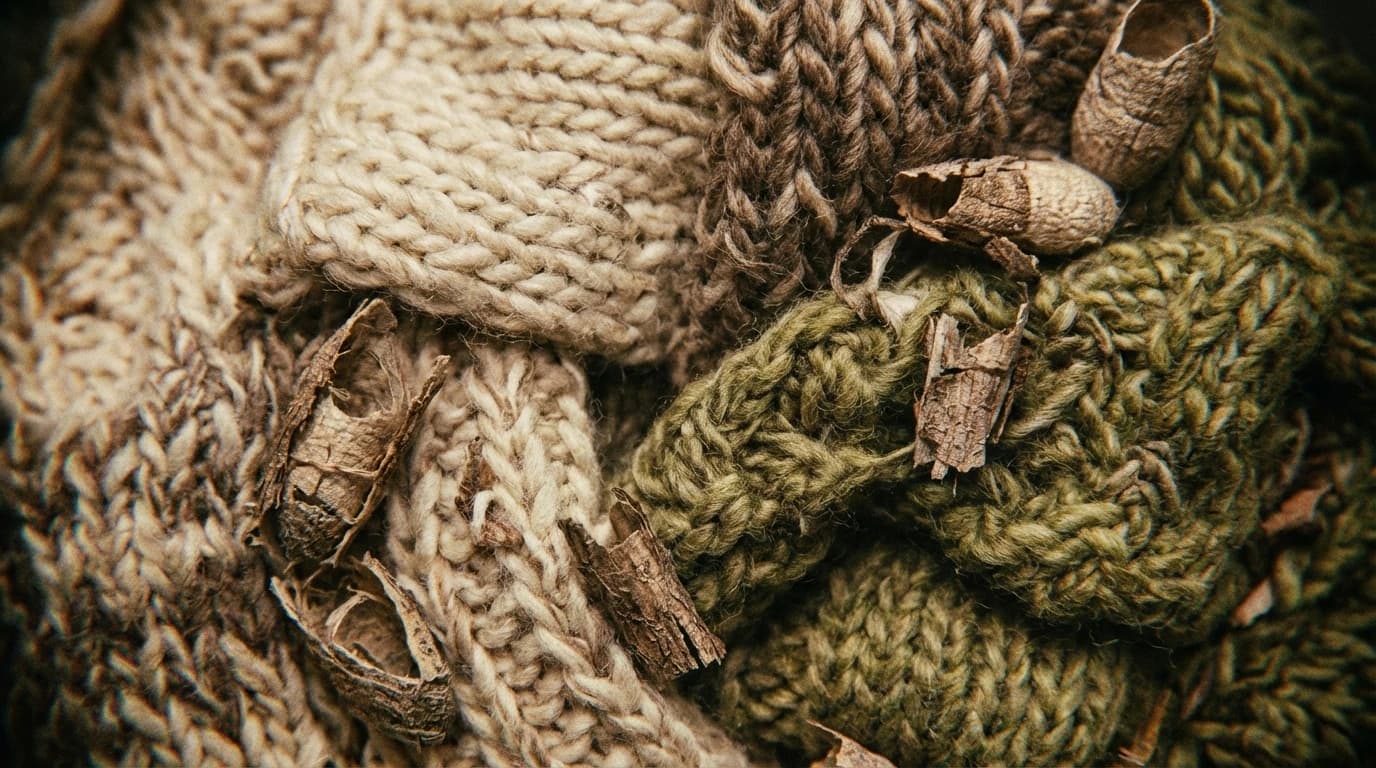
Nature’s introverts, the bagworms, are renowned for their hermitic lifestyle, encasing themselves in elaborate protective cases constructed from silk and scavenged plant debris. A recent study has finally unzipped the genetic code of the species Eumeta crameri, revealing the molecular machinery required to sustain life inside a mobile fortress.
By assembling the creature's nuclear genome—comprising 13,554 coding genes across 31 pseudochromosomes—researchers identified distinct evolutionary adaptations. When compared to other Lepidopterans (butterflies and moths), E. crameri displays a marked evolution in genes controlling metabolism, defence, and the crucial phases of moulting and metamorphosis. Of particular interest is the genetic instruction for creating ultrafine silk fibres, the high-tensile mortar that binds their camouflage together.
However, the bagworm does not rely on structural engineering alone. The team also sequenced the insect's gut microbiome, uncovering a unique catalogue of bacteria essential for the host’s digestion and immune defence. This suggests that surviving the complete metamorphosis process within a bag requires a complex biological partnership. These findings provide a comprehensive view of the bagworm's strategy, proving that their reclusive existence is supported by a sophisticated internal ecosystem.