Balanced Spiking Networks: Does Structural Disorder Boost Neural Sensitivity?
Source PublicationScientific Publication
Primary AuthorsDedieu, Nikolic
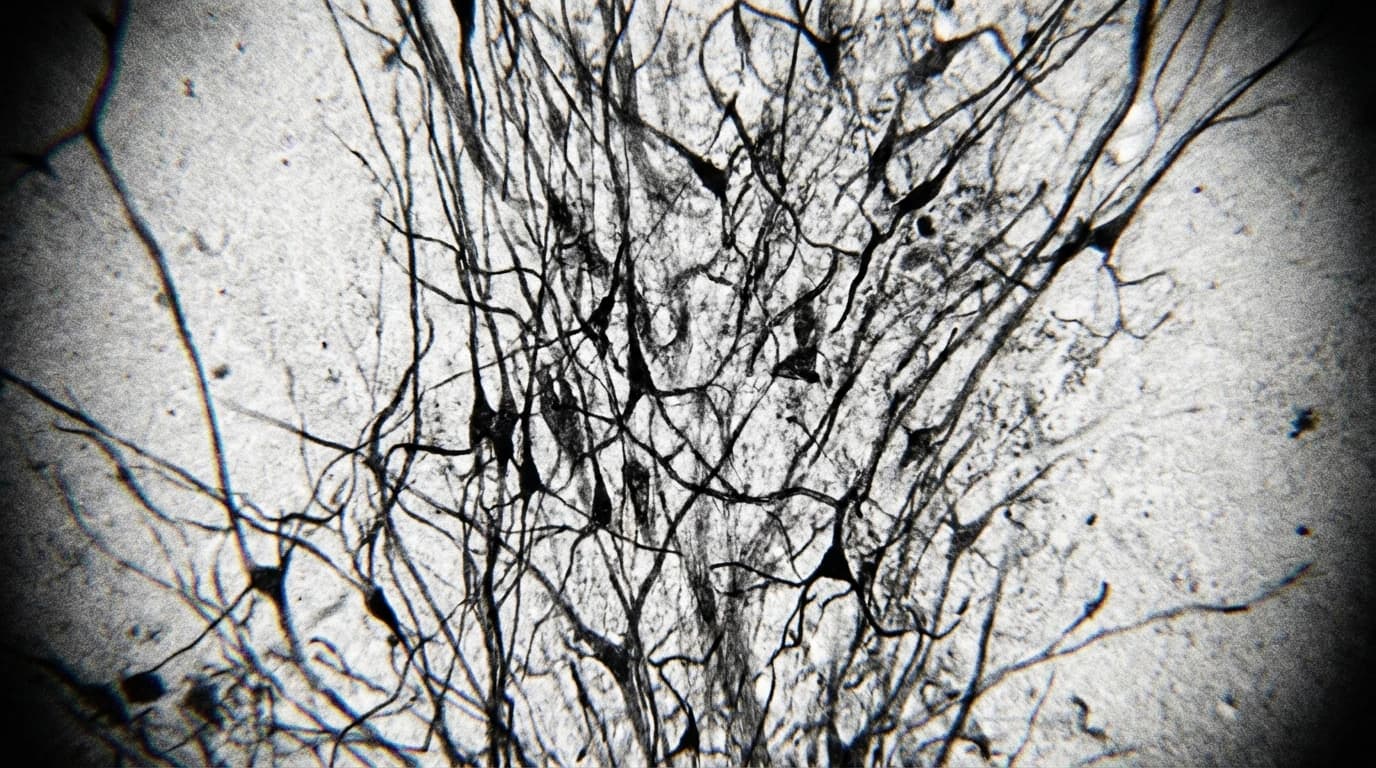
Structural disorder within neural circuits may not be a flaw, but a mechanism for amplification. The study posits that varying the number of connections per neuron—while keeping the total population count static—can significantly enhance network responsiveness. Historically, mapping and modelling balanced spiking networks relied on the simplifying assumption of uniform connectivity. Researchers often presumed that an equal distribution of synapses was necessary to maintain stability and ease mathematical derivation, a method that frequently obscured the messy, heterogeneous reality of biological tissue.
These results were observed under controlled laboratory conditions, so real-world performance may differ.
Variability in Balanced Spiking Networks
The core of this analysis lies in the technical contrast between fixed connectivity schemes and the study's variable distribution model. Traditional approaches often utilise a fixed in-degree, ensuring every neuron receives an identical number of inputs to maintain a predictable equilibrium. In this simulation, the authors introduce a Gaussian distribution characterised by standard deviation (σ). While the aggregate number of synapses remains conserved, the allocation shifts drastically. Some neurons become highly connected hubs, while others are isolated. This deviation creates a scenario where the network remains globally balanced, yet local fluctuations grow in intensity. The authors measured how this variance—effectively structural noise—forces the system into a regime of higher firing rates and heterogeneity without requiring additional external energy.
This efficiency is notable. The data indicates that a network can tune its sensitivity simply by reorganising existing connections rather than metabolically supporting new ones. However, the reliance on leaky integrate-and-fire neurons presents a potential blind spot. These are reduced abstractions of biological cells. It remains to be seen whether the phenomenon of 'topological stochastic resonance' persists under the complex conductance dynamics of living cortical tissue. While the simulation demonstrates that disorder modulates activity in silico, it only suggests this mechanism is utilised by actual biological circuits to maintain stability.