AI Transforms Static Cities into Responsive, Living Spaces
Source PublicationScientific Reports
Primary AuthorsLiu
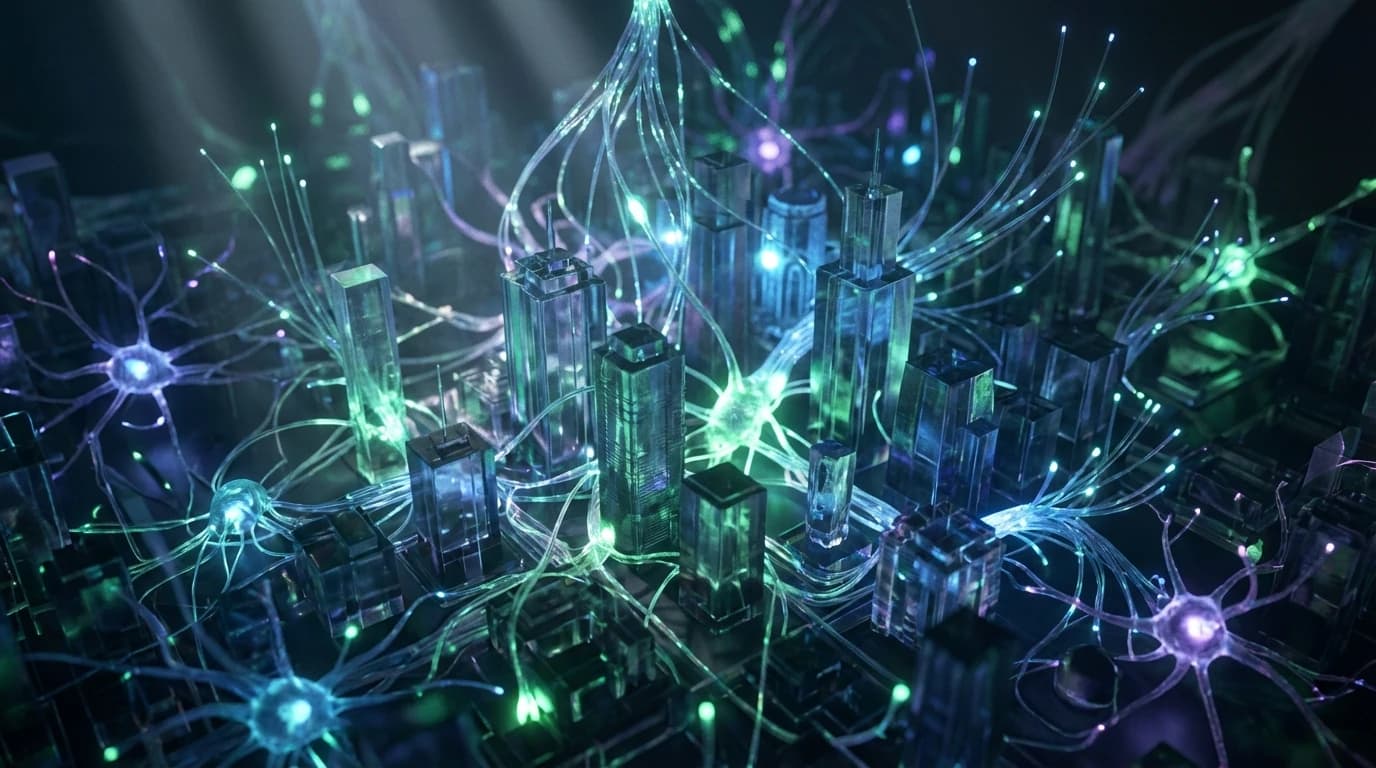
Traditional urban planning relies on static designs that often fail to keep pace with the shifting rhythms of city life. To address this, researchers have unveiled a sophisticated AI-driven framework capable of modifying urban open spaces in real time. By employing a hierarchical data fusion architecture, the system analyses a mix of visual, acoustic, and environmental sensor streams to understand current conditions.
Using deep learning models for spatial optimisation and reinforcement learning for decision-making, the technology generates adaptive design solutions in under 100 milliseconds. This allows for immediate adjustments to layout or function based on how people are actually using the space.
Experimental validation, including a case study at Shanghai’s 2.4-hectare Metropolitan Central Plaza, demonstrated remarkable efficiency gains. Compared to conventional methods, the system achieved a 34.2% increase in space utilisation and a 28.7% improvement in pedestrian flow. Crucially for city managers, operational costs dropped by 22.3%, proving that intelligent environments can be both user-centric and economically viable.