AI Takes an Important Step in Mapping Protein Adsorption for Biomaterials
Source PublicationACS Applied Materials & Interfaces
Primary AuthorsSu, Tanaka, Ushiku et al.
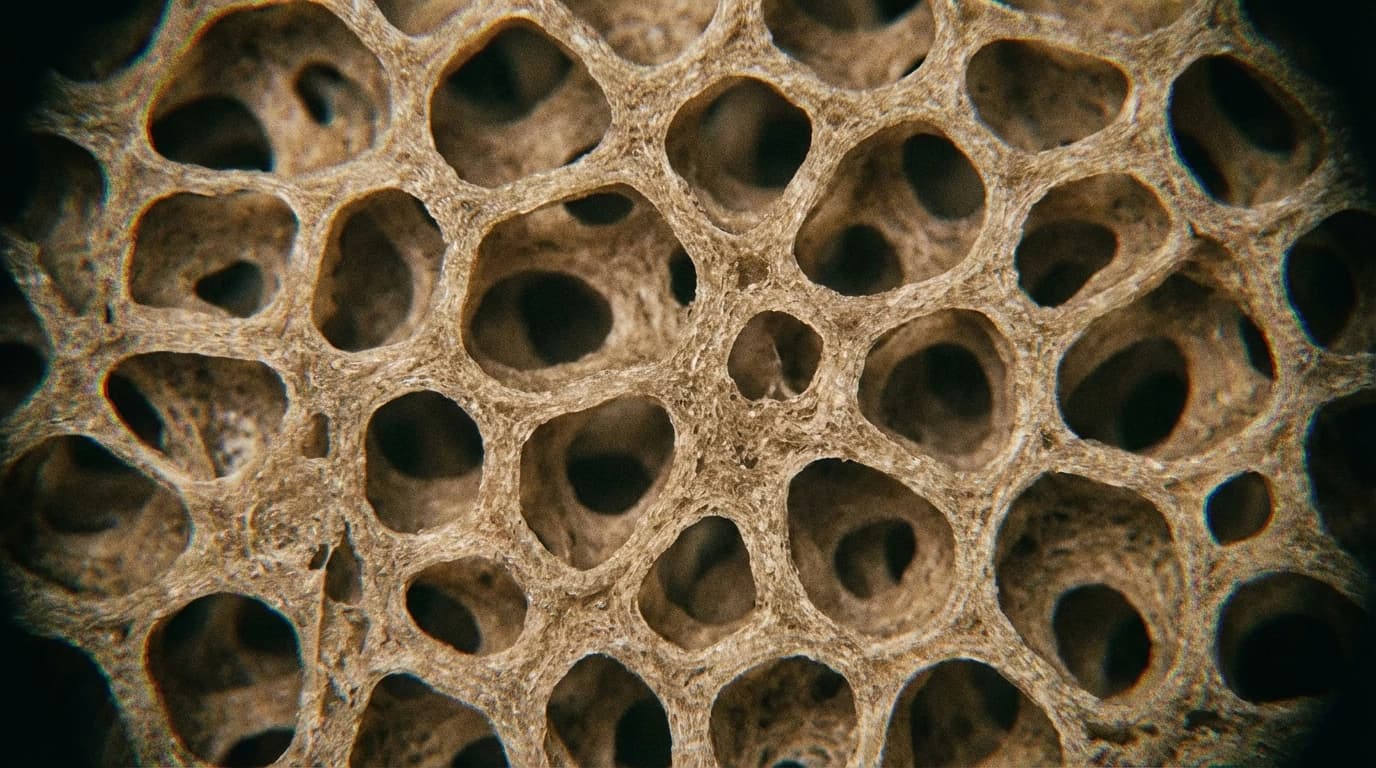
Imagine dropping a handful of wet spaghetti onto various kitchen surfaces. Some strands stick like glue to your ceramic tiles, while others slide straight off a non-stick pan.
These results were observed under controlled laboratory conditions, so real-world performance may differ.
In biology, this exact same sticky physics happens every single second. Except instead of pasta, we are dealing with complex biological molecules colliding with artificial materials.
This process is called protein adsorption, and it is a massive headache for materials scientists. Getting it right is the difference between a successful biomaterial and a failed one.
Why Protein Adsorption Matters
Whenever engineers design a biosensor, a cell culture surface, or a drug delivery system, biology reacts instantly. A rush of proteins immediately coats the foreign object.
If the wrong biological matter sticks to the material, the device's performance can plummet. A biosensor might give false readings, or an antifouling surface might become entirely coated and useless.
To prevent this, engineers try to design special plastics, known as polymers, that control exactly what sticks and what repels. They want the non-stick effect for some molecules, and the glue effect for others.
But mapping these interactions is incredibly difficult. The physical rules change depending on the exact shape, size, and electrical charge of the molecules involved.
Until now, researchers lacked a unified system to predict how different biological molecules would behave on various synthetic surfaces.
Training AI to Read Chemistry
To solve this sticking problem, researchers turned to large language models. They built a new artificial intelligence tool called BB-EIT (Biointerface BERT Encoder for Interaction Translation).
Think of it as a highly specialised version of ChatGPT. But instead of reading English sentences, it reads the chemical structures of polymers and proteins as if they were words.
The team fed the AI a massive diet of chemical data using text-based representations of molecules. They also adapted the model to include a strict set of physical measurements, such as:
- The microscopic thickness of the polymer coating.
- How water physically behaves when it touches the surface.
- The electrical charge and exact size of both the plastic and the protein.
In this computational study, researchers measured the AI's ability to calculate the exact amount of protein that would stick to specific polymer brush surfaces. The results showed the model could accurately predict this behaviour, even on polymer combinations it had never seen before.
The Future of Biomaterial Design
This digital tool suggests we could soon design smarter biomaterials entirely on a computer. Engineers could test millions of combinations before ever stepping into a physical lab.
Instead of relying on slow trial and error, scientists could use this AI to custom-build materials with perfect surface properties. They can dial in the exact level of stickiness required for a specific system.
By better understanding protein adsorption, we may be able to create next-generation materials tailored for precise biological tasks. It represents an important step towards data-driven biomaterials that work flawlessly from the start.