AI Struggles with Molecular Property Prediction. A New 'Bartender' Approach Could Fix It.
Source PublicationSpringer Science and Business Media LLC
Primary AuthorsGreen, Burns, Zalte et al.
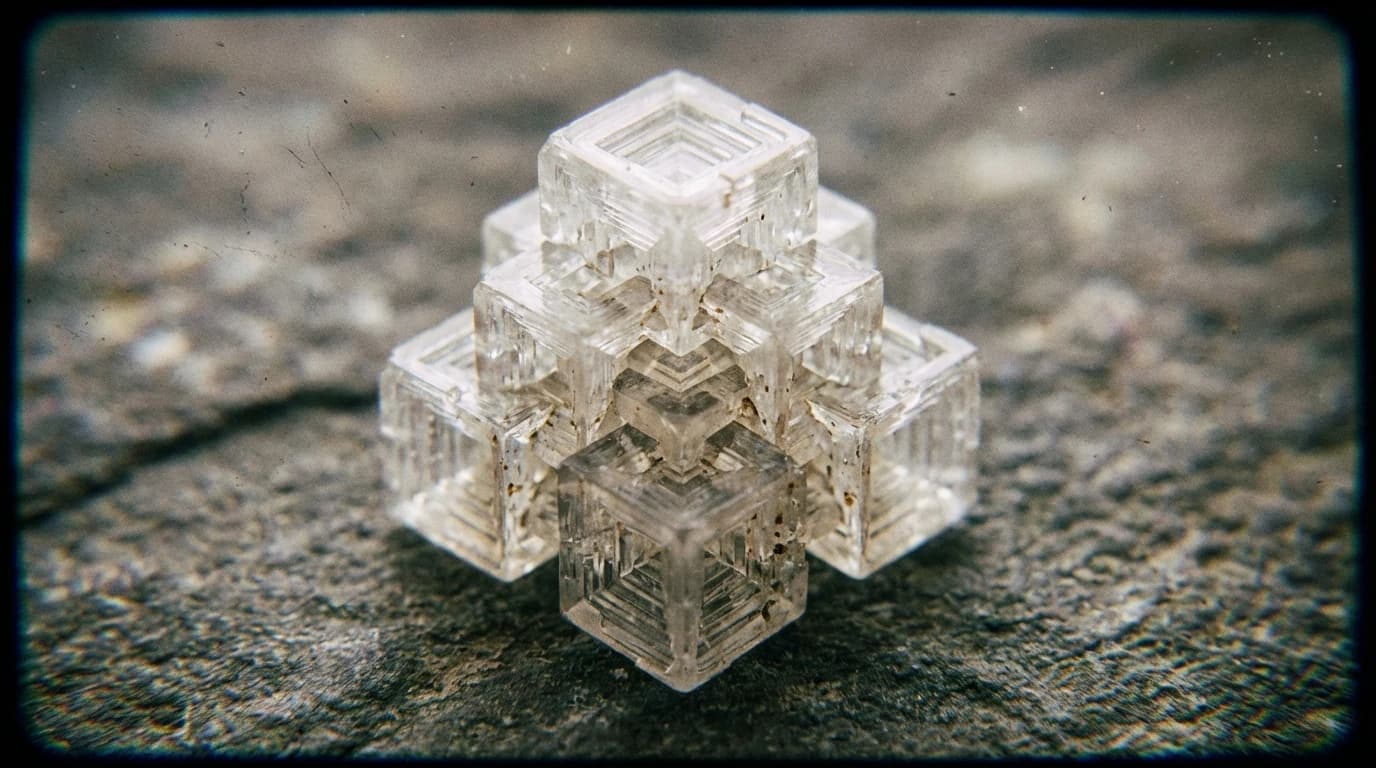
Imagine trying to guess how a mysterious new cocktail will taste just by glancing at a list of its chemical ingredients. Old-school algorithms are like veteran bartenders. They rely on simple, reliable rules of thumb to guess the flavour.
Modern deep learning artificial intelligence, however, is like an overly eager novice. It tries to learn by chugging thousands of random drinks. Unfortunately, it often gets terribly confused when you only give it a few recipes to study.
This exact scenario is the core problem with molecular property prediction today.
The Struggle with Molecular Property Prediction
Scientists use algorithms to guess how new chemicals will behave before actually mixing them in a lab. This saves immense amounts of time and money.
But deep learning models have surprisingly struggled to excel here. When faced with limited real-world data, these advanced systems usually lose to older, classical machine learning methods.
The problem is the training material. Deep learning models often get distracted by messy experimental data or biased simulations. Researchers need a smarter way to train these systems so they do not autumn apart when data is scarce.
Enter CheMeleon: A Cleaner Way to Learn
A new preprint study—meaning the findings are early-stage and currently awaiting peer review—proposes a solution called CheMeleon.
Instead of forcing the AI to learn from noisy, real-world lab results right away, the researchers fed it 'low-noise molecular descriptors'. In our bartender analogy, this is like giving the novice a precise, flawless encyclopaedia of basic flavour profiles before letting them near a shaker.
The researchers measured CheMeleon's performance across 58 different benchmark datasets. The AI was tested against both classical methods and other modern models.
The results suggest a significant shift in performance:
- CheMeleon achieved a 75 per cent win rate on Polaris tasks, beating older methods like Random Forest.
- It hit a staggering 97 per cent win rate on MoleculeACE assays.
- It managed all of this with a relatively compact, 10-million parameter foundation model.
What This Means for Chemistry
If these preliminary results hold up through peer review, CheMeleon could alter how scientists design new drugs and materials.
By learning clean, fundamental representations of molecules first, the AI requires far less real-world data to make accurate guesses later. It learns the actual rules of the road rather than just memorising the bumps.
This suggests that the secret to better AI in chemistry is not necessarily more data. Instead, offering an AI a cleaner, simpler education might be the smartest path forward.