A Small-Molecule Fix Upgrades Efficiency in Inverted Perovskite Solar Cells
Source PublicationACS Applied Materials & Interfaces
Primary AuthorsWang, Che, Li et al.
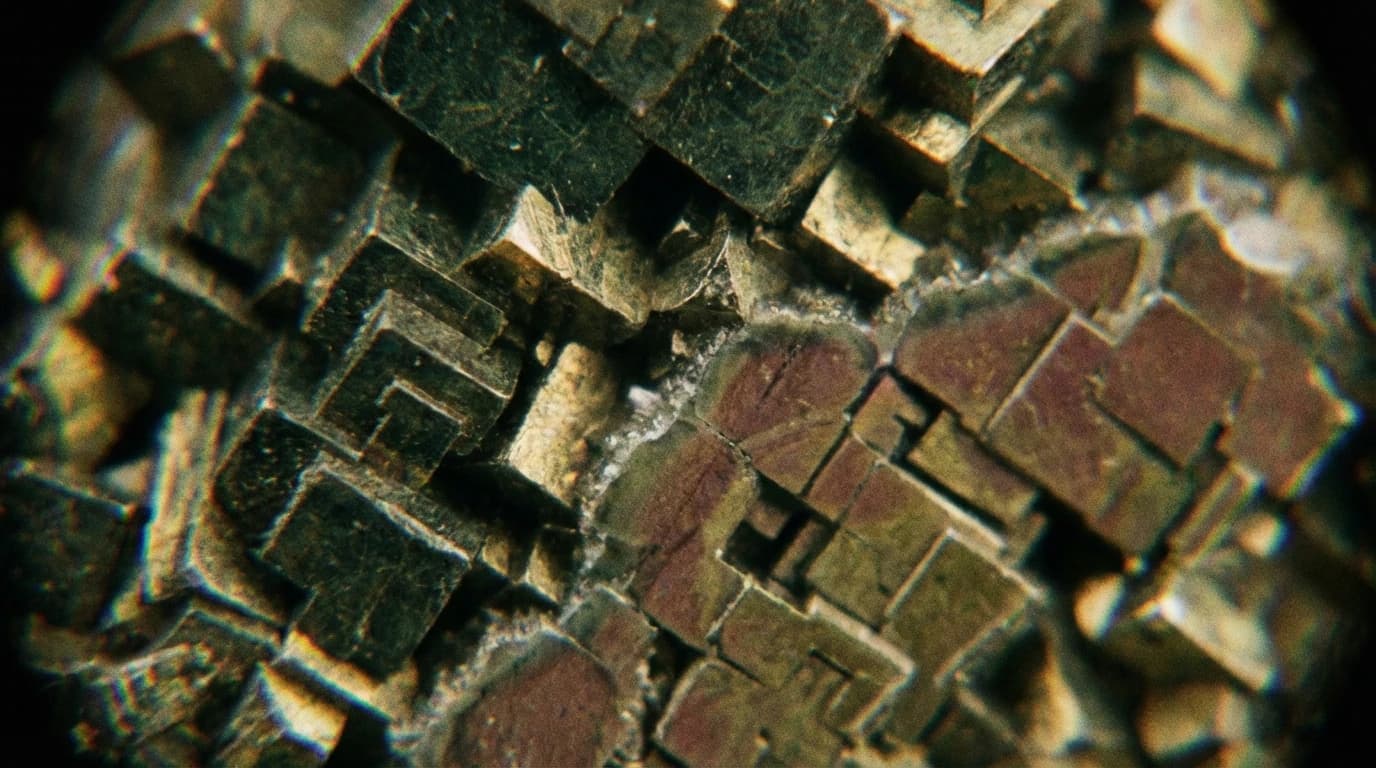
A Microscopic Fix for Inverted Perovskite Solar Cells
Materials scientists have increased the power conversion efficiency of inverted perovskite solar cells to 20.89 per cent by substituting a bulky polymer with a nimble small molecule. Achieving this was notoriously difficult because the standard base material, nickel oxide, is riddled with microscopic surface defects that trap electrons, degrade the device, and limit energy output.
The Context: The Problem with Polymers
Nickel oxide serves as a standard hole-transport material in these energy systems, responsible for moving positive charges away from the light-absorbing layer. However, its flawed surface structure degrades long-term stability and saps overall performance.
Engineers traditionally attempted to patch these defects using large polymer molecules like polyvinylpyrrolidone (PVP). The old method assumed that covering the surface with long molecular chains would smooth out the chemical imperfections. Yet, the underlying mechanisms of how these polymers interacted with the interface remained largely assumed rather than explicitly proven.
The new study measured exactly why that older approach falls short. The long polymer chains in PVP create a physical barrier—a phenomenon known as steric hindrance. This bulky barrier actually blocks charge transport and disrupts the formation of the perovskite crystals layered directly above it.
The Discovery: Small Molecules, Better Passivation
To bypass this barrier, researchers tested a smaller, structurally similar molecule called N-methylpyrrolidone (NMP). The results demonstrated a clear mechanical advantage for the more compact chemical.
The researchers measured three distinct advantages of the NMP molecule over its larger predecessor:
- It selectively neutralises surface defects without creating an obstructive physical barrier.
- It facilitates a much cleaner, highly ordered crystallisation of the perovskite films.
- It boosts the device's power conversion efficiency to 20.89 per cent, up from 18.52 per cent with PVP.
Furthermore, the research team tracked the degradation of the unencapsulated NMP devices over time. They found the new cells retained 93 per cent of their initial efficiency after 1,800 hours of continuous storage.
What the Study Does Not Solve
Despite the rigorous experimental setup, this study leaves several practical engineering challenges unanswered. The impressive 1,800-hour stability test occurred at a mild 25 °C inside a strictly controlled nitrogen atmosphere.
This sterile environment does not replicate the harsh moisture, thermal cycling, and oxygen exposure a commercial solar panel must endure on a real-world rooftop. Furthermore, scaling this precise molecular passivation from small laboratory cells to commercial-sized manufacturing lines may introduce entirely new structural defects.
The Impact: A Clearer Path Forward
By proving exactly how molecular size dictates surface passivation, this research provides a stricter framework for designing next-generation solar materials. Engineers can now systematically abandon bulky polymers in favour of agile small molecules that target specific chemical flaws.
While commercial viability remains distant, this chemical insight suggests that careful structural tuning could eventually make these high-efficiency cells stable enough for mass production. It forces a critical re-evaluation of how we engineer the microscopic interfaces in renewable energy technology.