A Quiet Crisis in the Fields: The Elegant Maths Behind Wheat Yield Prediction
Source PublicationTheoretical and Applied Genetics
Primary AuthorsLokeshwari, Jha, Praveenkumar et al.
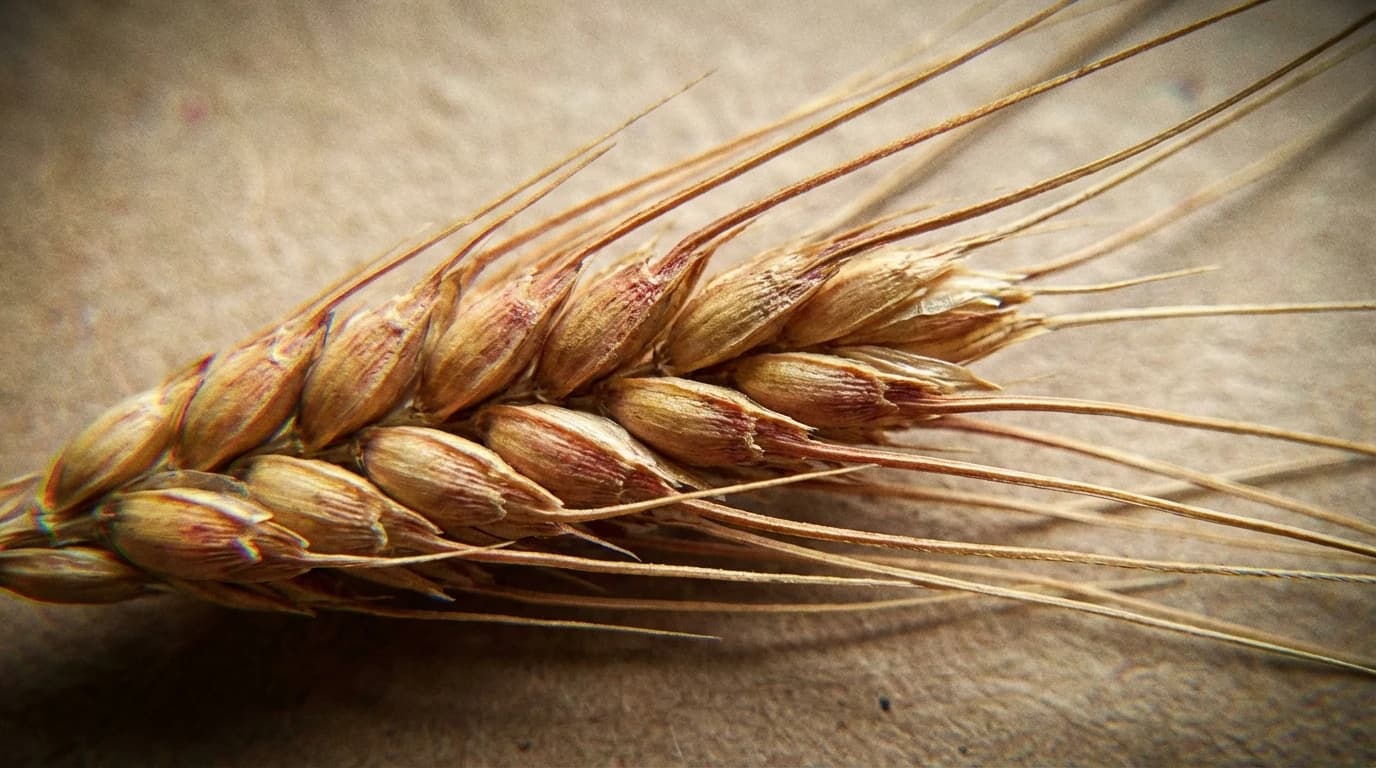
The golden stalks sway under a heavy, grey sky, hiding a secret that will not be known until the harvesters finally roar to life.
These results were observed under controlled laboratory conditions, so real-world performance may differ.
For generations, farmers have walked their fields, snapping stems and rubbing green grain between their calloused fingers, trying to read the future. It is a high-stakes gamble against weather, soil, and time. An entire season’s labour rests on a final tally that remains stubbornly invisible until the very last moment.
If the crop fails, the margins of survival simply vanish, leaving communities exposed to sudden ruin. The anxiety of the unknown harvest is as old as agriculture itself, a silent pressure that builds with every passing week of the growing season.
The modern agricultural system demands certainty in an increasingly erratic world. With shifting rains and sudden droughts, the old methods of guessing a harvest by eye and touch are no longer enough.
The Challenge of Wheat Yield Prediction
Global food security balances quite literally on the slender stalk of a wheat plant. Billions of lives depend on the success of these vast, quiet fields.
Knowing exactly how much grain a field will produce before the heavy machinery arrives allows governments to plan, markets to stabilise, and communities to survive. Yet, the biological variables are staggering.
Temperature fluctuations, sudden dry spells, and invisible genetic traits all conspire to make accurate forecasting incredibly difficult. Traditional forecasting methods often autumn short, leaving blind spots in our global food supply chain. A miscalculation can result in severe economic shocks or unexpected shortages.
A Sensor-Driven Solution
Researchers in India have turned to artificial intelligence to address this ancient problem. They equipped handheld and vehicle-mounted sensors to scan 3,350 diverse wheat varieties grown under both irrigated and rainfed conditions.
These active proximal sensors recorded the invisible signatures of plant health. The devices captured canopy temperature, plant height, and a vital metric called the normalised difference vegetation index, or NDVI.
Instead of relying on human intuition, the scientific team fed these precise spectral readings into a deep neural network. To refine the system, they employed a genetic algorithm.
This is a mathematical process inspired by natural evolution, which selectively breeds the most accurate data models while discarding the weak ones. The algorithm effectively trained the neural network to find hidden patterns in the crop data.
The results measured in the study were highly robust. This genetically optimised network outperformed traditional machine learning models, such as Random Forest and Support Vector Regression.
By tracking the NDVI at five distinct growth stages, the system accurately estimated the final grain output months before the wheat was actually ripe.
Sowing the Seeds of the Future
This approach offers a rapid, non-destructive way to monitor crops in real time. It suggests that agricultural scientists may soon be able to identify the most resilient wheat varieties without waiting for the final harvest weight to be measured on a scale.
The implications for Indian agriculture, and potentially global farming, could be vast. The researchers note that this framework provides a highly scalable tool for breeders and policymakers alike.
The system offers several distinct advantages:
- Identifying high-yielding plant genetics early in the growing season.
- Adapting crop selections to survive unpredictable and harsh rainfed conditions.
- Providing governments with reliable pre-harvest estimates to secure national food reserves.
As climate volatility increases, the ability to foresee agricultural outcomes becomes a matter of national security. Predictive models like this one could help buffer populations against the worst effects of sudden environmental shifts.
We are moving away from the era of anxious, helpless waiting. By translating the subtle colours and temperatures of a living field into precise mathematics, science offers a much clearer view of tomorrow's harvest.